

In Manu National Park you can pass from the cloud forest to the low jungle of the Peruvian Amazon Rainforest on the same trip. The road descends from the Andes of Cusco, through fog, ferns, and moss-covered ravines. As the descent continues, the air becomes warmer and more humid, and the vegetation changes until it turns into the dense jungle of the plain. Few routes in Peru allow you to see so many ecosystems in so few days of travel.
Another feature that sets Manu apart is that it receives far fewer visitors than other destinations in southern Peru. Part of the area has restricted access and entry is made with authorized operators, which limits the number of people. The result is a quieter trip, with uncrowded trails and long stretches without other groups in sight.
In this guide you will find what to see in each segment: the cloud forest and its birds, the rivers that flow down toward the Amazon, and the low jungle oxbow lakes where it is possible to observe giant otters, monkeys, and other species. We also explain how access to the park is organized and what is best to keep in mind before booking.
What is Manu National Park?
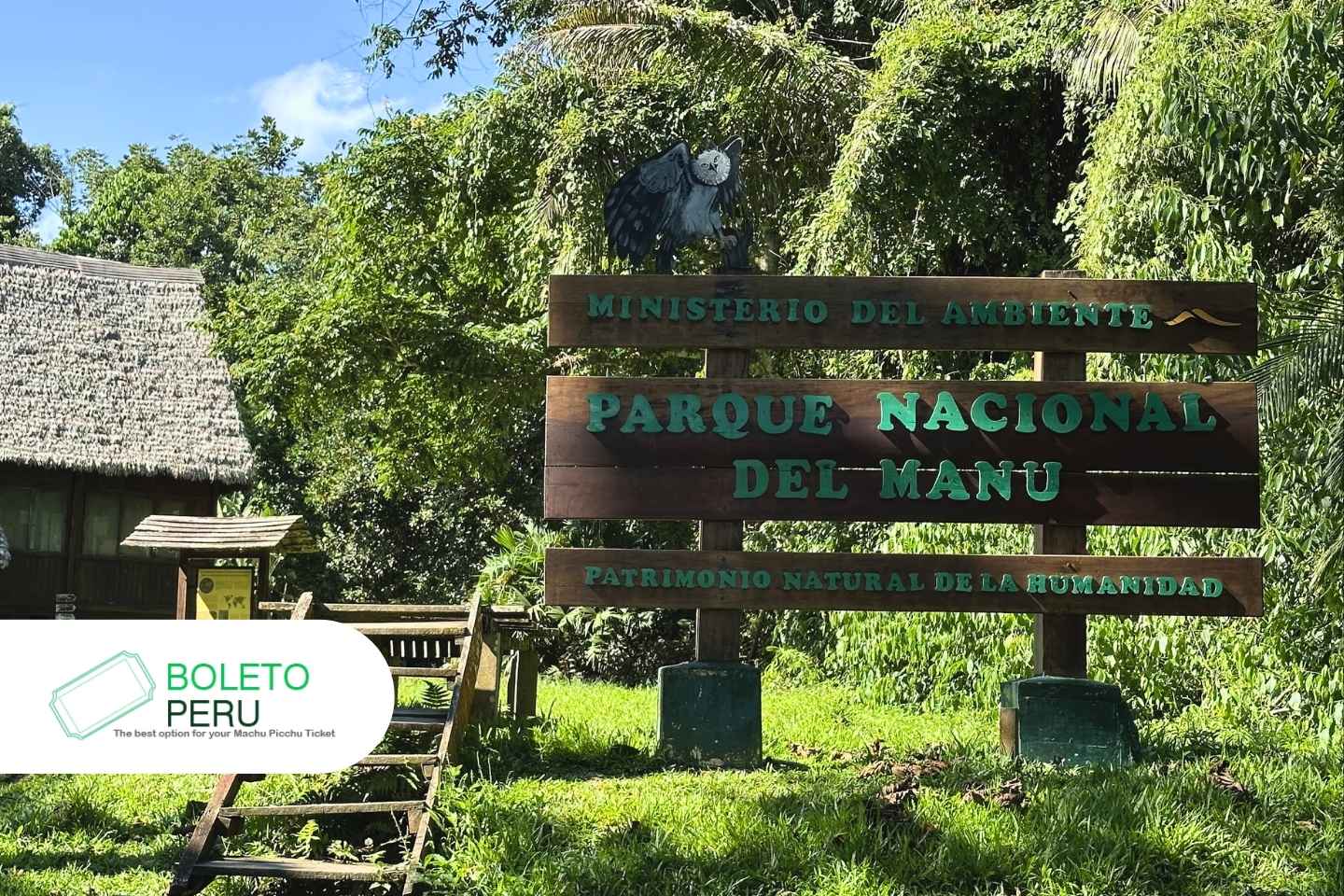
Manu National Park is a protected natural area in southeastern Peru, managed by SERNANP and created on May 29, 1973. It protects a representative sample of the low jungle, the high jungle brow, and the Andes of southeastern Peru. It covers the entire Manu River basin, so that within the same territory punas, cloud forests, and the Amazon plain follow one another. An important part of the park is indigenous territory, and Matsigenka communities live within its borders.
In 1977 UNESCO declared it a Biosphere Reserve and in 1987 it was recognized as World Heritage. According to UNESCO, it meets criteria IX and X of the World Heritage Convention, which correspond to natural values.
Key facts
- Extension: 1,716,295.22 hectares. This area was set in 2002, when the park was expanded with part of the former Manu Reserved Zone.
- Altitude: The park ranges from the Amazon plain, at about 300 meters above sea level, to Andean zones near 4,000 meters above sea level.
- Fauna: Nearly 160 species of mammals, more than 1,000 of birds, around 140 of amphibians, 50 of snakes, 40 of lizards, 6 of turtles, 3 of caimans, and 210 of fish.
Location of Manu National Park
The park is located on the western edge of the Amazon basin, between two regions: Cusco (Paucartambo province) and Madre de Dios (Manu province). Most trips to the park depart from the city of Cusco.
The 3 zones of Manu Park
Before exploring Manu, you should know that the complex is not visited in its entirety; a part of the territory is closed to tourism and another is only traveled with authorized operators. Zoning determines what the visitor can see, how many days are needed, and what type of accommodation will be found. These are the three zones into which Manu is divided:
- Core or Intangible Zone: It is the strict protection zone. Access is only permitted for scientific research purposes authorized by SERNANP. It also serves a protection function for indigenous peoples in voluntary isolation who inhabit the area; therefore, tourist tours do not enter here.
- Reduced Use or Reserved Zone: It is the sector of the park enabled for nature tourism, along the Manu River. Entry is made through Boca Manu and it is mandatory to go with an operator authorized by SERNANP. In this zone there are lodges and it is where wildlife sightings are usually concentrated, such as jaguars, tapirs, and giant otters.
- Cultural or Buffer Zone: It is located in the areas surrounding the park, along the Alto Madre de Dios River. Here, a more experiential tourism takes place; there are lodges, viewpoints, and communities, including Matsigenka communities. It is the shortest and most accessible option, with programs starting from 2 days.
Wildlife you can see in Manu
Manu’s fauna changes with altitude. Mountain birds dominate in the Andean stretch and cloud forest. In the low jungle, large mammals, caimans, and the greatest variety of insects appear. Sightings depend on the sector, the season, and luck. No species is guaranteed, least of all the most elusive ones.
Birds
SERNANP records more than 1,000 species of birds in the park, the best-studied wildlife group. Among the birds you can find in this reserve are:
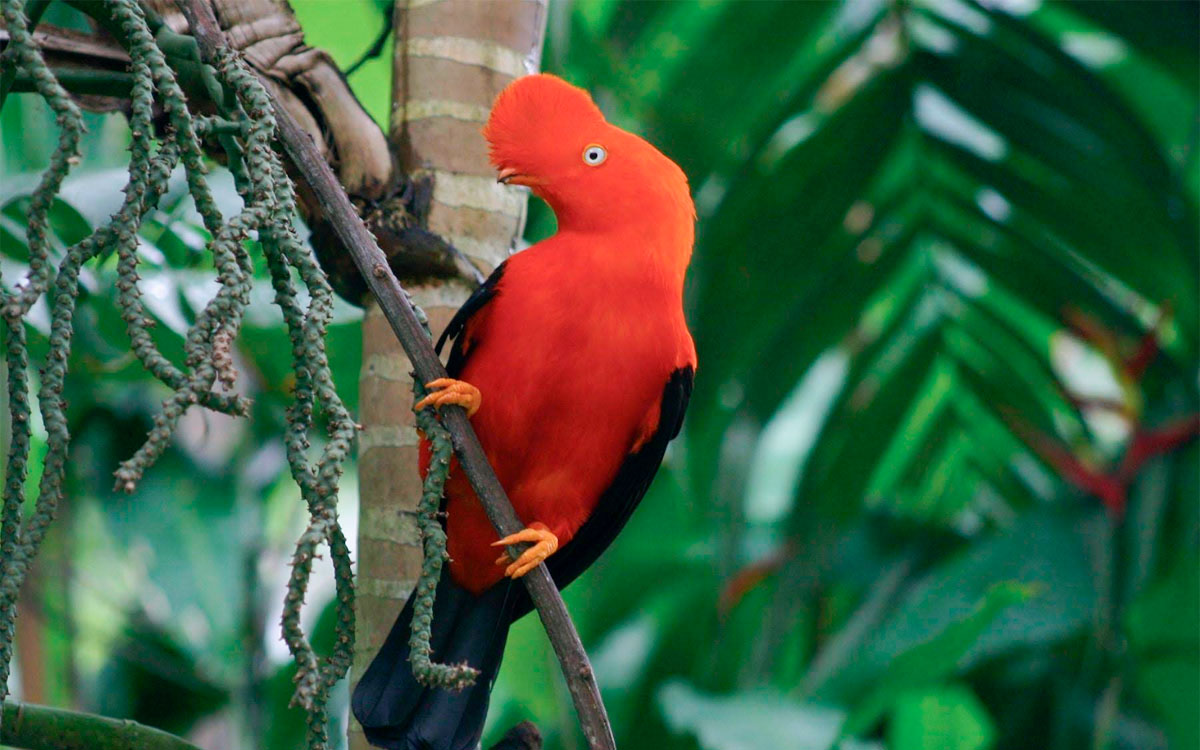
- Andean cock-of-the-rock. It is the national bird of Peru and is usually seen in the cloud forest, during the descent from the Andes to the jungle. The male has a reddish-orange plumage that stands out among the green vegetation. In that same stretch, it is possible to see hummingbirds, trogons, and quetzals.
- Macaws at clay licks. Clay licks are clay cliffs that macaws visit to feed on the soil. They are visited early, from observation posts or on the riverbank, and the spectacle depends on the weather: with rain or low light, birds may take time to arrive or not show up at all. Some lodges in the area also have clay licks frequented by tapirs.
On the other hand, on the Andean descent, before entering the cloud forest, the road crosses the puna. There, the Andean condor can be spotted, a fauna different from that of the jungle. If you want to learn more about this species, you can read The Andean Condor in Peru.
Mammals
SERNANP records nearly 160 species of mammals, although other sources give higher figures. Among the most endemic mammals you can find in this reserve are:
- Giant otter. It is observed in the oxbow lakes (cochas) that form along the riverbanks. Tours are usually done by boat or catamaran, in silence, during the morning.
- Monkeys. There are several species. In the cloud forest, woolly monkeys can be seen, and in the low jungle, spider monkeys, capuchins, and squirrel monkeys appear. On night walks, it is possible to find the night monkey.
- Tapir. It is a shy and difficult animal to see, but it visits certain clay licks to eat clay. Some lodges have observation platforms to see it with little disturbance, usually at dawn or dusk.
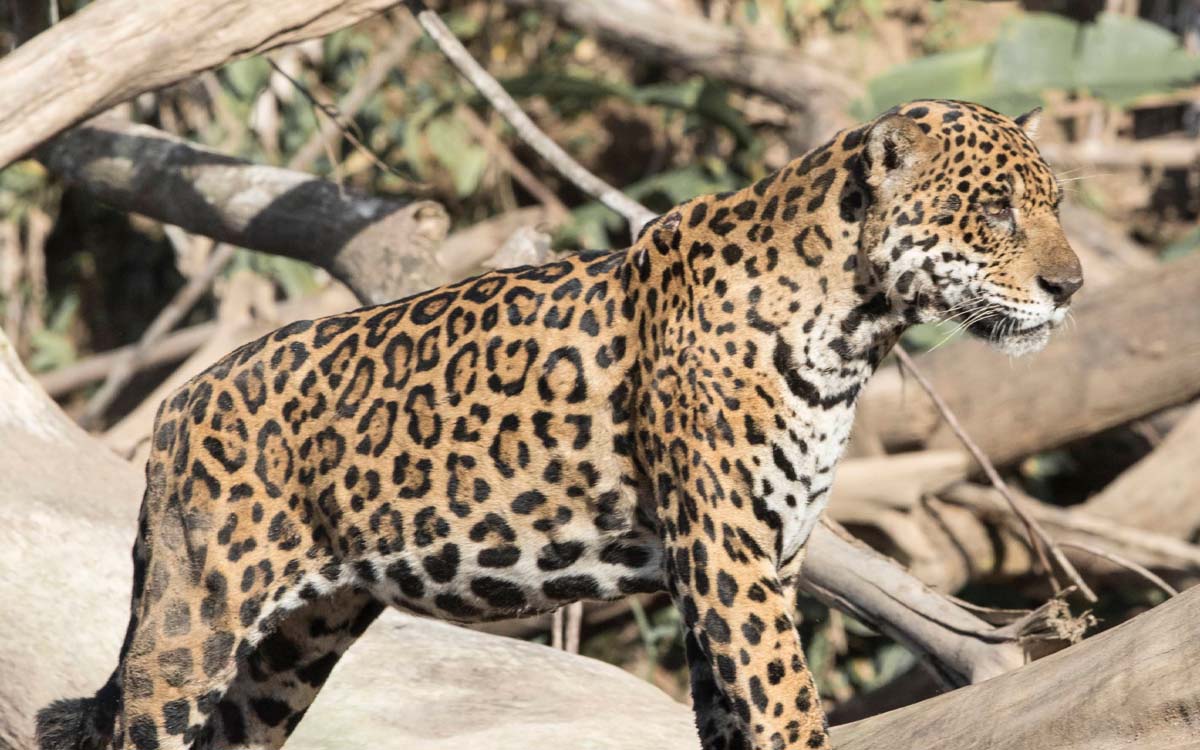
- Jaguar. It is a rare sighting. Some visitors have seen it on the riverbanks, especially after rains or in cool weather, but finding it cannot be counted on. It is better to plan the trip for the overall collection of species and not just for the jaguar.
Reptiles
SERNANP records 3 species of caimans, 6 of turtles, 40 of lizards, and 50 of snakes. The black caiman and the white caiman are frequently seen on the banks and in oxbow lakes, often sunbathing during the day. On night walks, the reflection of flashlight beam in their eyes makes them easier to find.
Insects
Currently, more than 1,300 species of butterflies and hundreds of species of beetles and ants have been recorded. Butterflies are most visible on riverbanks during the day, including the purple ones with blue wings called morpho. At night, spiders, frogs, and nocturnal insects appear.
How to get to Manu from Cusco?
Almost all trips to Manu depart from Cusco. The road descends from the Andes to the jungle in a single day of driving and continues down the river by boat. To enter the reserved zone, it is mandatory to go with an operator authorized by SERNANP. The Cultural Zone is more accessible and can also be organized using public transport to Pilcopata or Atalaya.
The most used route to reach Manu
- Cusco → Paucartambo. The first stretch, about 102 km, crosses dry areas and Andean towns. Along the way, there are frequent stops such as the Huacarpay lagoon, the Ninamarca chullpas, and the bakeries of Oropesa. Paucartambo is a colonial town with an arched bridge.
- Paucartambo → Acjanaco. It is the checkpoint marking the Andean entry to the park, at about 3,500–3,600 meters of altitude. From here the descent begins, with views of the puna and the Manu valleys when there is no fog.
- Acjanaco → cloud forest → Pilcopata and Atalaya. The descent drops nearly 3,000 meters in about 88 km, along a one-lane dirt road. Many tours stop to see the Andean cock-of-the-rock and sleep in a lodge in the cloud forest or in Pilcopata.
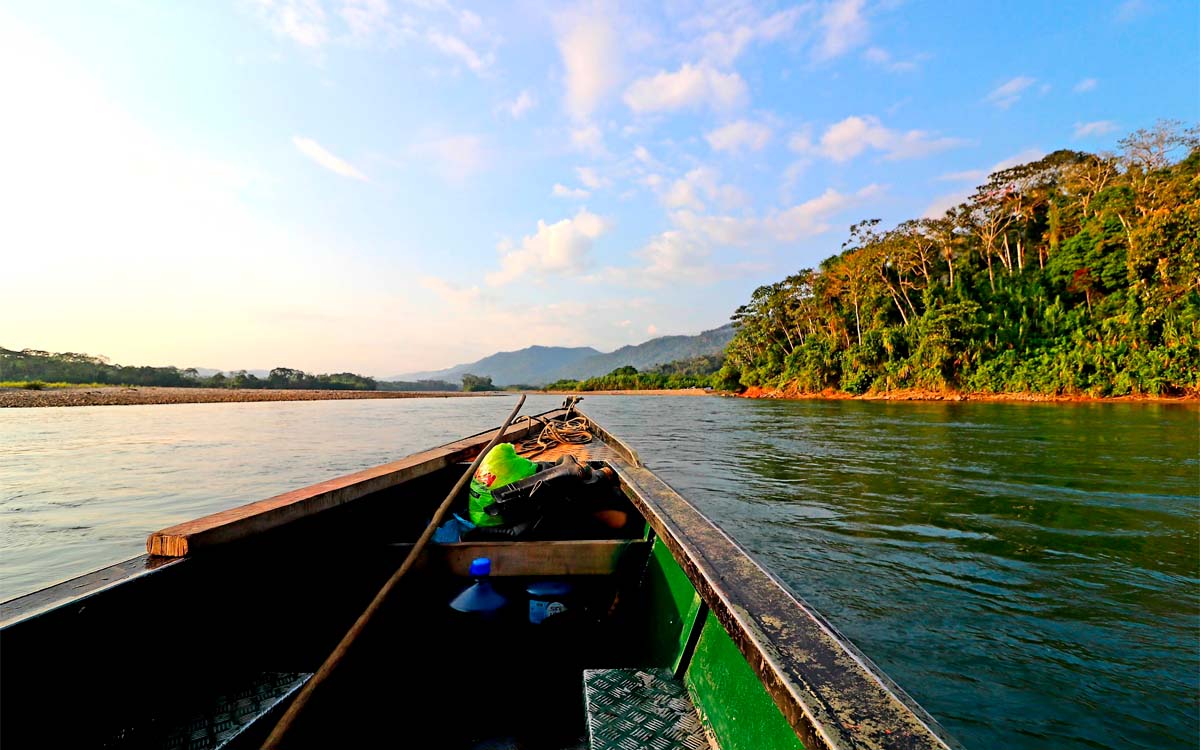
- Atalaya → Alto Madre de Dios River. Atalaya is the port where the boat is taken. Lodges in the Cultural Zone are reached in about 30 to 40 minutes of navigation. To Boca Manu, the gateway to the reserved zone, the boat trip usually takes between 5 and 6 hours.
| Section | Mode | Approximate time |
|---|---|---|
| Cusco → Atalaya | Bus or van | 7 to 9 hours, depending on stops and road conditions |
| Atalaya → Cultural Zone lodges | Boat | 30 to 40 minutes |
| Atalaya → Boca Manu | Boat | 5 to 6 hours |
Alternative from Puerto Maldonado
It can also be reached from Madre de Dios. You travel by road to Boca Colorado and from there by boat down the Madre de Dios River to the Limonal control post, in a trip of several hours. This route is used less and always requires an operator to enter the reserved zone.
Tip for planning your trip: Visiting the Manu Reserve requires dedicating several days to the tour, which generally begins in Cusco. Therefore, you can include this experience before or after exploring other attractions in the region. If you also plan to explore the Sacred Valley, check our guide Cusco to Sacred Valley. And if your trip starts in the Peruvian capital, discover how to organize your route with Lima to Machu Picchu.
Best time to visit Manu
Manu can be visited all year round, but the season influences access, sightings, and how comfortable the trip turns out to be. But it is recommended to visit this reserve during the dry season, between May and October. This is because the rainy season, from November to April, although it has its own advantages, carries more risks for the itinerary.
-
Dry season (May to October)
It is the most recommended season. It rains little, trails are firm, and river levels drop, which concentrates animals near the water. Macaw clay licks have more activity because they depend on dry weather. The descent road and boat trips are also more predictable.
- Pros
• Fewer rainy days and dry trails
• Higher activity at clay licks
• Better access by road and river - Cons
• Higher demand, so booking in advance is advisable
• Some waterways may become inaccessible when the river drops significantly
• Prices and occupancy tend to be higher
- Pros
-
Rainy season (November to April)
Rains are frequent and river levels rise. The heaviest rainfall usually concentrates in late January and February. Some parts of Manu may become inaccessible or closed during the rainiest months. In return, the forest is greener and there are fewer visitors.
- Pros
• More lush vegetation
• High rivers, which facilitate navigation in some stretches
• Fewer tourists and occasionally lower rates - Cons
• Intense downpours and muddy trails
• Higher risk of delays on the road and during transfers
• Harder to see canopy birds, and clay lick activity depends on the weather
- Pros
Comparison table
| Aspect | Dry season | Rainy season |
|---|---|---|
| Rain | Scarce | Frequent; heaviest in January and February |
| River level | Low | High |
| Road and river access | More predictable | Delays or partial closures may occur |
| Trails | Dry | Muddy |
| Macaw clay licks | Higher activity | Weather dependent |
| Vegetation | Less dense | Lush |
| Visitors and prices | Higher demand and prices | Fewer visitors, possible discounts |
| Recommended for | First-time visitors and wildlife watching | Those seeking tranquility and open to unexpected changes |
How to combine Manu with Cusco and Machu Picchu?
The dry season in Manu coincides with the months of lowest rainfall in Cusco, especially between May and September, which favors planning an itinerary that combines nature, culture, and history. However, conditions can vary depending on the destination, Cusco Climate presents differences throughout the year, while the Best Time to Visit Machu Picchu depends on factors such as rain, visibility, and visitor influx. Keeping these particularities in mind will help you choose the most suitable dates to explore all three destinations.
Practical tips before going
Manu is a remote destination and requires somewhat more planning than other spots in southern Peru. These are the aspects that are best to resolve before booking.
Health: Vaccines, repellent and malaria
Consult a doctor or a travelers’ vaccination center several weeks in advance. Recommendations depend on your history, your age, and the exact itinerary.
- Yellow fever. The CDC recommends the vaccine for travelers 9 months and older going to areas below 2,300 meters in Madre de Dios and designated areas of Cusco. It does not recommend it for itineraries limited to the city of Cusco or Machu Picchu. Some centers advise applying it at least 10 days before the trip and carrying the international vaccination certificate.
- Malaria. The CDC recommends prescription preventive medication for certain areas of Peru. There is no risk above 2,500 meters, such as in Cusco or Machu Picchu, but there is in the low jungle. Your doctor will decide if you need it depending on whether you are going to the Cultural Zone or the reserved zone.
- Other vaccines. The CDC also lists other vaccines for travelers to Peru, such as hepatitis A and typhoid fever, in addition to having the MMR (measles, mumps, and rubella) vaccine up to date.
- Repellent. Use it from sunset to morning, and complement with long sleeves and long pants. For clothing and luggage, you can review Jungle Trip? What Clothes to Bring to the Peruvian Amazon.
- Medical attention. Health services in the area are limited and the closest hospital to a lodge can be several hours away by river and road. Carry a basic first aid kit and your personal medications.
Altitude and acclimatization when starting in Cusco
Most trips to Manu depart from Cusco, which is at about 3,300–3,400 meters in altitude. If you arrive from the coast, it is advisable to arrive at least one or two days before the tour to acclimate. Many tours leave early in the morning, so it is better not to arrive on the same night. During the descent toward the jungle, the altitude drops significantly, something that usually relieves symptoms. For more information, you can read What is the Altitude of Machu Picchu and the Inca Trail?. If you have heart or respiratory conditions, or are pregnant, consult your doctor before traveling.
Approximate budget and permits
In Manu, tourist services can only be provided through operators with rights granted by SERNANP. Therefore, the permit and entry are managed with the tour. The entry fee to the park is usually included in the package.
These are referential ranges for tours from Cusco, according to published offers:
| Type of trip | Duration | Reference price per person |
|---|---|---|
| Cultural Zone | 2 to 4 days | From about US$ 680 for 4 days |
| Reserved zone | 6 to 7 days | Between US$ 950 and US$ 2,000 |
These figures change with the operator, season, group size, and accommodation. The reserved zone is more expensive and farther away, and usually requires a minimum of two travelers. It is advisable to book several weeks in advance, especially in the dry season.
Safety and agency selection
- Verify that the operator is authorized. SERNANP’s “Visita Áreas Naturales” platform allows checking authorized operators.
- Book directly with the operator when possible. Some agencies resell tours and charge a commission, without you knowing who will execute the trip.
- Ask for details. Ask what the price includes: accommodation, meals, guide (and their language), activities, entry fee, and additional charges.
- Respect local rules. Do not wander away from the group or try to approach isolated indigenous communities. Always follow the guide’s instructions.
- More on reliable agencies. If you are looking for general criteria for choosing agencies in the region, you can consult Is Machu Picchu Safe?.
Frequently asked questions (FAQ)
- Can you go to Manu on your own?
Only in part. You can get to Pilcopata and Atalaya on your own, in the Cultural Zone, using public transport from Cusco. However, inside the park, tourist services can only be provided through operators with rights granted by SERNANP, and to enter the reserved zone it is mandatory to go with an authorized operator. - How many days do I need to visit Manu?
It depends on the zone. Programs to the Cultural Zone usually last between 2 and 4 days, although some reach 5. For the reserved zone, between 5 and 7 days are recommended, because a good part of the time goes into transfers: the road journey from Cusco to Atalaya takes between 7 and 9 hours, and then there are several hours by boat. - Is it safe to travel to Manu?
It is a destination visited with authorized operators and guides, which reduces logistical risks. The main precautions are health and isolation: mosquitoes, weather, and medical services limited to several hours away. Consult a doctor about vaccines and malaria before traveling, and always follow the guide’s instructions. - Is there signal or internet in Manu?
It is limited. Some lodges in the Cultural Zone, in the Pilcopata and Atalaya area, offer Wi-Fi and phone signal. Inside the park, however, there is little coverage and no internet. Some accommodations run on solar panels, so electricity and hot water may be available only at certain times. - Is it suitable for children?
Yes, but it depends on the tour. Some Cultural Zone programs accept young children, while longer trips that include the reserved zone usually require a minimum age of 8 years. Long road and boat journeys can be tough for little ones, and it is advisable to consult with a pediatrician regarding vaccines and malaria prevention. For more planning ideas, you can read the Cusco Family Guide. - What is the best time to go to Manu?
The dry season, from May to October, is the most recommended: there is less rain, trails are firmer, and macaw clay licks have higher activity. In the rainy season, from November to April, the forest is greener and there are fewer visitors, but risks of delays and partial closures increase.
