

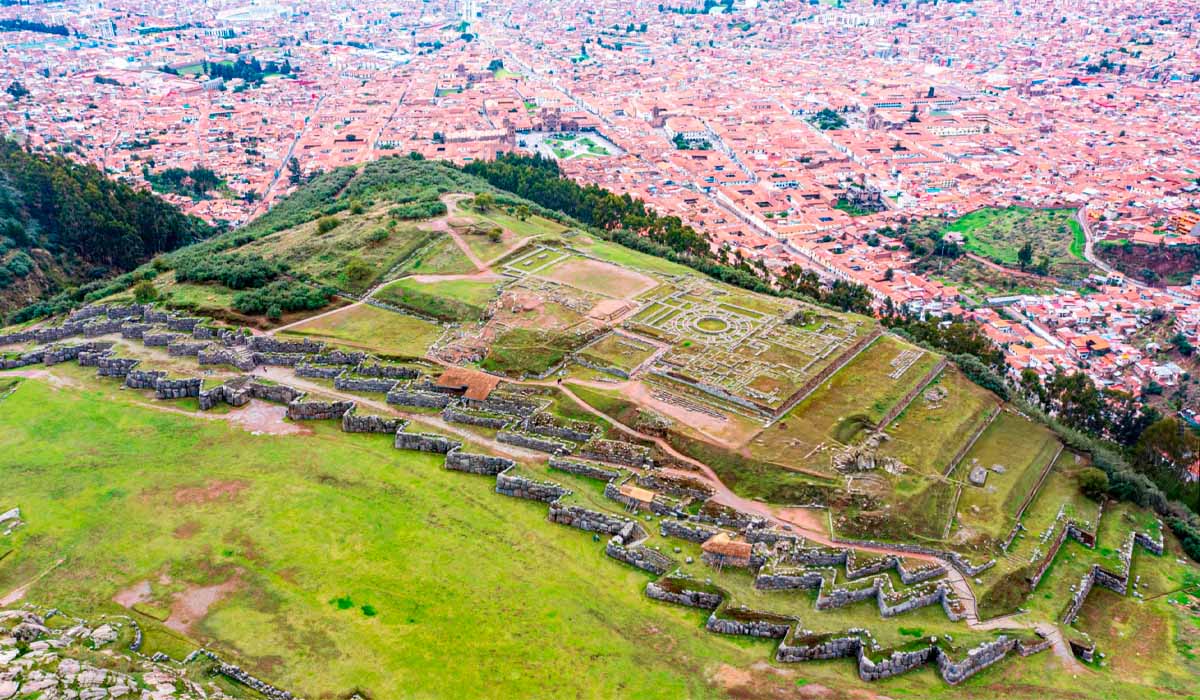
A few kilometers from the historic center of Cusco, on a hill that overlooks the entire city, stands one of the most impressive archaeological complexes of the Inca world. Sacsayhuaman was built between the 14th and 15th centuries, and its importance within the Empire was only surpassed by the city of Cusco itself. So much so, that it received the official title of “The House of the Sun of Hanan Qosqo”, the upper Cusco.
What stands out the most upon arrival is not only the size of the walls, but the way each stone block blends with the topography of the land. The Inca stonemasons did not work against the landscape: they incorporated it. The result is a fortress where the rock and human intervention joined to create this ancient archaeological complex.
History: from imperial fortress to World Heritage
To start, archaeological studies reveal that, long before the Inca expansion, the territory was already inhabited by the Killke culture. It was the Inca Pachacutec who promoted the construction of the fortress around 1350 AD, and being finally finished by his grandson, the ruler Huayna Capac. Between one and the other, more than 90 years of continuous work passed, with more than 20,000 men operating under the mita system, the community work organized by the Inca State. It is, still today, one of the greatest demonstrations of organization and technical capacity of the Andean Empire.
With the arrival of the Spanish, Sacsayhuaman became a battlefield and the heart of the Inca resistance. When the fighting ended, the site was systematically dismantled: its stone blocks were reused as building material for the colonial buildings of Cusco, including the Cathedral.
Over time, the fortress fell into neglect and its stones continued to be extracted by local residents to build their houses. That deterioration stopped in 1983, when the city of Cusco (including the walls of Sacsayhuaman) was declared a World Heritage Site by UNESCO.
What does Sacsayhuaman mean?
The name comes from Quechua and combines two words: “Sacsay”, which means satisfied, and “huaman”, which means hawk. Sacsayhuaman is, literally, the satisfied hawk. A guardian that has been watching the city from above for centuries, and that remains one of the most powerful images of all that the Inca Empire was.
Religious and astronomical importance
Sacsayhuaman was not only considered a fortress. Its open areas were the main stage for large celebrations, with ceremonies and offerings that marked every winter solstice. It was also an open-air astronomical observatory: by following the position of the Sun during the solstices and equinoxes, the wise Incas built their calendar, determined the start of the dry or rainy season, and set the exact dates for planting and harvesting. A knowledge that was not only spiritual, but completely practical: the feeding of the entire Empire depended on it.
Architecture: a mystery that has no simple explanation
The chronicler Inca Garcilaso de la Vega wrote that the scale of Sacsayhuaman even exceeded Machu Picchu. Walking through the site, it is easy to understand why.
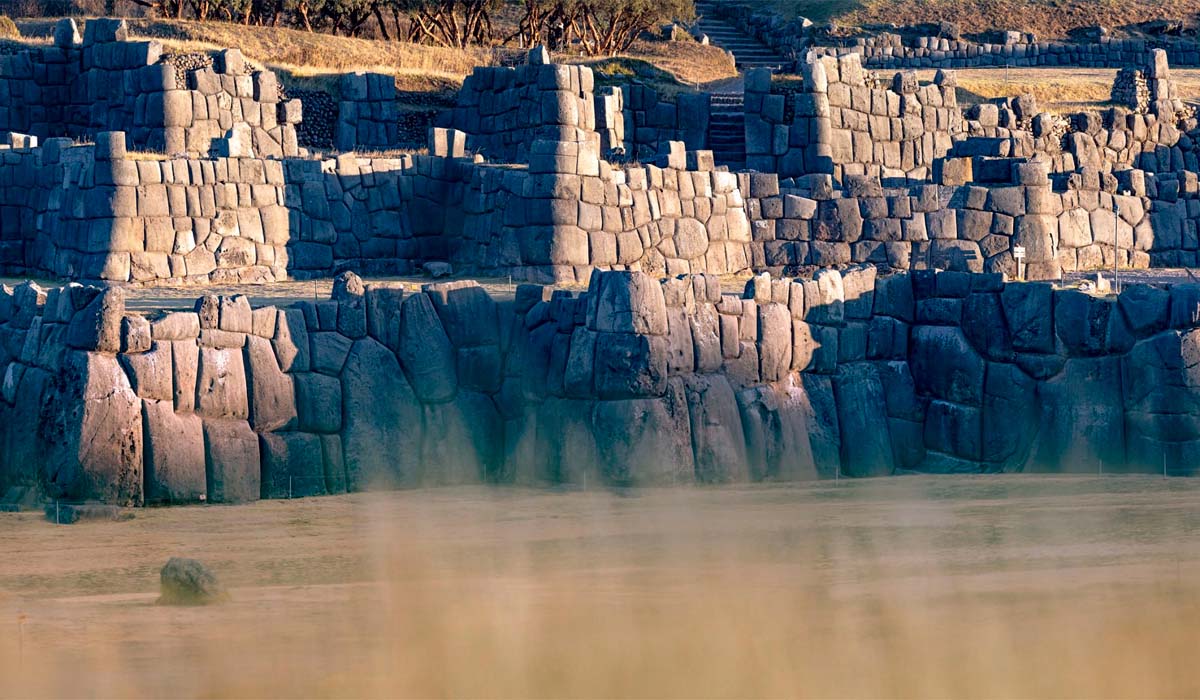
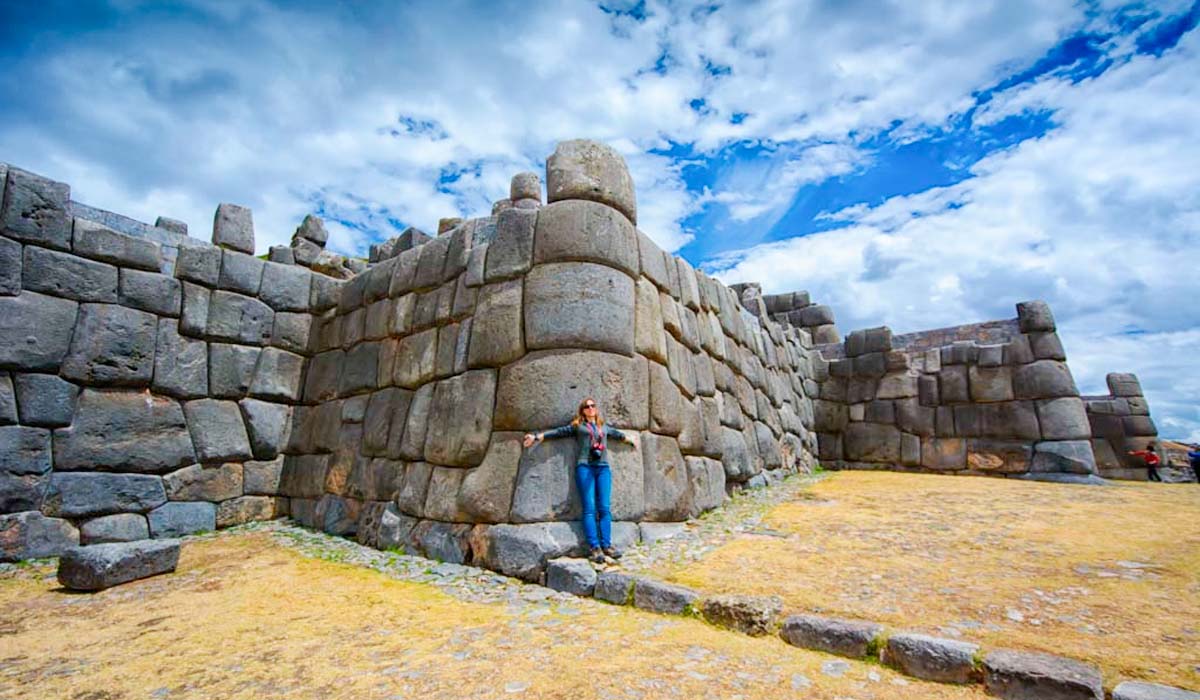
The retaining walls are arranged in a zigzag, built with carved stone blocks that reach five meters in height and weigh 125 tons. Assembled without mortar, with a precision that leaves no gaps between the pieces. How they were cut, how they were transported, and how they were placed in their exact spot remains a question with no final answer.
Beyond the walls, the complex includes ceremonial altars, tower bases, water systems, and stepped terraces, all integrated into the landscape with a geometric consistency that impresses both the architect and the visitor. Likewise, Sacsayhuaman worked at the same time as a military shield, a religious center, and an astronomical observatory. That combination, in a single place and built on that scale, makes it one of the most extraordinary sites left by the Inca Empire.
Sacred temple or military fortress?
The answer is that it was both things, but not at the same time.
In its origin, Sacsayhuamán was created as a religious sanctuary dedicated to Illapa, the god of thunder, and to other gods of the Inca worldview. Its function was ceremonial, not military. It was the Spanish conquest that changed that view: when the site became a battlefield during the Inca resistance, the conquerors saw it from a purely tactical perspective and called it a fortress. The name remained, although the original story was different.
What will you find in Sacsayhuamán?
The archaeological park is bigger than it looks from the outside, and there is a lot to discover inside. This is what you will find when walking through it:
The towers
In the highest part of the zigzag walls there were three towers placed in a straight line on the hill. In that area there was a water supply system, and even today remains of the old aqueducts can be seen. The buildings did not survive the colony, but Dr. Luis E. Valcárcel managed to rescue their foundations. Each one has its own name:
- Muyucmarca: The most striking of the three. Its name means something like “round population” in Quechua, and its bases confirm it: a perfect cylindrical design formed by three concentric circles inside an irregular square.
- Paucarmarca: Its foundations are still covered with dirt. It is estimated that it had a quadrangular shape and would have served for sky observation.
- Sallaqmarca: Right next to the Muyucmarca. Its name translates as “population in a rough or stony place”, a quite literal description of the land where it sits.
The rooms and the defensive walls
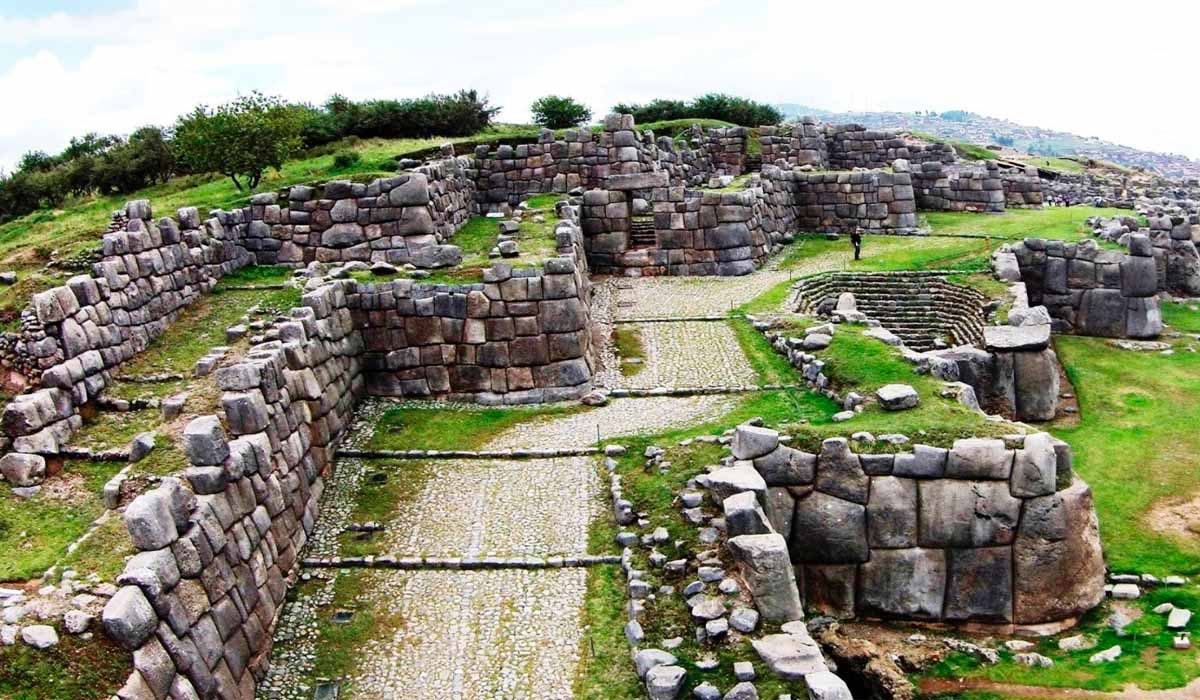
South of the towers, crowning the top, there is a set of long and narrow rooms connected to each other by trapezoidal doors, with walls formed by stone blocks of irregular shapes, but with perfectly polished edges. And then there are the bastions: three stepped platforms in the shape of saw teeth, built with huge limestone blocks that fit together with a precision that still puzzles modern engineers.
The doors and the Rodadero
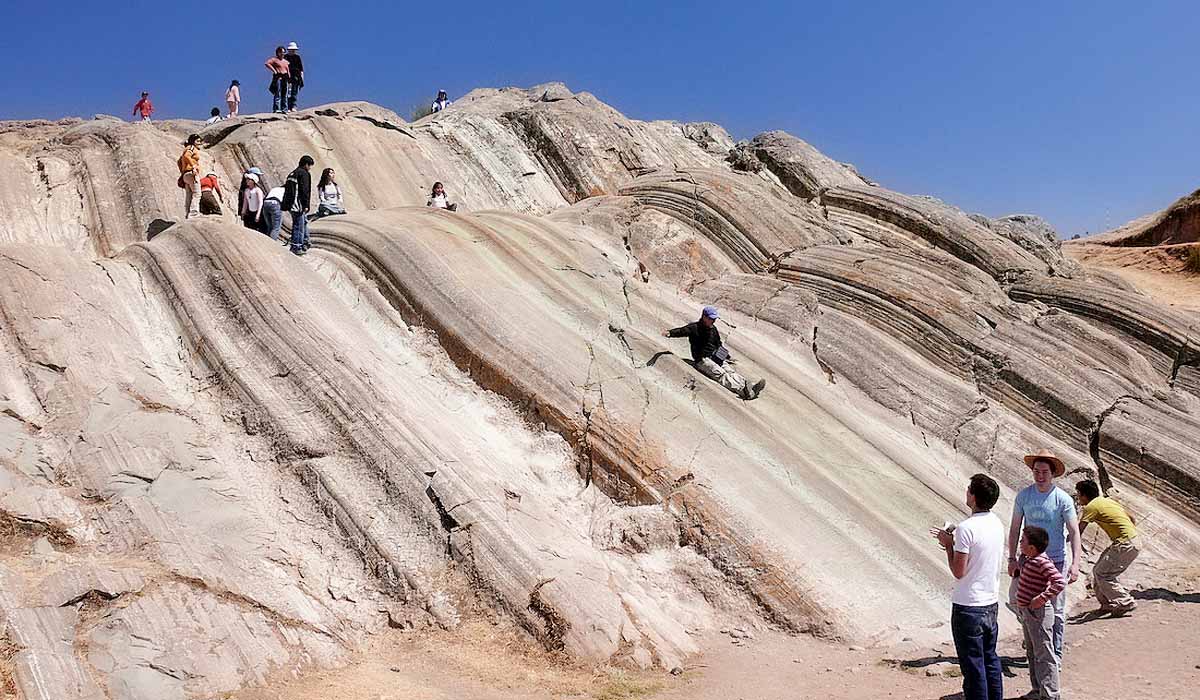
To enter the tower area there were three trapezoidal doors: T’iopunku, Ajawanapunku and Wiracochapunku. Further ahead, the terrain gives a completely natural surprise: the Rodadero, also called Suchuna. It is a diorite rock formation of volcanic origin that, over time, developed grooves and curves on its surface that look like stone-carved slides. Children and more than one adult cannot resist sliding on its surface.
The Throne of the Inca and the Chincanas
In the eastern part of the hill is the K’usilluc Jink’ian, known as the “Throne of the Inca”, whose Quechua name translates as “where the monkey stands up”. They are a series of steps carved in diorite rock from where you have the best panoramic view of the whole complex.
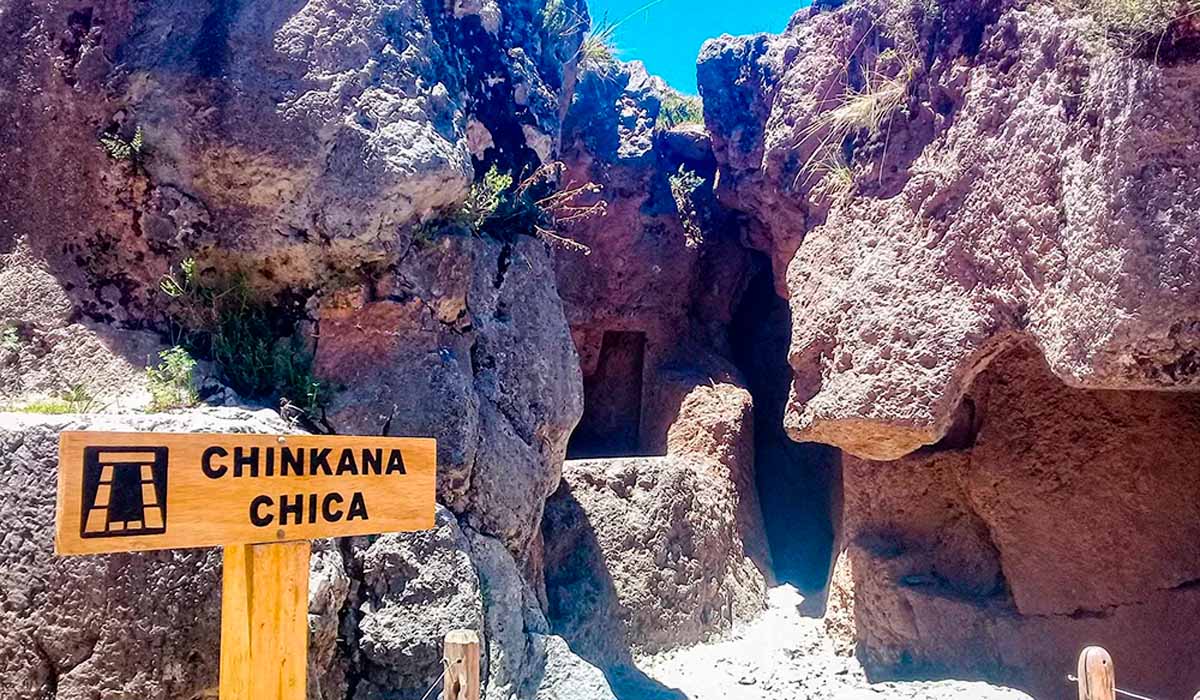
And to close the tour, the Chincanas: underground tunnels that remain one of the great mysteries of the place. The smallest one is accessible and can be explored. The main one, further north, is flooded and cannot be walked through. But what intrigues the most is not its current state, but its purpose. There are legends passed down from generation to generation, and stories from chroniclers like the Inca Garcilaso de la Vega, that suggest that these passages connected Sacsayhuaman with the Qoricancha temple and other key points of the Inca city, which would explain how troops could appear and disappear from one place to another without being seen. The mystery, to this day, remains not entirely solved.
Where is it and how to get there?
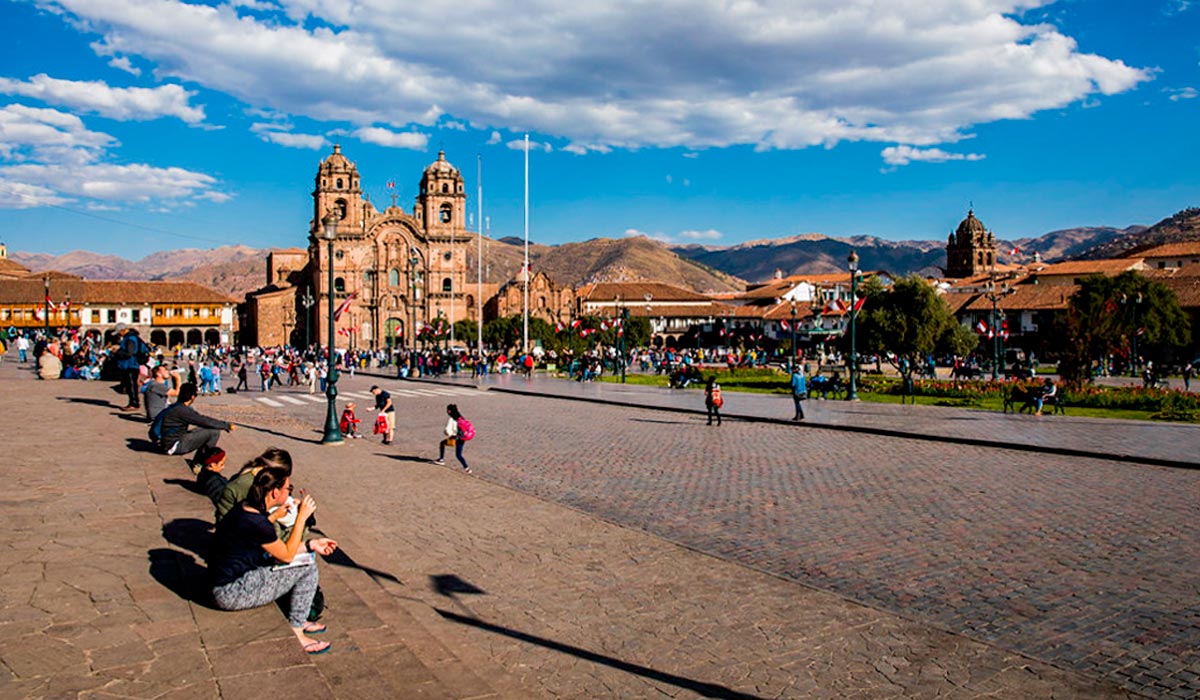
Sacsayhuaman is just north of the Main Square of Cusco, so it is not far, although walking there takes some effort. The most comfortable option is to go on an organized City Tour Cusco, which takes you directly and usually includes a guide.
There are several ways to go up, depending on the time and energy you have:
- On foot: The most authentic option. It takes between 30 and 40 minutes walking up cobblestone streets and stairs that are part of the original Inca trail. Tiring but worth it.
- By taxi: Fast and direct, about 10 minutes from the center. Just remember to agree on the price before getting in.
- By tourist bus: There are units that leave from the center and connect with the fortress and other nearby sites. A good option if you want to go comfortably and see the landscape along the way.
- On an organized tour: The most complete alternative. We at BoletoPeru operate City Tours that include transport, an expert guide, and a visit to nearby complexes: Qenqo, Puca Pucara and Tambomachay. Ideal if you want to understand the context of everything you see.
Hours and tickets
Sacsayhuaman is open every day of the week, from 7:00 a. m. to 5:30 p. m. To enter you need the Cusco Tourist Ticket: foreign visitors pay S/ 130 (about 38 dollars) and nationals S/ 70 (about 20 dollars). It is worth knowing that this same ticket gives access to 16 tourist sites in total and is valid for 10 days, so, if you plan to visit other places in the Sacred Valley, it goes a long way.
The weather
The weather in Cusco changes a lot depending on the time of the year. From December to March, rains are common, while between May and August the weather is drier and more stable. But no matter when you go, keep in mind that Sacsayhuaman is 3,700 meters above sea level, which means that the cold can surprise you even on the sunniest days. Always bring an extra layer.
Facts you probably did not know
- Walking through the site carefully reveals things that do not appear in all guides:
- Some stone blocks reach 9 meters in height. Seeing them up close completely changes the perspective on how they were built.
- The construction technique is cyclopean: huge and irregular stones fitted together without mortar with amazing precision.
- The “suchunas” or slides, those rock formations with natural curves that look like stone slides, are one of the favorite points of the tour, especially for the little ones.
- What can be seen today is only between 20% and 40% of the original structure. The rest was taken apart during the Spanish colony to use the stones in other buildings.
- Archaeological studies show that there is still a significant part of the complex buried underground, still unexcavated.
Cultural events in Sacsayhuaman
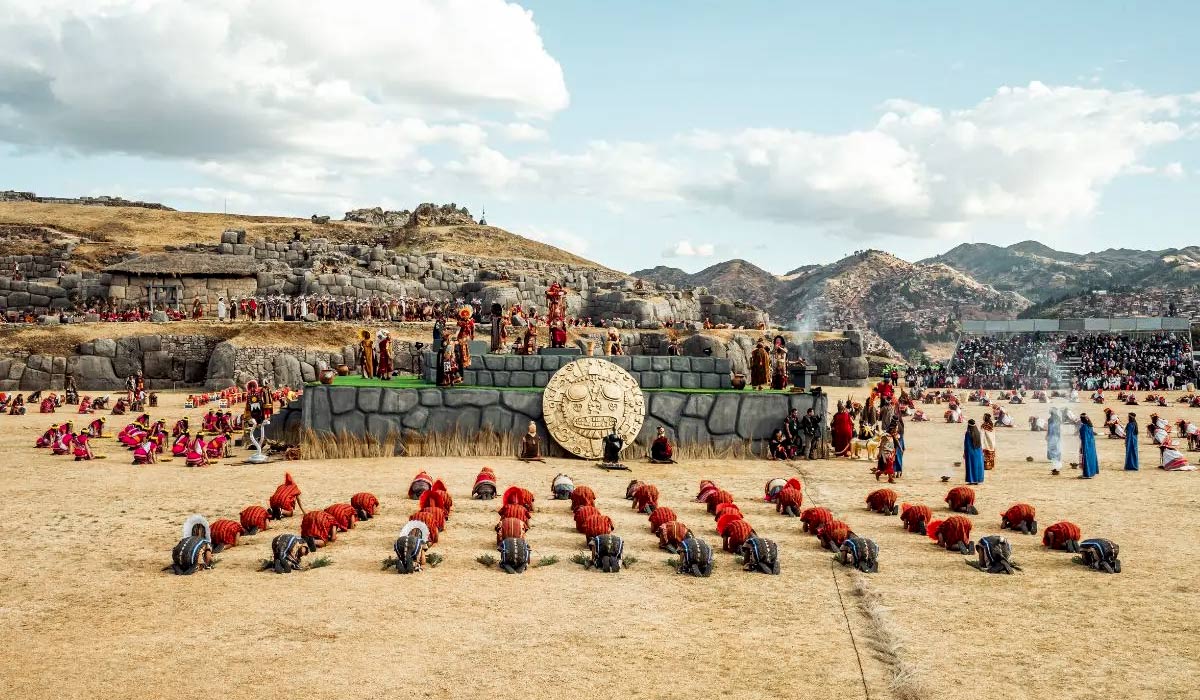
Currently, Inca performances are held on the esplanade of the Sacsayhuaman fortress. The main and most important one is:
The Inti Raymi
The Sacsayhuaman esplanade is not just an archaeological site: every 24th it becomes the stage for the Inti Raymi, the great Andean celebration in honor of the Sun god. It was the most important festival of the Tahuantinsuyo, and today it is still celebrated with a performance that attracts thousands of visitors from all over the world. If your trip matches that date, it is an experience that has no comparison.
What is not allowed inside the site
Sacsayhuaman is a World Heritage Site, and there are basic rules that must be respected to preserve it:
- Do not eat inside the architectural areas.
- Do not leave trash or change the natural environment of the complex.
- Do not camp or stay to sleep in the place.
- Do not enter on horseback or by bicycle.
These are simple rules that help the site stay standing for those who come later.
