

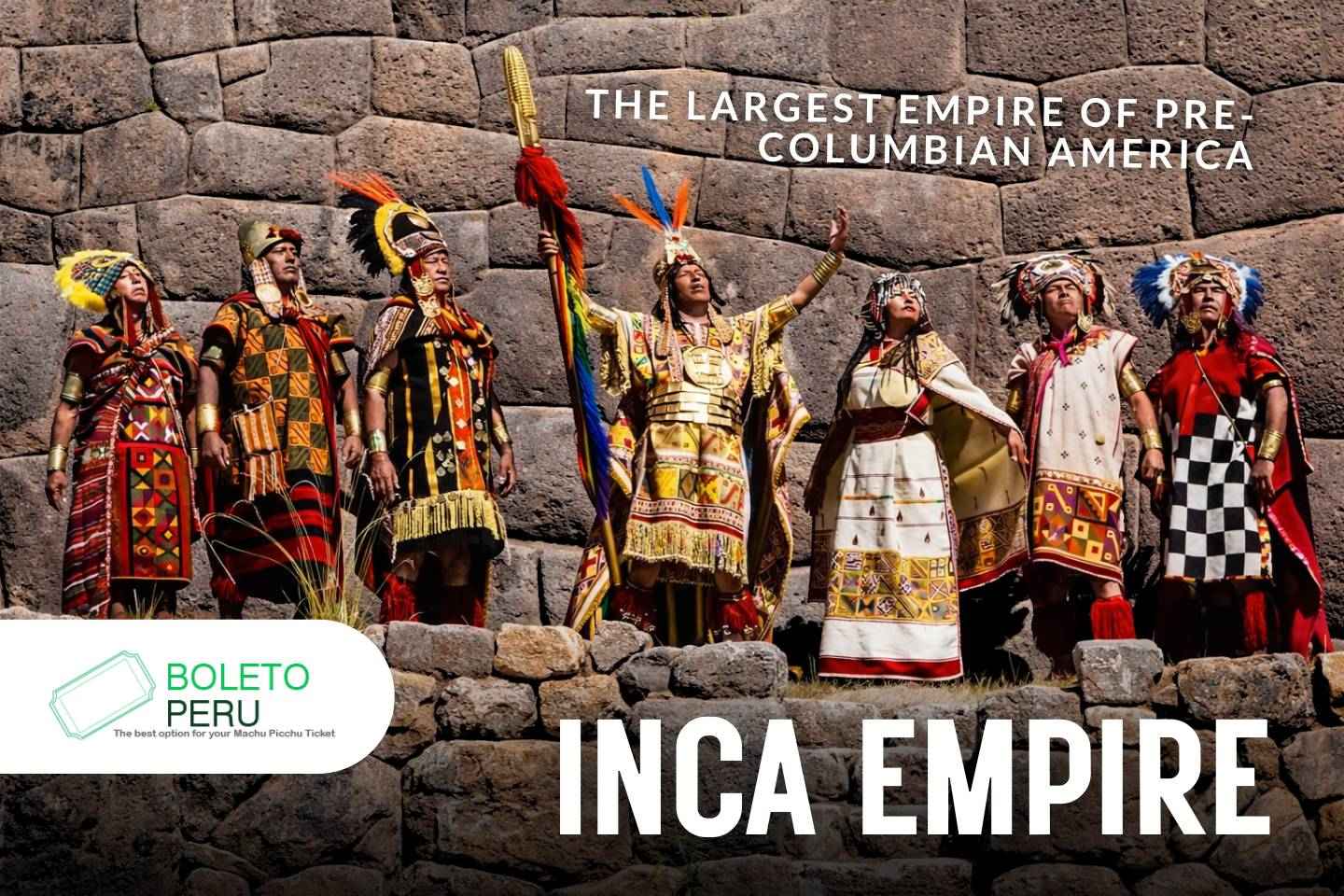
In a relatively short period of time, barely a century, the Incas built not only the most important empire of pre-Columbian America, but also one of the largest, most organized, and complex civilizations in history. Their vast and imposing domain covered geographic contrasts, stretching from the frozen peaks of the mountain range and the dry coastal deserts, to the thick Amazon jungle, having the imperial city of Cusco as its great center of power.
Before the consolidation of the Incas in the central Andes, whose first settlements date back to approximately 1000 AD, this rugged area was home to a huge variety of different and often hostile cultures. The Inca conquerors not only managed to unify the entire region under the same social system and an official language (Quechua), but also showed a brilliant political strategy by absorbing and integrating the best knowledge and advances of the people they took over.
Throughout this article, we will explore in depth the secrets of their deep religious devotion, the workings of their advanced civilization, and the permanent architectural legacy they left carved in the sacred mountains.
The Inca culture and its bold foundations
At its highest peak (between the 15th and 16th centuries), the Inca Empire covered thousands of square kilometers, stretching impressively along the entire Andes mountain range. The Incas proved to be very bold engineers, building spectacular stone citadels on the most inaccessible mountain tops. They developed elaborate agricultural terraces (“andenes”) and kept their crops alive through advanced systems of canals and drainage.
Their social structure was extremely rigid and shaped like a pyramid, where the emperor (the “Sapa Inca”) enjoyed absolute power and was worshiped directly as a god. In their worldview, they deeply worshiped and respected the elements that gave life: the sun, the moon, mother earth (“Pachamama“) and the sacred mountains (“Apus”), also considering totemic animals like the Andean condor and the puma as divine.
History of the Inca civilization
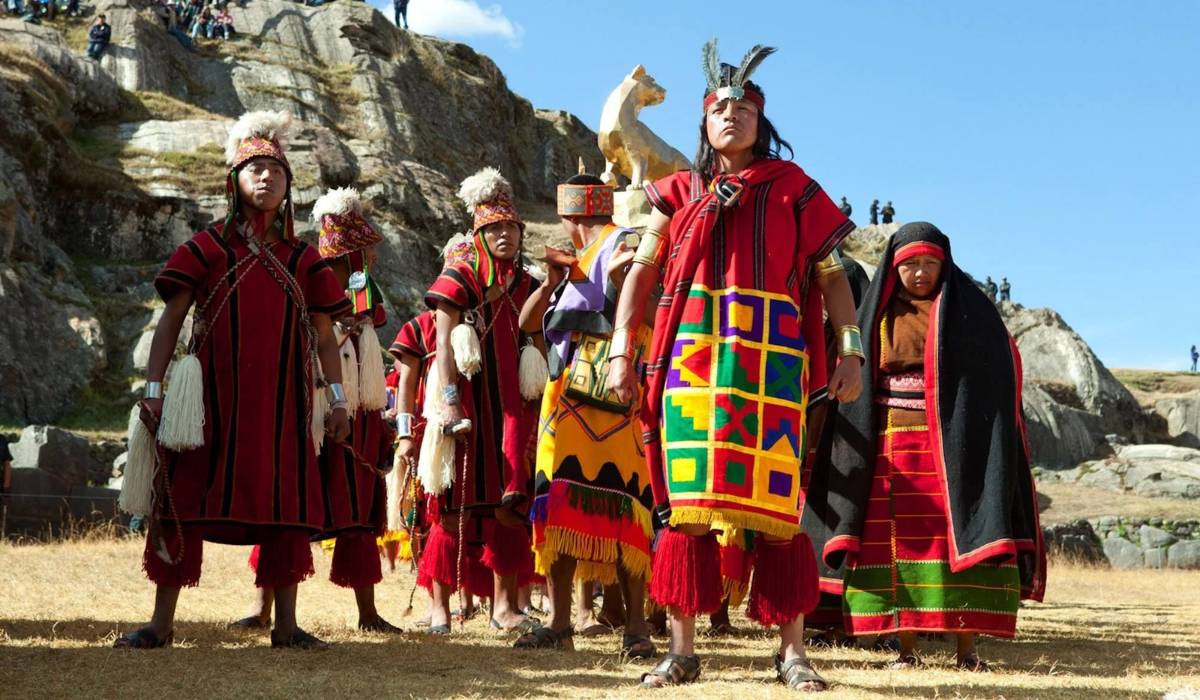
Historians estimate that the Incas arrived in the dry valley where they would later establish their great capital, the city of Cusco, around the year 1100. Initially, the region presented many challenges due to the lack of rain, which created constant fights with other groups for control of fertile lands. Gradually, the Incas expanded their domain by conquering neighboring communities until taking total control of the valley around the year 1300.
The true imperial jump happened in 1438 with the rise of Pachacutec (“Pachacuti Inca Yupanqui”), the ninth emperor. Under his leadership, a vast and unstoppable territorial expansion began. “Pachacútec” established Quechua as the official language for government administration and, around 1450, ordered the construction of the majestic citadel of Machu Picchu.
In 1471, he passed power to his son, “Túpac Inca Yupanqui” (“Topa Inca”), under whose command the empire reached an unprecedented size, ruling about 12 million people who spoke more than 30 different languages. To maintain control, they decreed that conquered peoples had to serve in the army and build a vast infrastructure, highlighting the extraordinary network of the Inca Trail (“Qhapaq Ñan”).
The Qhapaq Ñan
The roads were the crucial gear for the ambitious unification program of the emperor Pachacutec. Only during his reign, the Incas managed to build about 4,000 kilometers of firmly linked stone roads, some of which crossed the breathtaking altitude of 5,000 meters. This impressive network of royal roads, which measured about one meter wide in the mountains, managed to connect the four great regions of the empire (Tahuantinsuyo), from Quito in Ecuador, passing through La Paz in Bolivia and Santiago in Chile, until reaching Tucuman in Argentina.
The legendary Inca Trail to Machu Picchu
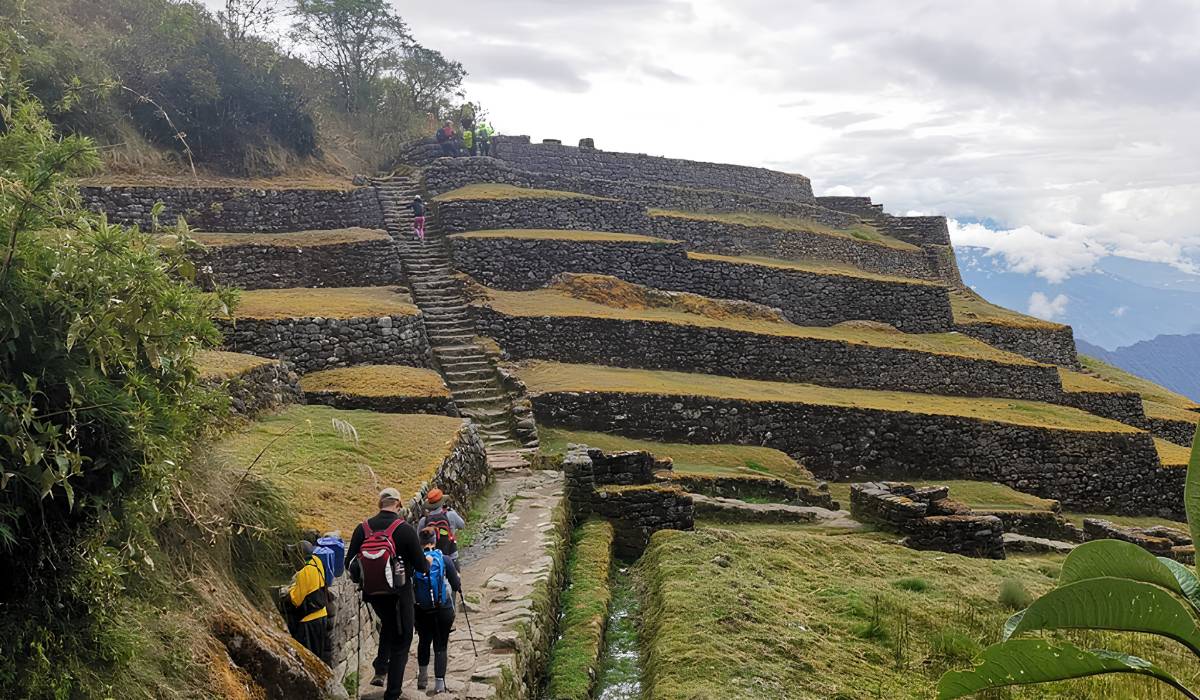
The stretch that we know commercially today as the Inca Trail in Peru is only a small fraction of the impressive 23,000 kilometers of roads built in South America, but it has become the most famous hiking route in the country and, possibly, in the whole continent.
The classic expedition traditionally starts at kilometer 82 (or in the Qorihuayrachina sector at kilometer 88) of the railroad to Quillabamba, requiring 3 to 4 days of tiring walking. The route shows an amazing variety of altitudes and ecosystems, forcing travelers to climb from the valleys to areas of extreme high altitude, such as the feared Warmiwañusca pass (4,215 meters). All this huge physical and mental challenge ends with the maximum reward: a magical and exclusive entry to Machu Picchu crossing the legendary Inti Punku at sunrise.
Inca religion and the Andean worldview
The Inca religion was deeply integrating; they worshiped previous ancient cultures like the Wari and the Tiwanaku, considering Lake Titicaca in Puno as the sacred place of the world’s creation. Their supreme gods were Inti (the Sun god) and Mama Quilla (the Moon goddess), who were worshiped in dazzling gold sites like the Coricancha in Cusco, under the direction of the High Priest.
- The cycle of life and the sky: They firmly believed in the “pachakuti”, a cycle of death and new life, guiding their farming rituals through the astronomical observation of the stars.
- The Huacas: Mountains, springs, and unusual rock formations were considered “huacas” (sacred places) with their own life.
- Ancestor worship: Honoring the dead was vital. The mummies of the rulers were preserved, fed, and consulted, offering them precious objects and sacrifices. To show their power, the Incas forced conquered peoples to adopt this religion and sent their sacred objects to Cusco.
The splendor of the Sun Worship
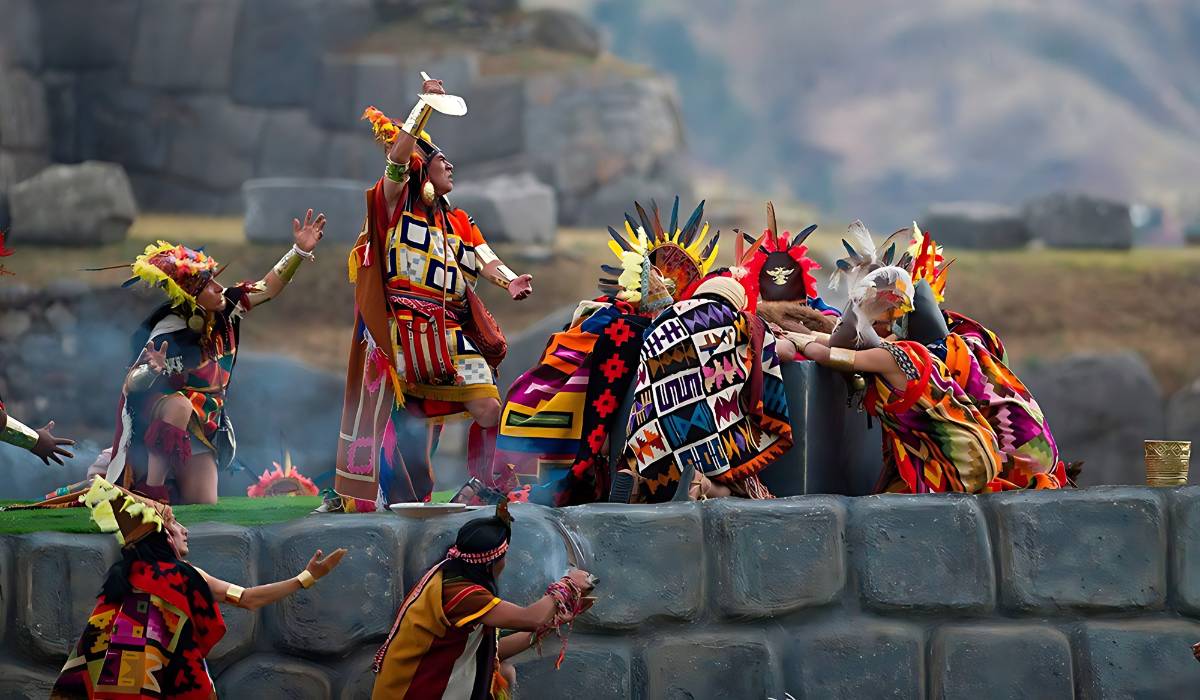
As the god that fed the earth and guaranteed the harvests, the god Inti occupied the center of daily devotion. The emperor, in his role as the direct son of the Sun, was in charge of making the main offerings during the State religious ceremonies.
- The Inti Raymi: The “Festival of the Sun God” was celebrated every winter solstice (June 21 in the original calendar). The mummies of the nobles were taken to the main square to witness the lavish celebrations. Today, this grand celebration is recreated every June 24 at the Sacsayhuamán esplanade.
- Offerings and sacrifices: While animal sacrifice was a daily practice, human sacrifice (the “Capacocha”) was strictly reserved for occasions of extreme gravity or state importance.
- Divination: The most important decisions of the empire were made by consulting the oracles. The high priest read the future and diagnosed diseases by observing fire, coca leaves, the movement of certain insects, or the drinking of sacred brews.
The Inca Peak and the Start of the Fracture
The reign of the first eight Inca rulers, which spanned from the 12th century to the early 15th century, kept the empire at a relatively manageable size. However, everything changed when a growing thirst for territorial expansion brought the neighboring Chanca tribe to the very gates of Cusco around 1438. Faced with panic, the Inca Viracocha fled believing his kingdom was lost; however, his brave son Pachacutec took command, regrouped the imperial army, and, in a desperate and bloody battle, decisively defeated the invaders.
Encouraged by this historic victory, Pachacútec started the first great wave of military expansion, conquering much of the central Andes. During the next 25 years, the empire grew until it reached the current border between Ecuador and Colombia. It was precisely during this glorious period of war and economic success that the most fabulous citadels were built on the mountain tops, including the mythical wonder of Machu Picchu.
However, the fate of the empire would take a tragic turn. When European explorers discovered the New World, deadly diseases like smallpox spread quickly from Central America toward the south. In 1527, the eleventh Inca, Huayna Cápac, died from one of these epidemics. Before dying, the emperor made the strategic mistake of dividing his empire: he left the northern region (Quito) to his son Atahualpa, and gave Cusco and the south to Huáscar, the legitimate heir of imperial blood. This decision immediately started a ruthless civil war that marked the beginning of the slow and painful decline of the “Tawantinsuyo“.
The Fall of the Empire to the Spanish Conquest
Around 1526, the conqueror Francisco Pizarro set sail from Panama heading south, soon discovering the rich coastal settlements that belonged to the Incas. After traveling back to Spain to get official funding and recruit armed men, Pizarro landed again on the Ecuadorian coasts and began a relentless march by land toward the heart of the Andes. Finally, the Spanish expedition reached the city of Cajamarca in 1532, matching exactly the moment when Atahualpa had just defeated his half-brother Huáscar.
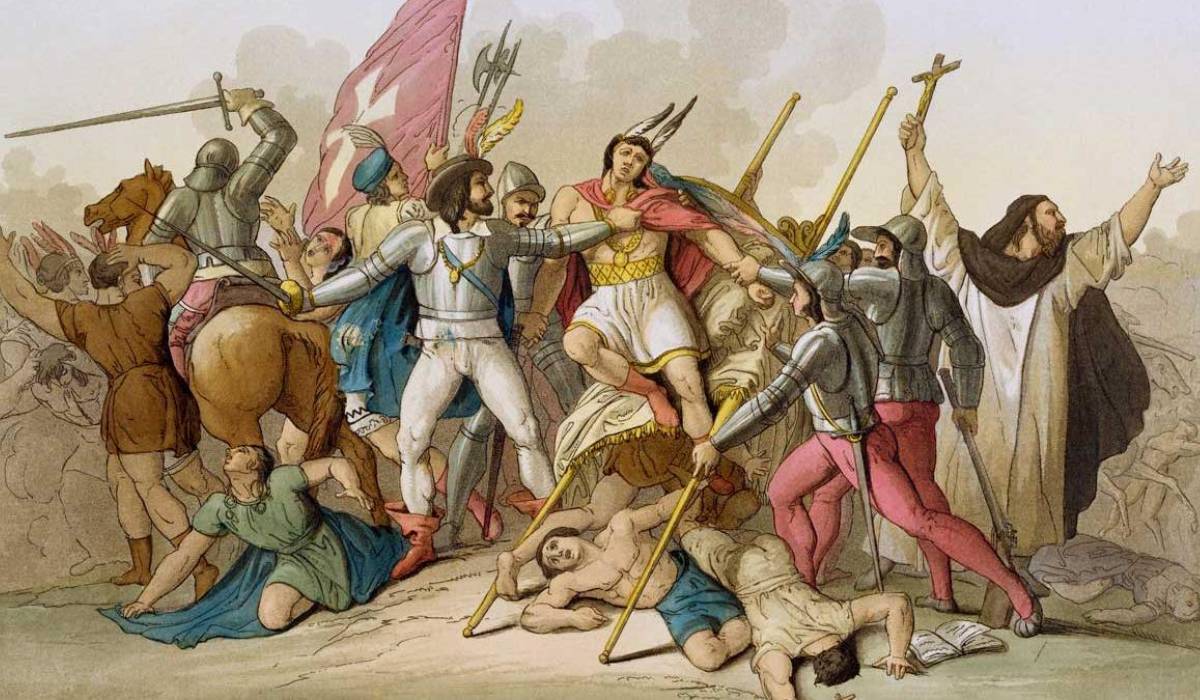
This meeting in the main square of Cajamarca would radically change the course of world history. Atahualpa, confident in his greater numbers, was surprised and ambushed by a few dozen heavily armed conquerors, who managed to capture him while killing thousands of his unarmed troops. In a desperate attempt to get his freedom back, the Sapa Inca offered to pay a legendary ransom by filling entire rooms with gold and silver brought from Cusco, including the heavy treasures taken from the sacred walls of the “Qoricancha“.
Despite collecting the ransom and keeping Atahualpa as a prisoner for several months, Pizarro betrayed his word and executed him anyway, immediately ordering the military march toward the imperial capital of Cusco.
After the capture of the capital, the younger brother of the dynasty, Manco Inca, managed to flee Cusco and took refuge in the remote region of Vilcabamba, an almost unreachable stronghold hidden in the thick jungle. From this refuge, the Inca resistance fought bravely against the Spanish occupation for almost 40 years. The rebel struggle reached its tragic end when the viceregal forces captured and executed Túpac Amaru I, the last Inca of Vilcabamba, ending forever the power of the empire of the sun.
Ancient ruins beyond Machu Picchu
What many visitors do not know when planning their trip is that the Peruvian territory offers a vast range of attractions, full of ancient and imposing archaeological ruins that go far beyond the famous citadel of Machu Picchu. Likewise, the unpredictable Andean geography hides formidable palaces, fortresses, and laboratories that show the brilliance of this civilization in mastering extreme environments.
Therefore, venturing to explore these enigmatic sites, many of them located just a day’s trip from the city of Cusco, will deeply enrich your historical understanding before or after visiting the great wonder of the world. Among the most outstanding places are:
- Moray: Located in the heart of the Sacred Valley, it is a giant set of circular terraces that served as an advanced agricultural laboratory for the Incas. Its brilliant circular design allowed them to create different microclimates at different heights, experimenting with the adaptation of hundreds of crops.
- Choquequirao: Known historically as the “sacred sister” of Machu Picchu, it is the ultimate alternative for the most daring adventurers. To reach its impressive terraces, it is necessary to go on a demanding endurance hike crossing one of the deepest canyons in America.
- Ollantaytambo: Famous for being the “Living Inca City,” it stands out for the perfect harmony between its huge ancient ruins and the peaceful modern life of its inhabitants. It is the best place to admire the incredible skill with which they carved and moved giant stone blocks.
- Waqrapukara: Located at 4,300 meters above sea level in the imposing Apurimac Canyon, this mysterious monument in the shape of horns still creates scientific debate about whether it was a military fortress, a sacred sanctuary, or an elite astronomical observatory.
- Sun Island (Bolivia): Since the empire covered not only Peru, but parts of Colombia, Ecuador, Bolivia, and Chile, this island in the highest navigable lake in the world (Titicaca) is vital for history. It is the favorite destination in the region, as Andean mythology marks it as the place of origin of the first Incas.
- Kuelap: Located at the top of a mountain 3,000 meters high, it offers a panoramic view where the clouds mix with the Amazon jungle. Although it is often included in the great historical routes, it is worth clarifying that Kuelap was built by the pre-Inca Chachapoyas culture (the “Warriors of the Clouds”), before the region was finally taken over by the Inca expansion.