

The South Valley of Cusco is an area with archaeological and colonial sites to the southeast of the city, on the route toward Puno. Unlike the Sacred Valley, it gathers several of its attractions within a short radius, just a few minutes apart from each other.
Is it worth it if you already know Machu Picchu and the Sacred Valley? What makes Tipón different from other Inca ruins you already visited in Cusco? Can it be toured in a day without hiring a tour? These are the questions that usually come up before adding this destination to the itinerary.
The Sacred Valley concentrates a large part of the region’s tourism and, in high season, that means more buses and more people at each site. The South Valley offers a different experience: fewer visitors, shorter tours, and a mix of Inca, pre-Inca, and colonial architecture in the same circuit. In Trip from Cusco to Sacred Valley you can check what the Sacred Valley includes and compare which one fits your itinerary better.
This guide explains what to see in Tipón, Piquillacta, Rumicolca and Andahuaylillas, as well as other lesser-known stops in the valley. It also covers how to get there on your own or with a tour, what the Tourist Ticket covers, how much time to dedicate to it, and the best time to go.
What is the South Valley of Cusco?
The South Valley of Cusco covers the section of the Huatanay river basin that extends to the southeast of the city, between the hills and up to the narrow pass of Rumicolca. It brings together sites from three different moments of regional history: pre-Inca in Piquillacta, Inca in Tipón and Rumicolca, and colonial in Andahuaylillas and Huaro.
South Valley Cusco Route
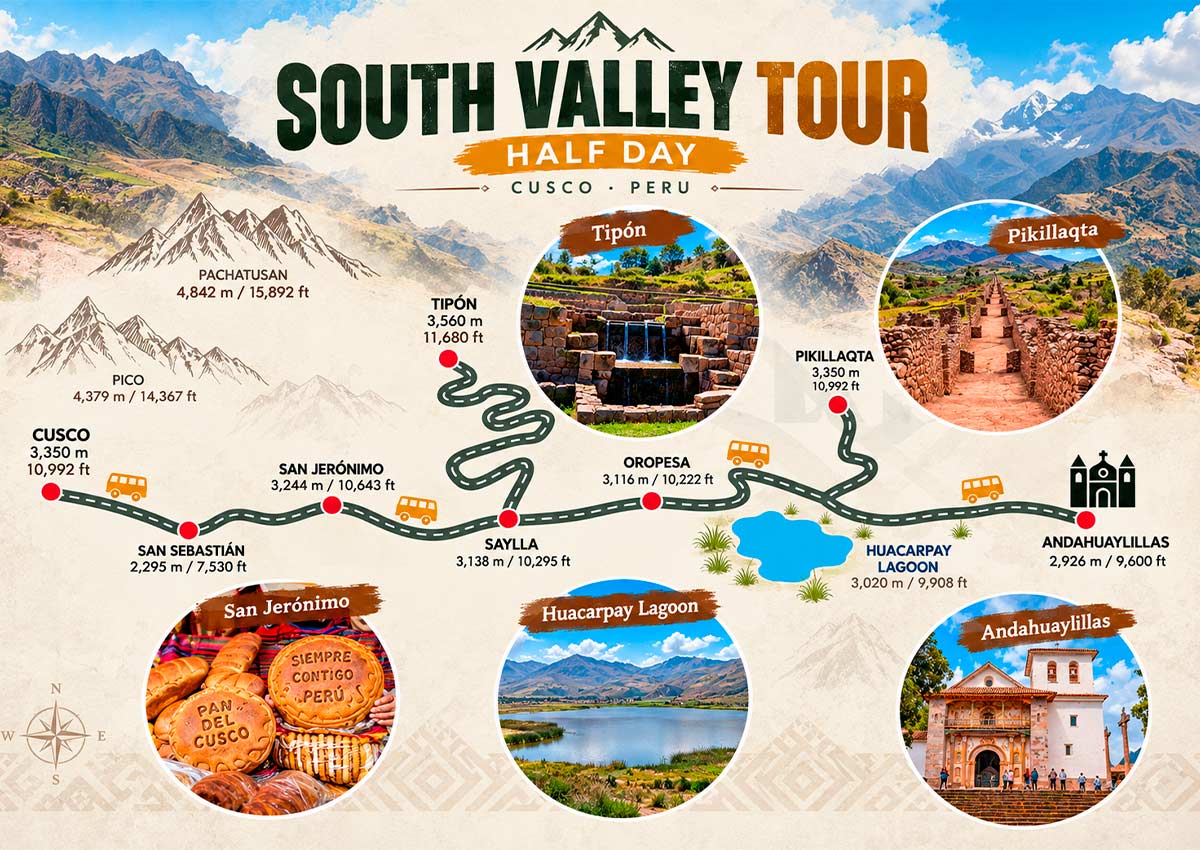
The South Valley Cusco does not have an administrative limit; it is usually associated with the districts of San Sebastián, Saylla, Oropesa, and Lucre, in the province of Cusco. However, a good part of the circuit’s tourist attractions, like Andahuaylillas and Huaro, belong to the province of Quispicanchi, to the southeast of Cusco, on the road toward Puno.
In practical terms, the South Valley tourist circuit usually includes Tipón (Oropesa district), Piquillacta and Rumicolca (Lucre), and Andahuaylillas and Huaro (Quispicanchi), plus minor stops like Saylla and the Huacarpay lagoon. All these points are on the same road, the Cusco–Urcos highway, which makes it possible to visit them in a single trip.
Why is it visited less than the Sacred Valley?
The Sacred Valley concentrates very well-known sites like Pisac, Ollantaytambo and Chinchero, and because of that, it receives most of the tourism that leaves Cusco. The South Valley, on the other hand, is not on the usual itinerary of most visitors. Added to this is the influence that its attractions, though valuable, are less known outside of Cusco: an Inca water complex, a pre-Inca citadel, and a colonial church do not have the same international reach as Machu Picchu or the Sacred Valley itself.
Destinations to Visit in the South Valley
The South Valley circuit brings together four stops on its route: the Tipón complex, the Piquillacta citadel, and the colonial temple of Andahuaylillas. To these are added minor stops like Saylla, Oropesa, and the Huacarpay lagoon, which complete a trip. Next, we will learn about each of these destinations, starting with the closest one to Cusco:
1. Tipón: The water temple
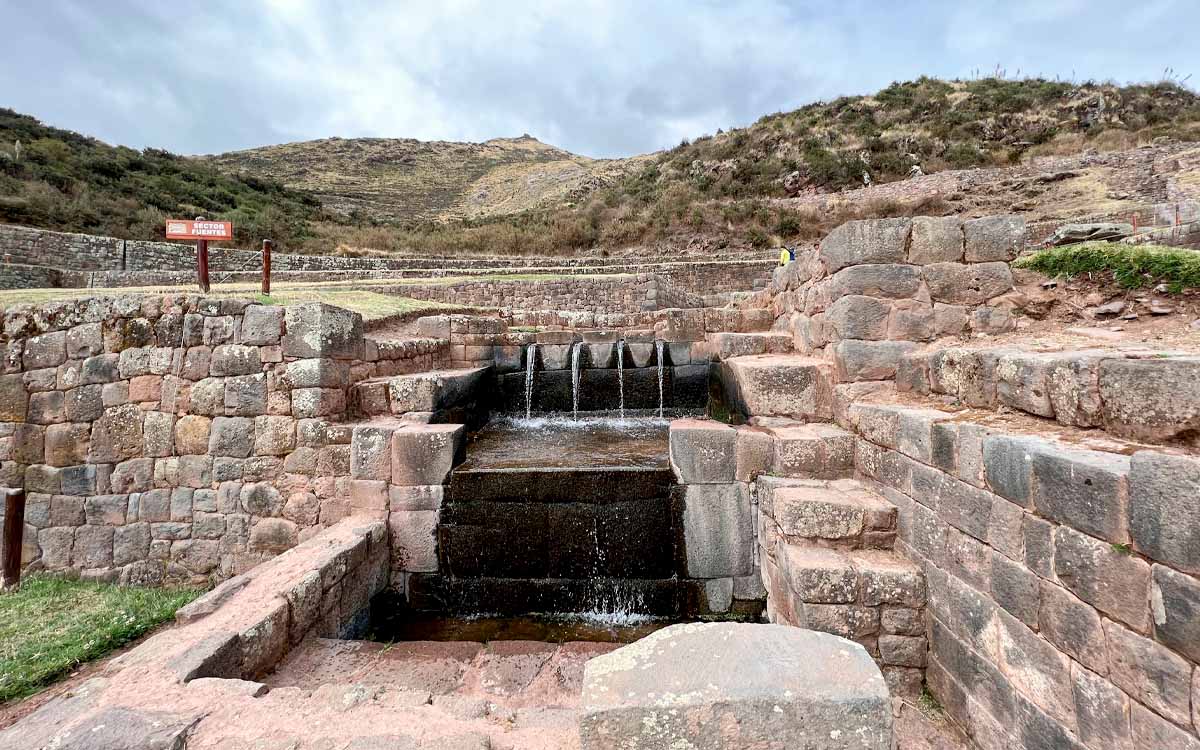
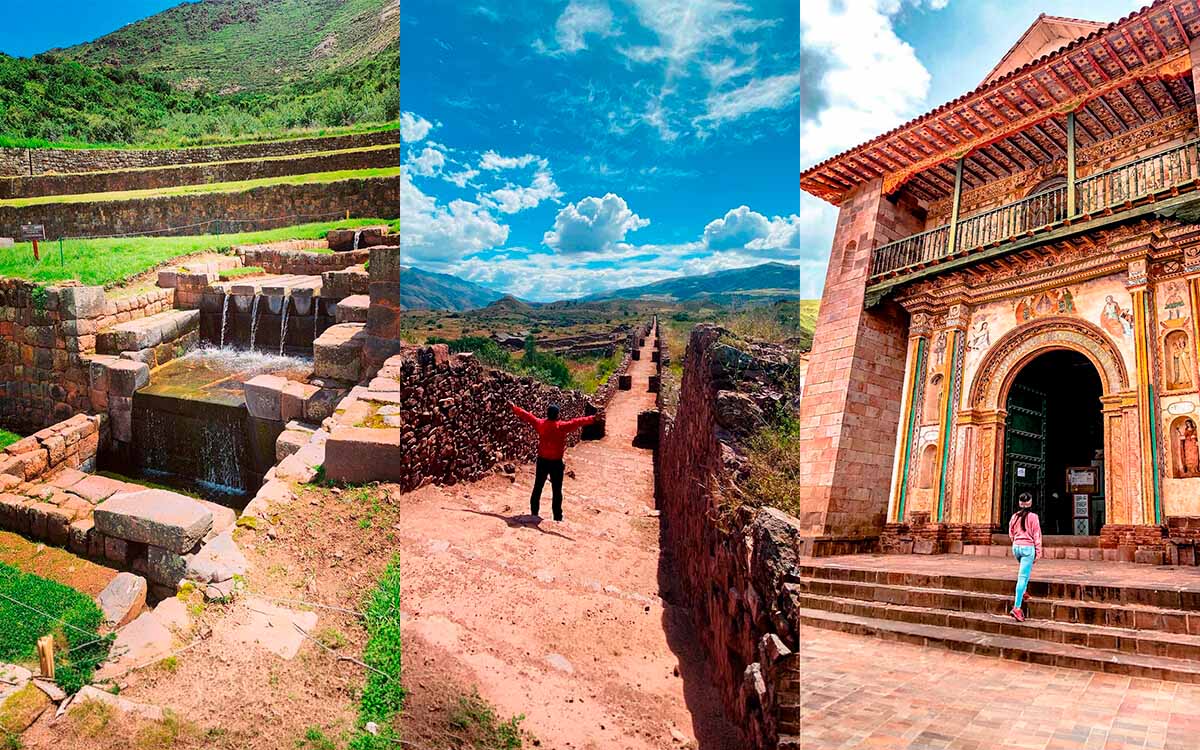
Tipón is an Inca archaeological site dedicated to the worship of water, considered one of the best examples of hydraulic engineering of its time. The site is made up of 13 agricultural terraces, primary and secondary canals, ceremonial fountains, and a defensive wall.
The American Society of Civil Engineers (ASCE) recognized it as an International Civil Engineering Landmark. According to research on the site, besides its agricultural and ceremonial function, it likely served as a sort of hydraulic laboratory to train young Inca engineers.
Other examples of Inca hydraulic and architectural engineering can be compared in Machu Picchu Circuits, where the citadel’s terrace and canal systems are detailed.
How to get there and visit duration?
Tipon is about 25 km southeast of Cusco, on the road to Urcos. You can get there by public transport from Avenida De la Cultura, on the Cusco-Urcos route, or within a tour that combines Tipon, Piquillacta, and Andahuaylillas in the same trip, with a total duration of 4 to 6.5 hours depending on the operator. The entrance is included in the Cusco Tourist Ticket.
2. Pikillacta: The Wari city
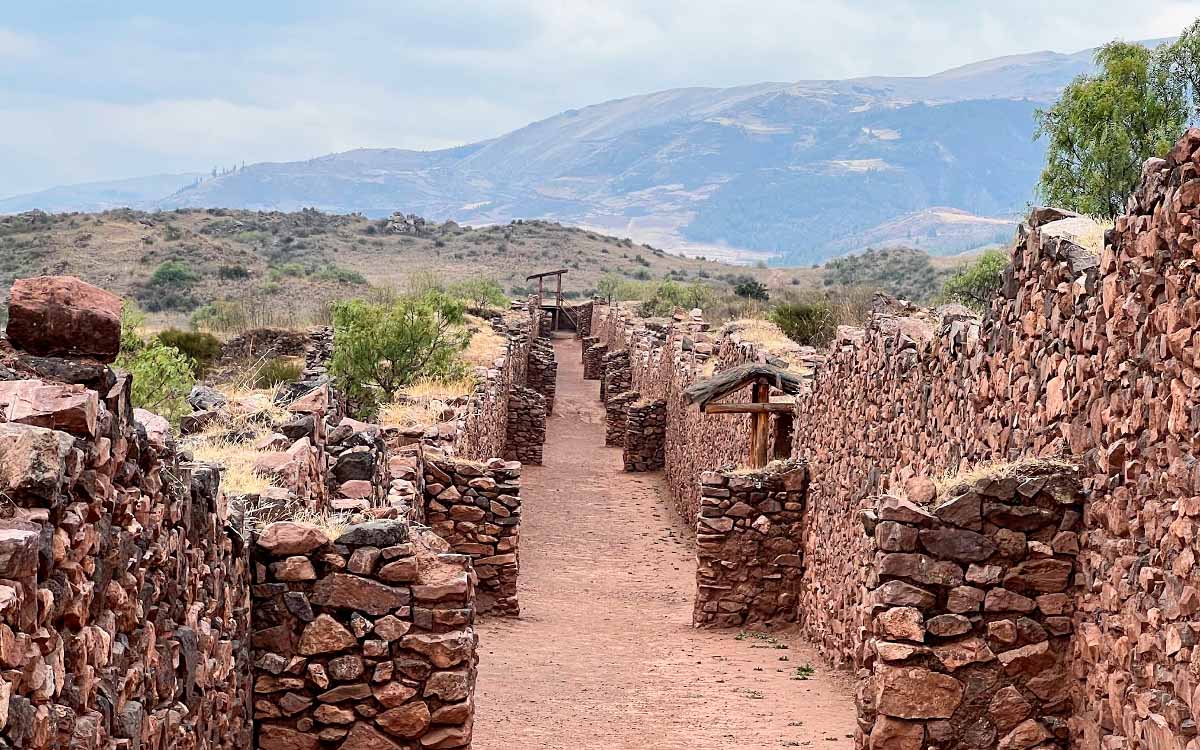
Piquillacta is a pre-Inca citadel built by the Wari culture, which spread from Ayacucho to the southern Andes between the 6th and 9th centuries AD. It is pre-Inca because its construction is earlier than the Incas: the building techniques used there are not found in any Inca site.
Pikillacta worked as an important administrative and ceremonial center of the Wari, with capacity to hold nearly 10,000 people. Its name in Quechua, “Piki Llaqta”, can be translated as “village of fleas” or “small village”, although it is believed this name was given after the arrival of the Spaniards.
Size and conservation state
The site covers an area of over 50 hectares, making it one of the largest archaeological complexes in Cusco. It is made up of nearly 700 buildings, 200 kanchas (enclosures), and around 500 colcas (storehouses), with walls that reach 10 meters at their highest point. It is one of the best-preserved pre-Inca sites in the region, and research work in the area continues to this day due to its huge size.
About Rumicolca
A short distance from Piquillacta is Rumicolca, a gate-aqueduct that worked as a control post for the royal roads (the Qhapaq Nan). Its construction started in Wari times, but the Incas remodeled it later with carved and polished stones, and used it to control the passage of people and goods to and from Cusco.
3. Andahuaylillas: The Sistine Chapel of America
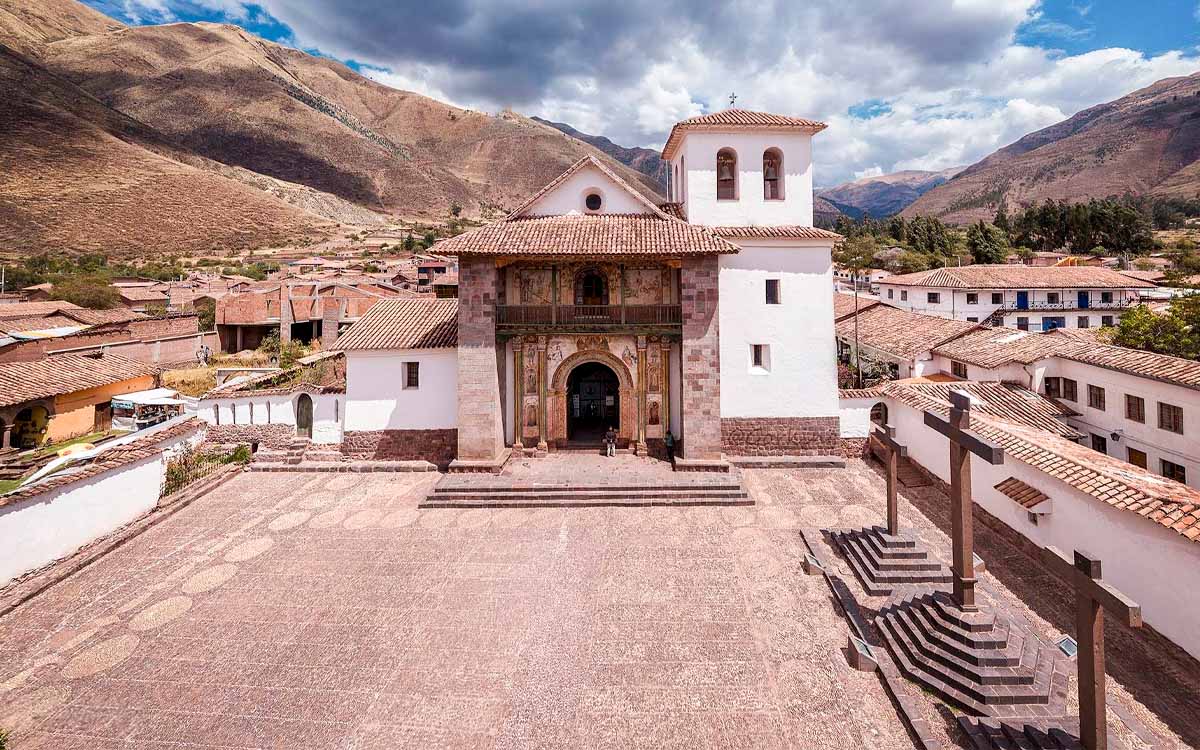
Andahuaylillas is a traditional town in the South Valley, known mainly for its colonial temple, the church of San Pedro Apóstol, nicknamed the “Sistine Chapel of America” because of the richness of its paintings and interior decoration. The church was built in the late 16th or early 17th century, and its decorative program was completed between 1618 and 1626. Its exterior is simple, with adobe walls, but the interior is covered with murals, altarpieces bathed in gold leaf, and works of the Cusco School, largely attributed to painter Luis de Riaño.
What to see inside?
Among its most prominent elements are the golden altarpieces, the murals, and two painted organs, considered among the oldest in Latin America. On the baptistery door is the so-called pentalingual door, carved with inscriptions in five languages. The church is part of the Andean Baroque Route, a circuit that also includes temples in Huaro and Canincunca.
About the town of Andahuaylillas
Besides its temple, Andahuaylillas is a traditional town with a main square declared part of the Cultural Heritage of the Nation for its monumental value. Since 2024 it has been part of the UNESCO Global Network of Learning Cities, a recognition linked to its community education initiatives, not to the temple itself.
Other stops in the South Valley
Huaro and Canincunca
Huaro is a town located about 40 minutes southeast of Cusco, on the Cusco-Puno highway, and is part of the Andean Baroque Route along with Andahuaylillas and the Society of Jesus in the Plaza de Armas of Cusco.
A few minutes from Huaro, in front of the Urcos lagoon, is the chapel of the Purified Virgin of Canincunca, built over a pre-Inca huaca. Its walls are covered with murals featuring Andean textile motifs that combine Pachamama with the Virgin Mary, one of the clearest representations of the religious syncretism of the Andean Baroque.
Oropesa: The town of bread and its attractions
Oropesa is about 22 km from Cusco, on the same road to Urcos, and since 2022 it holds the official title of National Capital of Bread, granted by the Peruvian Congress in recognition of its baking tradition.
It is a short but very visited stop within the circuit, especially for those going to or returning from Tipon, Piquillacta, or Andahuaylillas: it is enough to stop by the road to buy freshly baked bread directly at the town’s bakeries.
Huacarpay Lagoon and Huasao wetlands
The Lucre-Huacarpay lagoon and wetland complex extends southeast of Cusco, near Piquillacta, and is one of the best spots in the region for birdwatching of Andean birds: ducks, herons, coots, and migratory species arriving from the northern hemisphere find refuge in its water mirrors and totora reeds.
Tourist Ticket and how to visit on your own
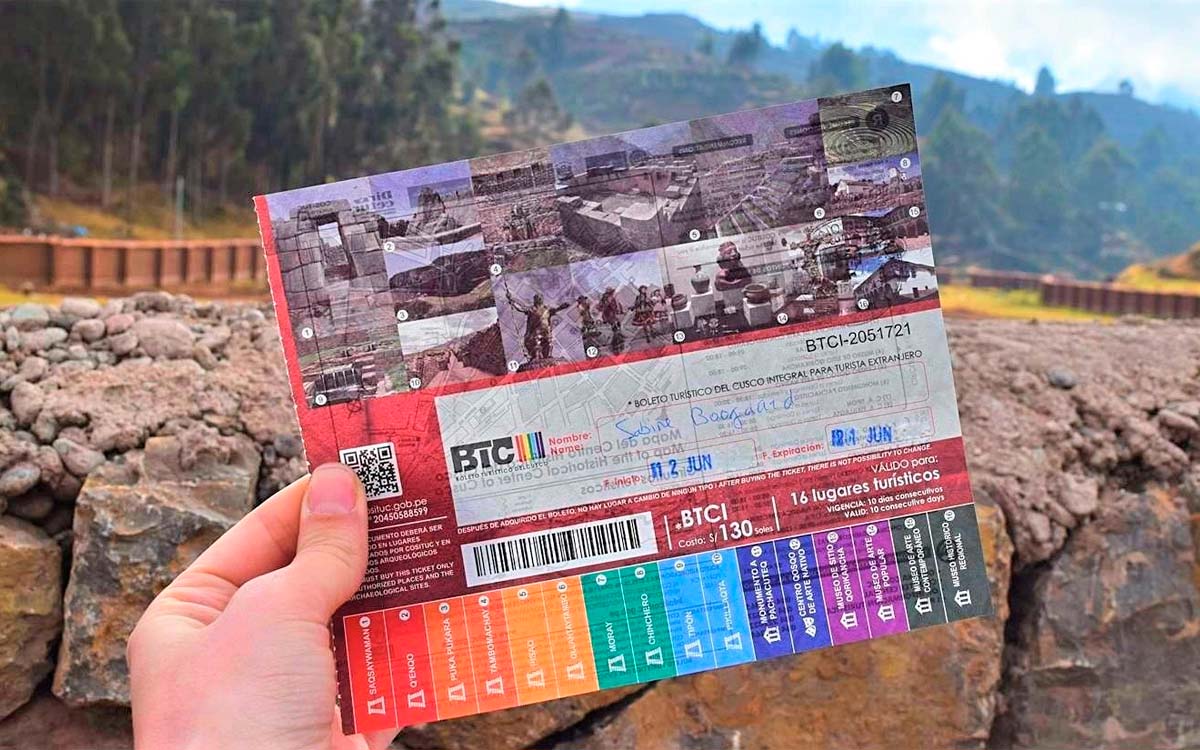
The Cusco Tourist Ticket (BTC), managed by COSITUC, is the official pass that gives access to 16 attractions spread between the city, the Sacred Valley, and the South Valley. Within the South Valley, it specifically covers Tipón and Piquillacta; Rumicolca and Andahuaylillas are not included, since the latter is visited with a separate ticket for the Andean Baroque Route.
There are two options:
- General Ticket: Includes all 16 attractions (Cusco, Sacred Valley, and South Valley). It costs S/ 130 for foreigners and S/ 70 for Peruvians, valid for 10 calendar days from the first use.
- Partial Ticket, Circuit 2 (city + South Valley): Includes Tipón and Piquillacta plus three city museums. It costs S/ 70 for foreigners and S/ 40 for Peruvians, valid for 2 days.
If you only plan to visit the South Valley and have already seen Sacsayhuaman or the Sacred Valley at another time, Circuit 2 is usually the most economical option. The ticket is not sold online: it is bought exclusively in Cusco at the COSITUC office (Av. El Sol 103, tourist gallery) or at the Garcilaso street location.
Transportation to the South Valley
To visit the South Valley without a tour, you take a bus or combi heading to Urcos (or Sicuani) from Av. de la Cultura, in the section near the traffic circle or around the coliseum. These vehicles travel along the Cusco–Urcos highway and allow you to get off directly at Tipón, Saylla, Piquillacta/Rumicolca or Andahuaylillas, which are right along the same road.
Some practical recommendations:
- Buses are frequent and cheap (a few soles per section), but they do not have fixed bus stops: you tell the ticket collector where to get off.
- In Tipón, the archaeological entrance is about a 45-minute uphill walk from the highway; on the way down, you can catch a shared taxi on the main road.
- To resume travel between stops, just wait on the highway and flag down any combi heading toward Urcos or back to Cusco.
- It is a flexible route, but it requires more time and coordination than a tour, since each site depends on the frequency of transportation at that time of day.
Organized tour option
Half-day or full-day tours combine Tipón, Piquillacta, and Andahuaylillas into a single circuit with private transport, a guide, and in some cases entrance fees included, taking a total of between 4 and 6.5 hours depending on the operator. This option solves the issue of transfers between sites and is more convenient if you have limited time, though it means following the group’s pace and, in high season, running into other visitors at the same times.
Best time and weather
Like the rest of the Cusco region, the South Valley does not have the four traditional seasons, but rather two seasons marked by altitude:
- Dry season (April to October): With sunny days, clear skies, and almost zero chance of rain. It is the best time to walk through the terraces of Tipón or explore Piquillacta without mud or slippery stones. On the downside, nights are cold, and in June and July lows frequently drop below 0 °C.
- Rainy season (November to March): Rains usually concentrate in the afternoons, while mornings start clear or partly cloudy; January and February are the wettest months. The advantage is that there are far fewer tourists and the landscape looks greener.
In any season, the temperature difference between day and night is sharp due to the altitude, so it is best to dress in layers even if you go out in the morning sun.
Frequently asked questions
- Can you visit the South Valley in one day?
Yes. Unlike the Sacred Valley, the South Valley concentrates its main attractions (Tipón, Piquillacta, Rumicolca, and Andahuaylillas) in a tight radius along the same highway, allowing you to tour them in a single day. An organized tour takes between 4 and 6.5 hours; on your own using public transport, it is best to plan for a full day so you do not have to rush between stops. - Do I need the Tourist Ticket?
It depends on which sites you want to visit. Tipón and Piquillacta are included in the Cusco Tourist Ticket (BTC), either in its General version (S/ 130 foreigners / S/ 70 Peruvians) or Circuit 2 (S/ 70 foreigners / S/ 40 Peruvians), which also covers three city museums. Andahuaylillas, Huaro, and Canincunca are not on the BTC; they are visited with a separate ticket for the Andean Baroque Route, which is bought at any of those three churches. - Is it better than the Sacred Valley?
It is not that one is better than the other; they offer different experiences. The Sacred Valley features better-known sites like Pisac, Ollantaytambo, and Chinchero, with higher tourist crowds, especially in high season. The South Valley has fewer visitors, shorter routes, and a mix of Inca, pre-Inca (Piquillacta), and colonial (Andahuaylillas) architecture in a single circuit. - How to get there without a tour?
You take a bus or combi heading to Urcos (or Sicuani) from Av. de la Cultura in Cusco and get off directly at Tipón, Piquillacta, Rumicolca, or Andahuaylillas, since they are all on the same road. Vehicles are frequent and cheap, though they lack fixed stops: you must tell the ticket collector where to get off. To resume travel between sites, you wait on the highway and stop any combi passing by in the desired direction. - How much time should you spend at each site?
As a reference: Tipón, including the walk up to the terraces, can take between 1.5 and 2 hours; Piquillacta and Rumicolca, due to their size, between 1 and 1.5 hours; and each church of the Andean Baroque Route (Andahuaylillas, Huaro, Canincunca), between 20 and 30 minutes. Adding travel time, a full tour of the circuit easily takes up a day. - Can it be combined with the Sacred Valley or Machu Picchu on the same trip?
Yes, but not on the same day. Since they lie in opposite directions from Cusco (the South Valley to the southeast on the way to Puno; the Sacred Valley to the north on the way to Machu Picchu), it is usual to dedicate separate days to them within your general Cusco itinerary. - Is it necessary to hire a guide?
It is not mandatory. The sites can be toured on your own with the information available on-site, though a guide helps you better understand the historical context of Piquillacta (Wari culture) or the background of the colonial churches. Organized tours include a guide; if you go on your own, you can also hire one informally at the entrance of the most visited sites, such as Tipón. - Is it safe to visit the South Valley on your own?
Yes, it is an area with constant public and tourist transit along the Cusco–Urcos highway, and it requires no extra paperwork beyond the Tourist Ticket or the Andean Baroque Route ticket. As at any archaeological site, it is a good idea to bring water, sunscreen, and proper footwear, especially if you walk up to the Tipón terraces.
