

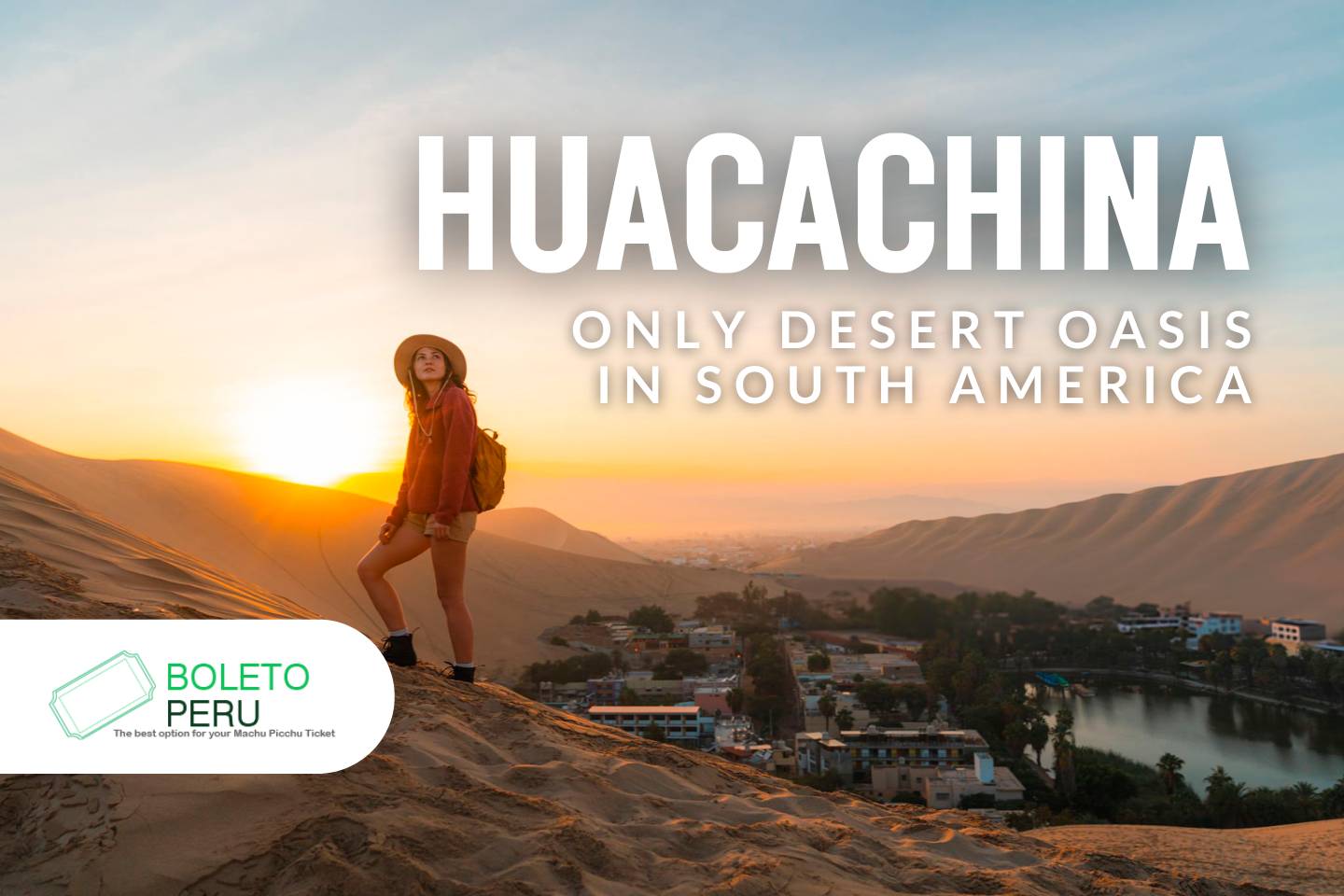
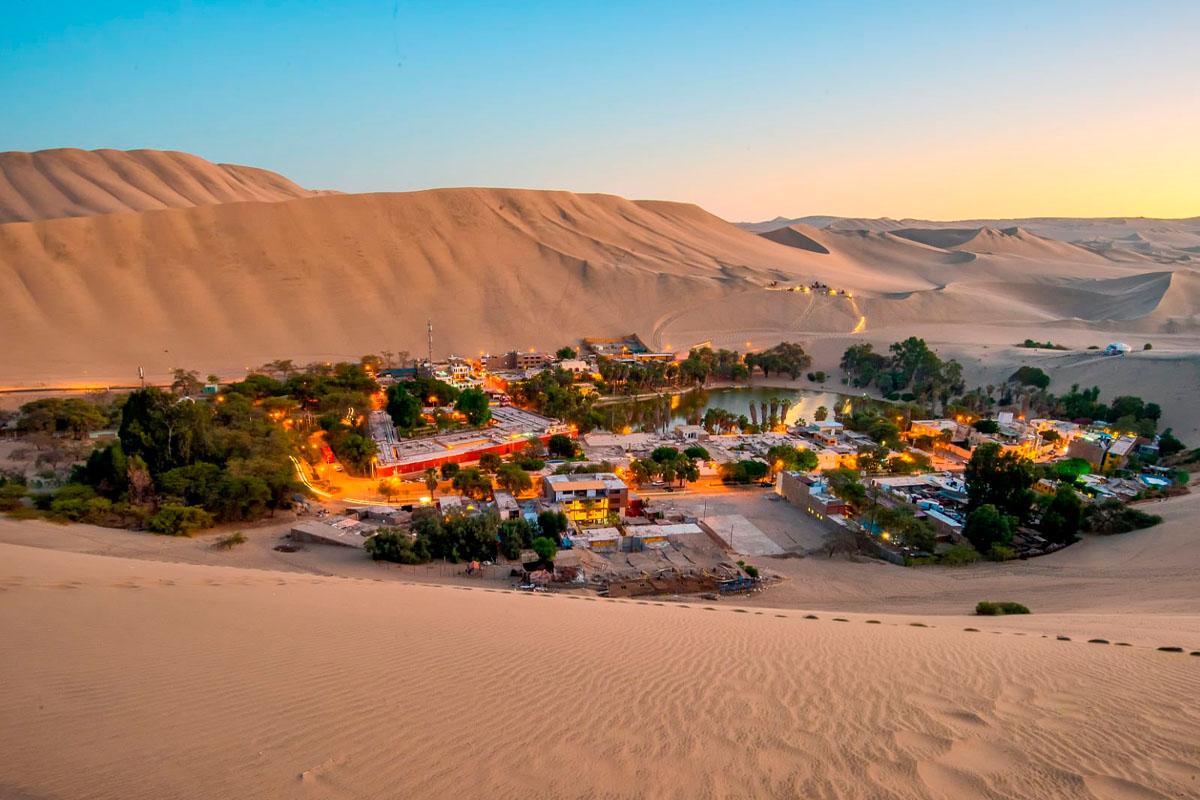
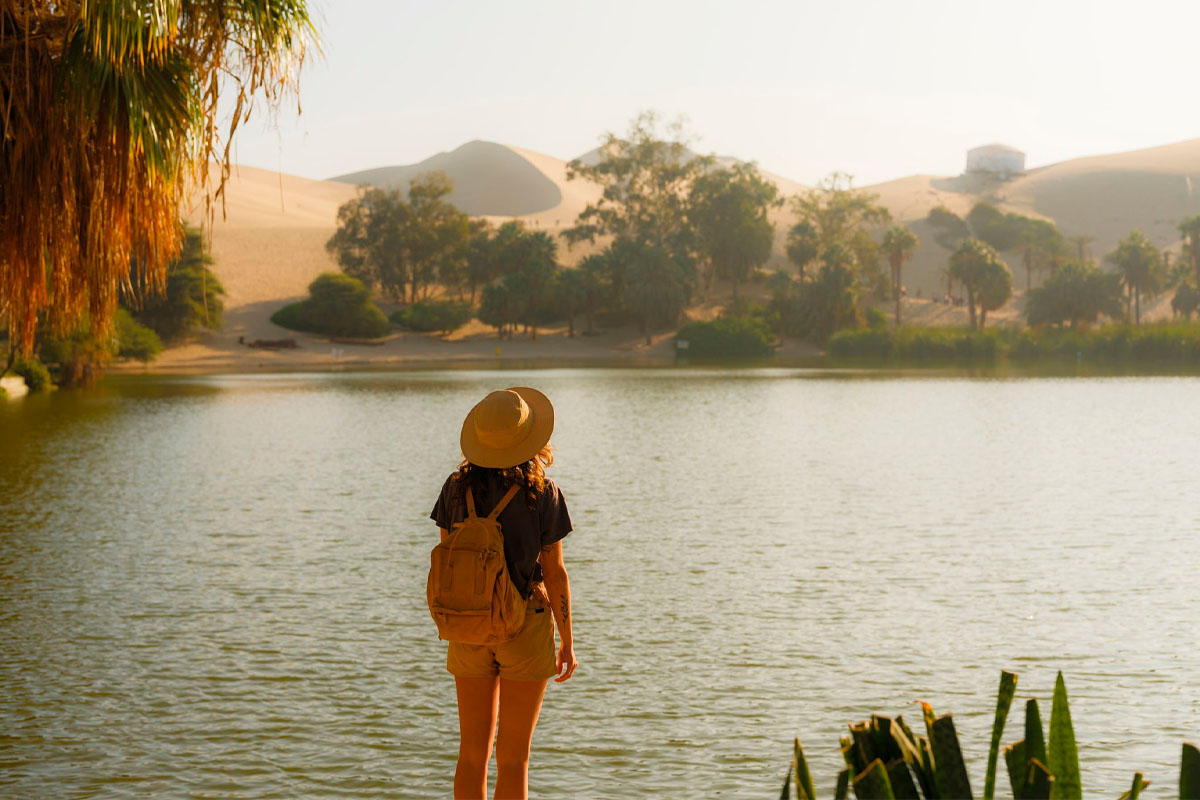
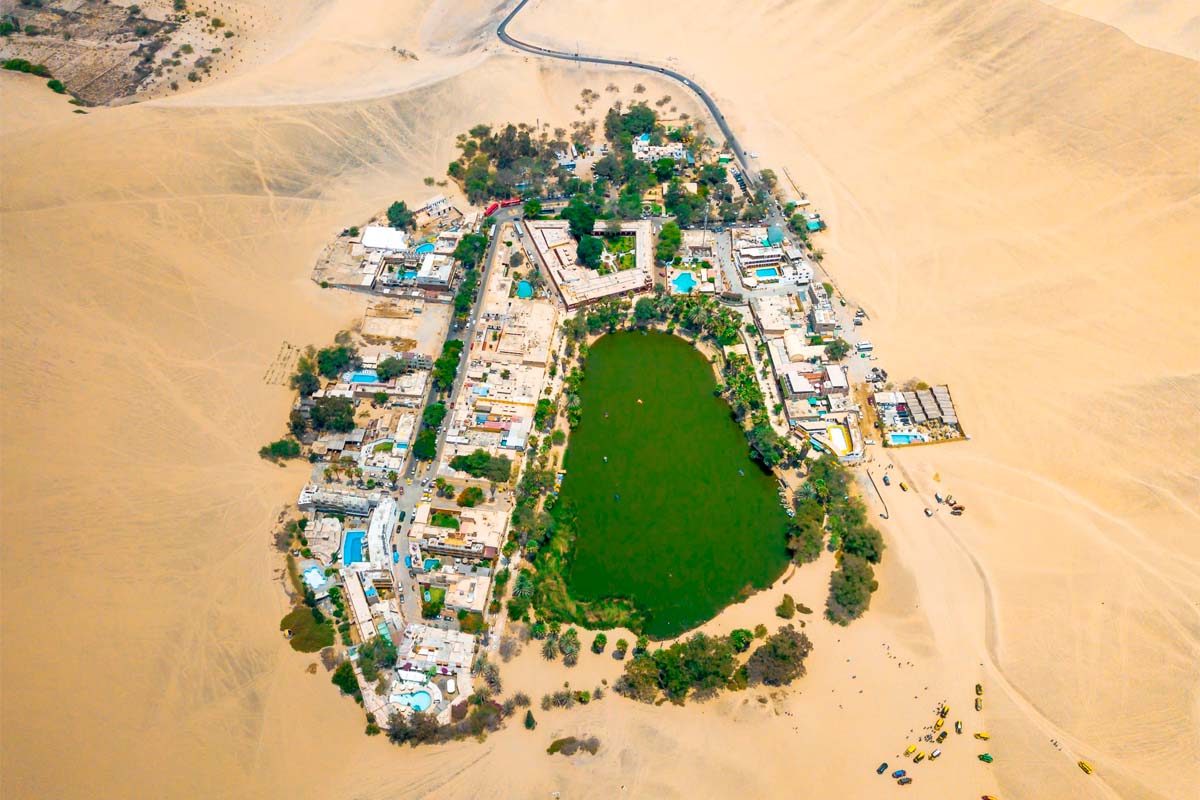
In the middle of the desert coast of southern Peru, a few minutes from the city of Ica, hides one of the most unique landscapes in the country: Huacachina, a natural oasis surrounded by giant dunes that looks like something out of a story. Its green waters, framed by palm trees and golden sand, have turned this small town into a must-see stop for those looking for adventure and rest in one place.
Huacachina has earned a fixed spot on the travel routes through southern Peru, mainly because it is close to Lima and because of the chance to combine sandboarding, buggy rides, and unforgettable sunsets in just one or two days. It is no accident that many travelers include it as their first stop before continuing south, whether heading to Nazca, Arequipa, or, finally, Cusco.
In fact, those who plan their route from Lima to Machu Picchu usually take advantage of the trip to add this detour to the desert, turning the journey into an experience that combines two opposite landscapes: the endless sand of the coast and the majesty of the Andes.
Where is Huacachina and how to get there?
Huacachina is located in the Ica region, just 5 kilometers from the center of that city, on the desert coast of southern Peru. Its closeness to Lima (about 300 kilometers) makes it an accessible getaway even for those who have little travel time.
- From Lima
The most common way to get there is by land, taking the Pan-American Highway South to the city of Ica, a trip that usually takes between 4 and 5 hours depending on traffic and the season. Most interprovincial buses arrive at the Ica terminal, from where the traveler must take a taxi or mototaxi to cover the last minutes to the oasis. There is also the option of traveling in a private or rented car on the same route, although the traffic leaving Lima can add extra time to the initial calculation. - Combining Huacachina with other southern destinations
Because of its location, Huacachina is rarely visited by itself. Many travelers take advantage of the same trip to visit Paracas, a little over an hour from Ica, famous for its Ballestas Islands and its natural reserve, or to continue to Nazca and its mysterious lines, both destinations on the same Pan-American Highway South. This closeness turns southern Peru into a natural travel corridor, where the desert, marine life, and archaeological mysteries are just a few hours away from each other.For those who are just organizing the starting point of their trip, it is a good idea to know more about Lima, the starting point for most travelers who later venture to the south of the country.
What to do in Huacachina Oasis?
Although the oasis itself is already a visual attraction, the real fame of Huacachina comes from the activities that can be done between its dunes and its lagoon. These are the must-do experiences:
-
Sandboarding
It is, along with the dune buggies, the most sought-after activity by those who arrive in Huacachina. It consists of sliding on the dunes with a board similar to a snowboard, either standing up or facing down, the latter being the most common way among beginners because it offers more control and safety. No previous experience is needed: local guides teach the basic technique before each descent, and the dunes offer slopes for all levels, from those looking for a gentle drop to those who dare with the steepest hills.
-
Dune buggies (buggy rides)
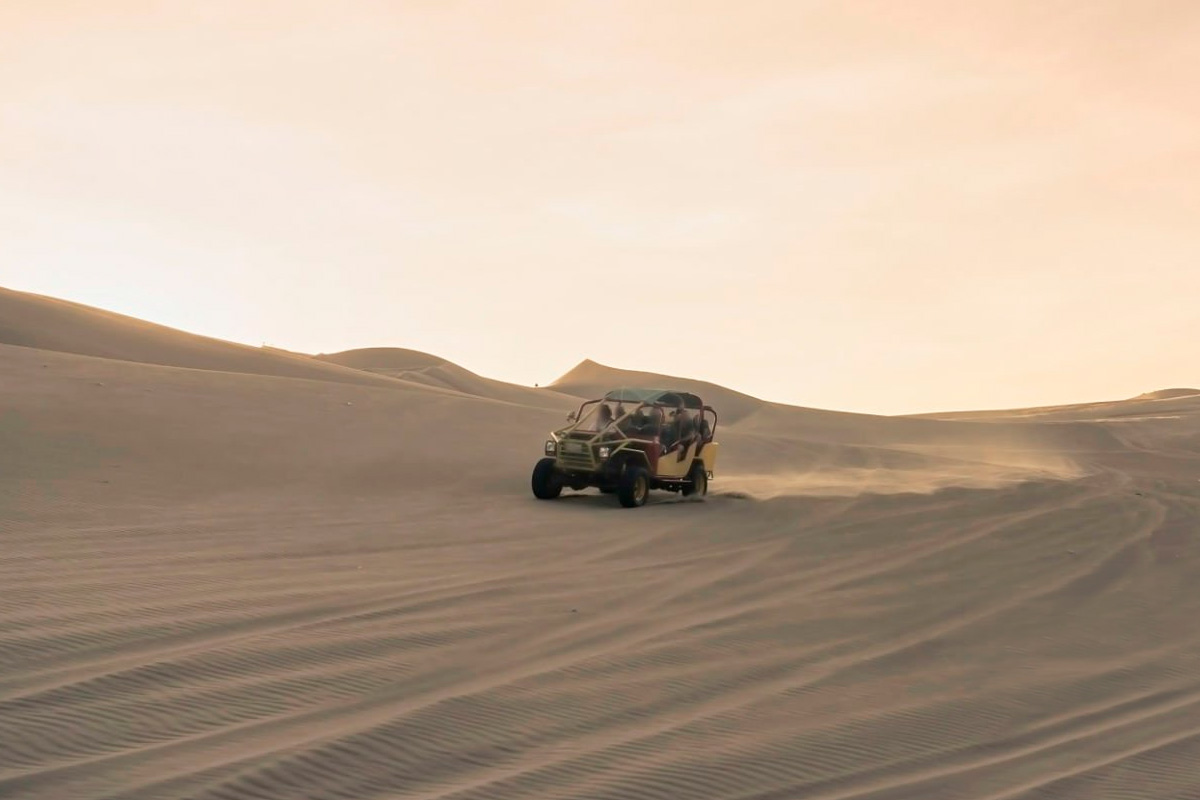
The buggy ride is the star activity of the oasis. These off-road vehicles, equipped with safety harnesses and roll bars, go up and down the dunes at high speed for about two hours, alternating adrenaline stretches with stops at the tops to take panoramic photos of the desert. Most tours combine the buggy with sandboarding in the same outing, taking advantage of those stops in the dunes to practice both sports in a single afternoon.
-
Boat ride on the lagoon
For those who prefer a calmer pace, the oasis lagoon offers pedal boat rides or small rowboats, a different way to enjoy Huacachina surrounded by palm trees and sand. It is not recommended to swim in its waters, since they do not have the right conditions for it, but the boat ride is still one of the most relaxing ways to end the visit before or after the adventure in the dunes.
-
Sunset from the dunes
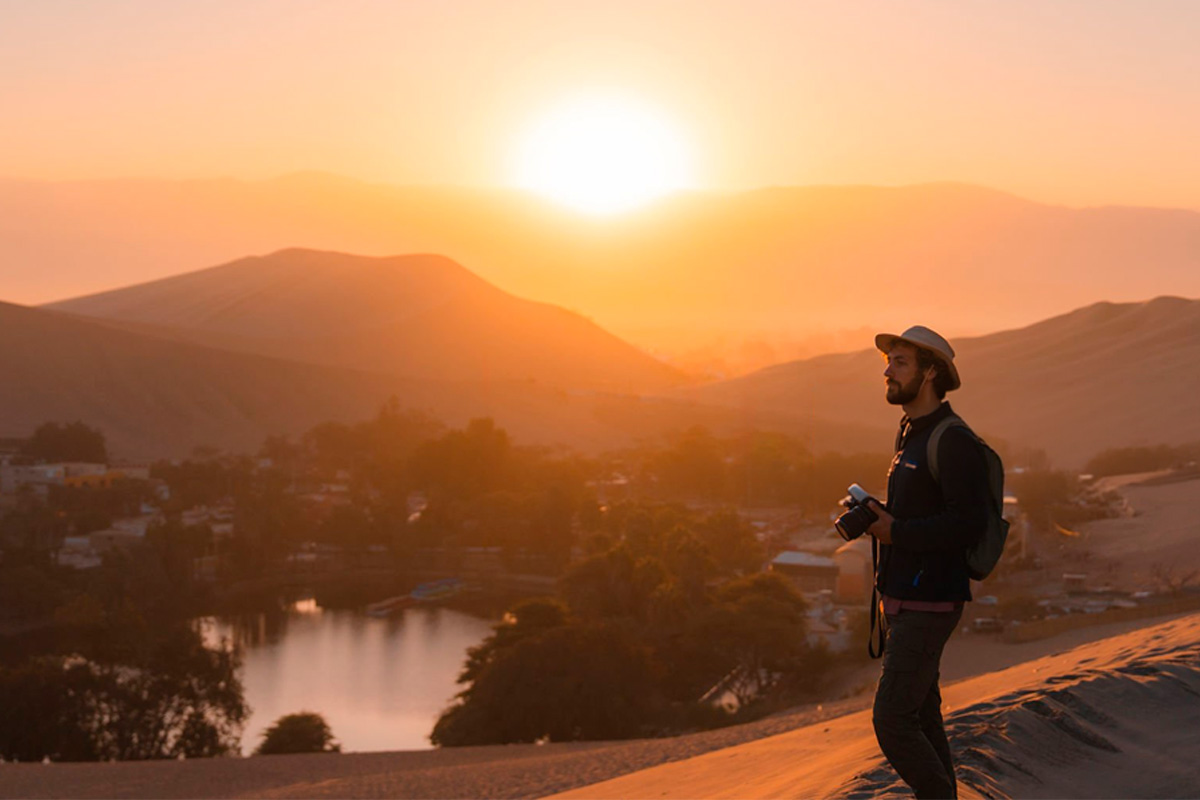
The perfect end to any visit to Huacachina is going up to the top of the dunes to watch the sunset. Many buggy and sandboarding tours are scheduled right for this time, since the sun hits with less force and the sky is dyed in orange and pink tones over the oasis and the endless desert. It is also the most sought-after moment by travelers to take photos, with the shapes of the dunes standing out against the sky.
How much time to spend in Huacachina
The good news for those with a tight travel schedule is that Huacachina does not require too many days. With just one afternoon it is possible to cover the essentials: sandboarding, the buggy tour, and the sunset from the dunes, activities that are usually combined in a single package of two to three hours. That is why many travelers visit it as a full-day stopover from Lima, or even as a stop of a few hours on their route south.
However, staying an extra night has its advantages: it allows you to enjoy the oasis with fewer tourists in the morning, make better use of the sunset light without the pressure of returning, and add a visit to the nearby pisco wineries in Ica. In short, one to two days is enough to experience Huacachina without rushing and without taking time away from the rest of the itinerary.
That is exactly the challenge of putting together a route through Peru: balancing the days between the coastal desert and the Andes, where experiences as different as Cusco and Machu Picchu await you. If you are defining your full itinerary through Peru, this will help you divide the days between the desert and the Andes.
Huacachina as part of a wider route through southern Peru
Few travelers arrive in Huacachina as their only destination: most add it as a stop within a wider trip through the south of the country, which usually stretches from the desert coast to the Andes.
-
Ica and its pisco wineries
Just minutes from the oasis, the city of Ica is the birthplace of pisco, the flagship spirit of Peru. Wineries like Tacama, one of the oldest in South America, welcome visitors for tours and tastings that are usually easily combined with a visit to Huacachina on the same day, given the short trip between both points.
-
Nazca and its lines
Two hours south of Ica on the Pan-American Highway South is Nazca, famous for its mysterious lines drawn in the desert over a thousand years ago, visible mainly from flights in small planes or from a viewing tower next to the road. Because it is close, many travelers add Nazca to the same route that includes Huacachina and Paracas, extending their time in the desert for one more day before continuing south.
-
From Ica/Nazca to Arequipa and Colca
From Nazca, the route south continues to Arequipa, a road trip of several hours that marks the transition from the coastal desert to the Andean landscapes. Those who continue their trip south can explore the Colca Canyon, one of the deepest in the world and home to the Andean condor, before returning to the road to Cusco and Machu Picchu.
From Huacachina to Cusco and Machu Picchu
After enjoying the desert, the next big step for most travelers is heading to the Andes, where the most wanted destination in all of Peru waits: Machu Picchu. The trip between Huacachina and Cusco is not short, but there are different ways to cover it depending on the time and budget available:
- Direct bus: From Ica it is possible to take an interprovincial bus to Cusco, a long trip of between 14 and 17 hours that crosses mountain and coast landscapes. Many travelers choose the “bed” type night service, which allows you to sleep during the trip and make the most of the next full day in Cusco.
- Flight from Lima: the fastest and most recommended option for those who have fewer days is to return to Lima (either from Ica or Nazca) and take a direct flight to Cusco, taking about an hour and twenty minutes. Airlines like LATAM, Sky Airline, and JetSMART cover this route with daily departures.
- Combining both options: some travelers prefer to split the trip into two parts, stopping in Arequipa before continuing to Cusco, which allows you to see the Colca Canyon without giving up too much direct travel time.
Whichever option is chosen, those who plan their route from Lima to Machu Picchu will find a complete step-by-step guide to organize the rest of the itinerary, from the transfer to the Inca citadel. And if you prefer to leave the logistics in the hands of experts, you can book your full tour to Machu Picchu here.
Practical tips for visiting Huacachina
Weather and best time
Huacachina has a warm desert climate all year round, which makes it a destination you can visit in any season. However, between April and November temperatures are nicer for outdoor activities, while the summer months (December to March) can easily go over 30°C at noon.
At night, however, the desert cools down a lot, so it is a good idea to bring some warm clothes even in high season. This temperature contrast is very different from what you will find later in the Andes: those who already know the weather in Cusco will notice that Huacachina needs an almost opposite preparation, with more sun protection and fewer warm layers during the day.
Safety
As in any crowded tourist destination, in Huacachina it is a good idea to keep some basic precautions: watch your belongings during buggy rides, hire only authorized operators for sandboarding and dune buggies, and avoid walking alone on the dunes outside of tour hours. Just like in Cusco, it is good to take similar precautions against offers that are too cheap or informal guides without the backing of a known agency.
What to bring
Sand and sun are the two factors that most determine the ideal luggage for Huacachina:
- High protection sunscreen and frequent reapplication, since the reflection of the sand makes the exposure stronger
- Sunglasses and, if possible, a bandana or buff to cover your nose and mouth during the buggy ride
- Light, long-sleeved clothes for the day, plus a light warm piece of clothing for the night
- Closed and comfortable shoes, able to handle the hot sand
- Enough water to stay hydrated, especially if the visit includes physical activities like sandboarding
Frequently asked questions
- Is Huacachina safe?
Yes, it is a well-established and generally safe tourist destination. Like in any area with a large number of visitors, it is recommended to hire official operators for the buggy and sandboarding, watch your belongings, and avoid going out alone in the dunes outside of tour hours. - How much does sandboarding cost?
The combined buggy and sandboarding tour usually costs between 35 and 40 soles if hired directly in Huacachina, although the price can change depending on the season and if it is booked in advance from online platforms, where the rates tend to be somewhat higher. - Can it be visited in one day from Lima?
Yes. Leaving early and returning at night, it is possible to cover the round trip (about 4 to 5 hours each way) and enjoy the main activities of the oasis in a single day, although staying one night allows you to live the experience more calmly. - Can it be combined with Machu Picchu on the same trip?
Of course. In fact, it is one of the most popular combinations among those who travel through the south of Peru: the Huacachina desert and the Andes of Machu Picchu offer completely different landscapes within the same itinerary, whether by bus, plane, or combining both.
