
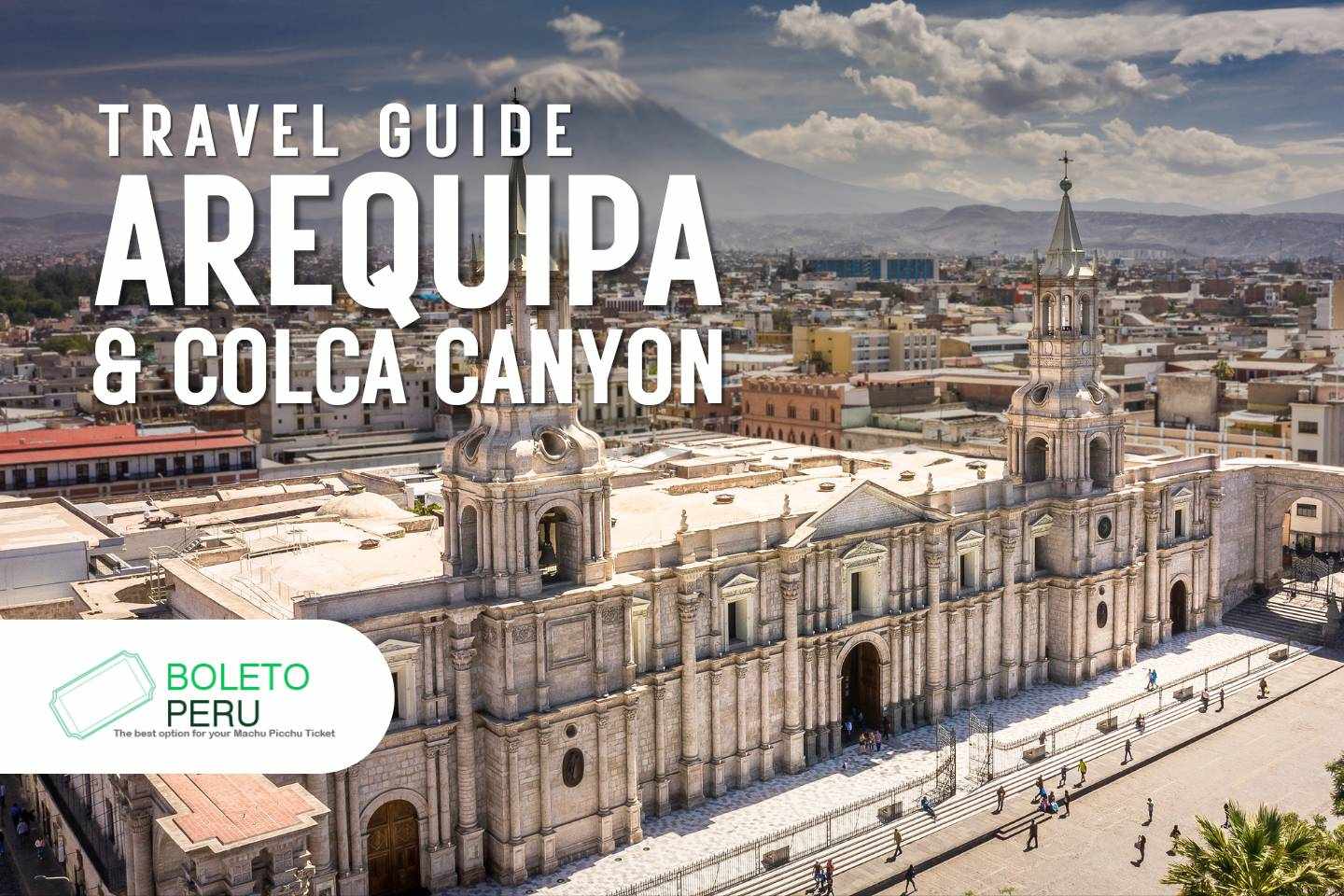
When thinking about a trip to southern Peru, the mind almost always travels straight to Cusco and Machu Picchu. And with good reason: it is an experience that justifies the trip on its own. But those who have already traveled the country know that there is another stop that should not be left out of the itinerary: Arequipa and the Colca Canyon.
If you are already organizing your tour through Cusco and its surroundings, adding a few days in Arequipa is easier than it seems and the contrast is worth it. While Cusco wraps you in Inca history and citadels in the heights, Arequipa offers another pace, a white city built in volcanic stone, colonial streets, and a couple of hours away, one of the deepest canyons in the world, where condors rule the sky at sunrise.
In this guide we will help you combine both destinations, what you cannot miss in the city and in the canyon, and some practical tips so that the trip flows smoothly.
Getting to know Arequipa, the White City
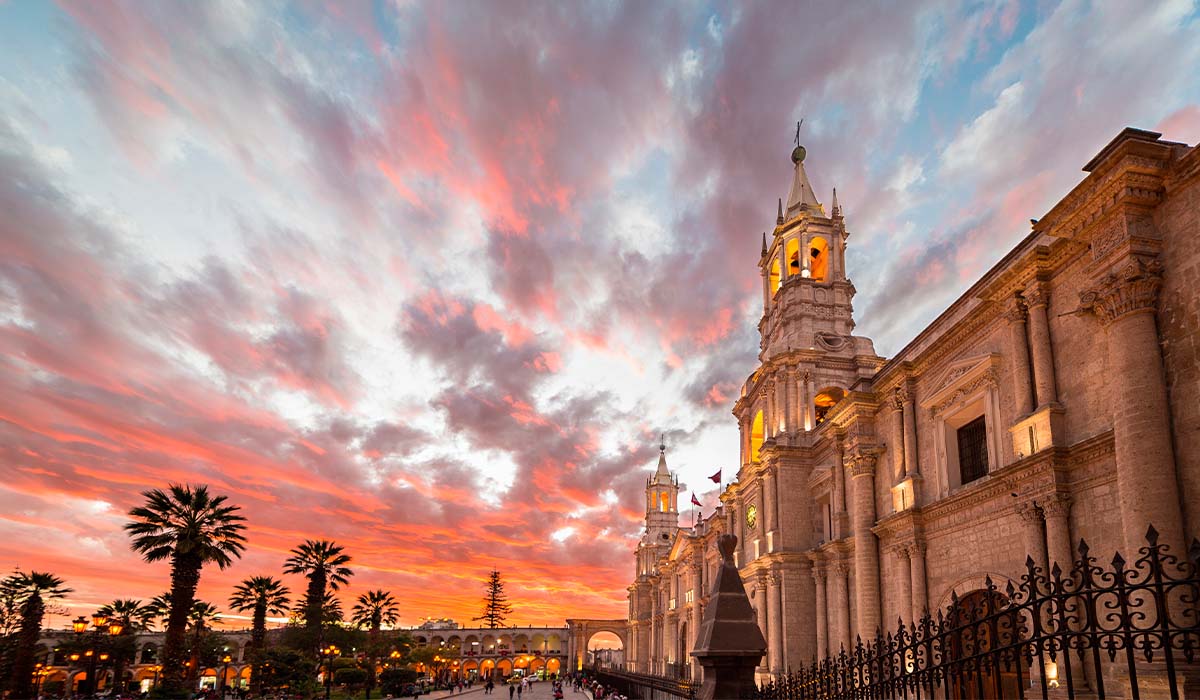
Arequipa owes its nickname to something that is noticed as soon as you arrive: sillar, a white volcanic stone with which a large part of the historic center is built. Under the morning sun, the fronts seem to shine, and it is no accident that this old town is declared a World Heritage Site by UNESCO.
The starting point to begin exploring Arequipa is the Santa Catalina Monastery, a true religious citadel inside the city. Its alleys painted in indigo and ochre tones, its courtyards and its century-old cells show you the architecture of another time; you can easily spend an entire morning walking through it without rushing.
Very close, at the Main Square, is the Cathedral, the colonial arches and other points of interest like the Yanahuara viewpoint, where the stone arches frame the Misti volcano as if it were a painting. But no tour of Arequipa is complete without tasting the local food, which has its place within Peruvian cuisine; with 2 dishes being the stars of this culinary delight: the stuffed spicy pepper, hot and filling, and the fried pork, crispy and generous.
The Colca Canyon
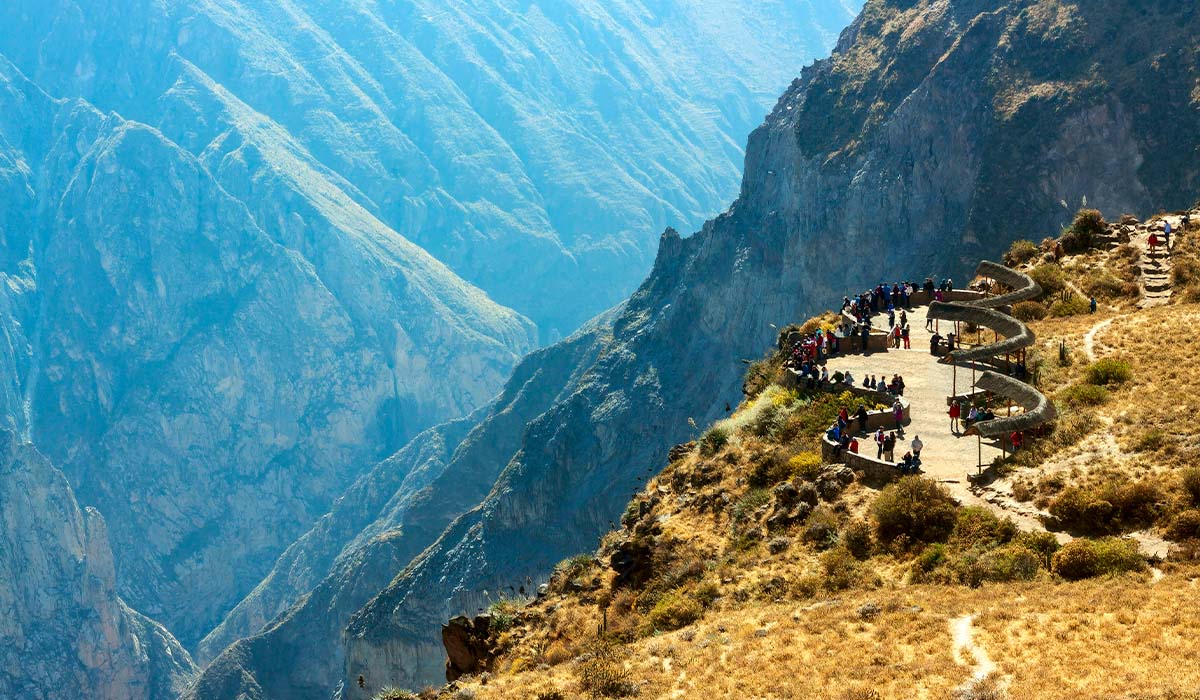
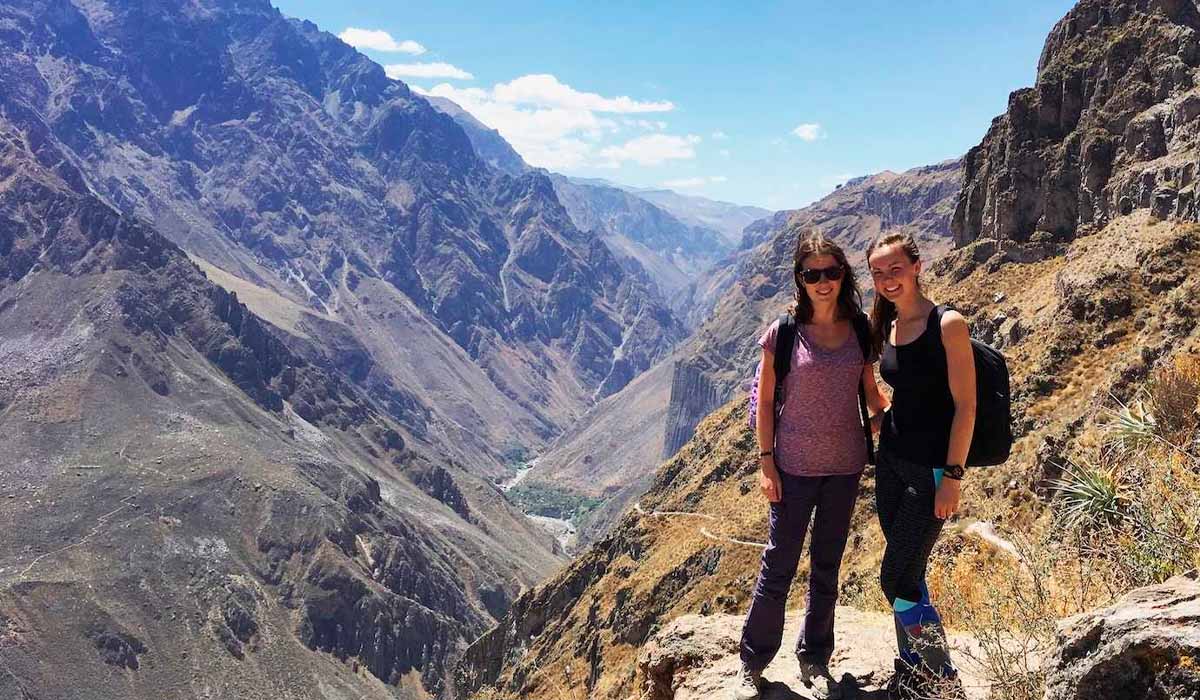
About 3-4 hours from Arequipa, one of the most stunning landscapes in southern Peru opens up: the Colca Canyon. It is considered one of the deepest in the world, with sections that reach over 3,000 meters deep (more than twice the depth of the Grand Canyon in Colorado).
How to get there from Arequipa:
- The most common route leaves early in the morning (many tours depart between 3:00 and 4:00 am) towards the town of Chivay, the gateway to the valley.
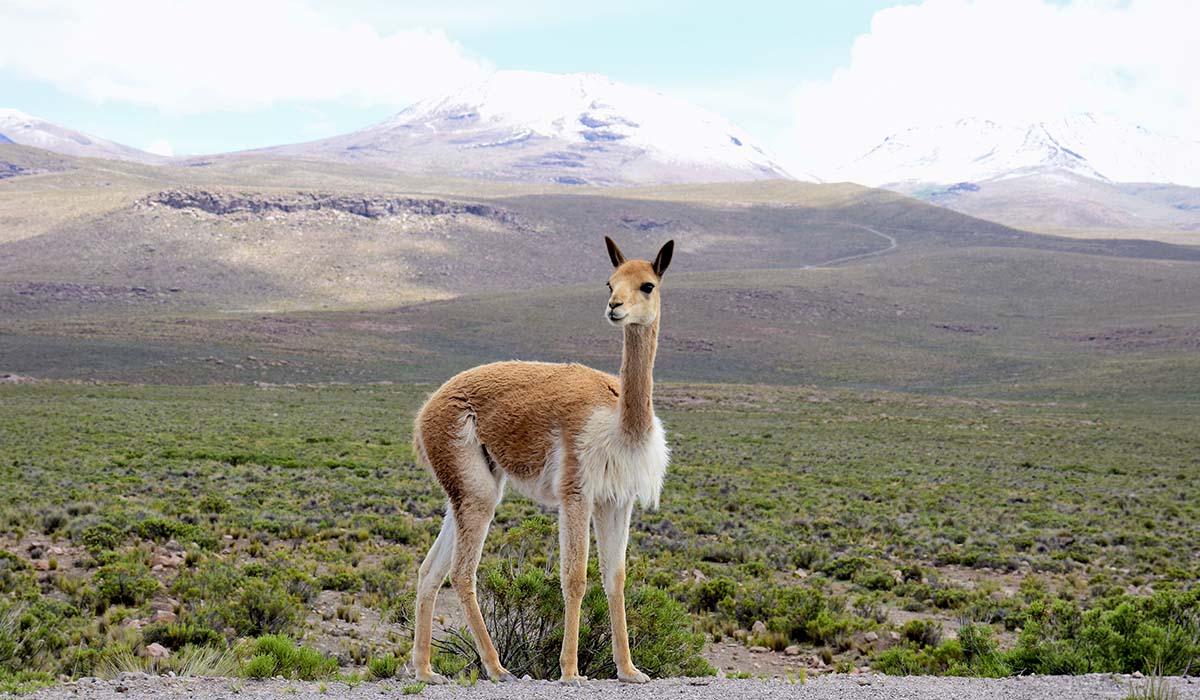
- The journey crosses the Salinas and Aguada Blanca National Reserve, featuring high plateau landscapes and, if you are lucky, vicuña sightings.
- It can be done on an organized tour (the most practical option) or on your own by public bus. The latter takes more time, but it also gives you more flexibility.
Condor’s Cross: The most famous viewpoint of the canyon
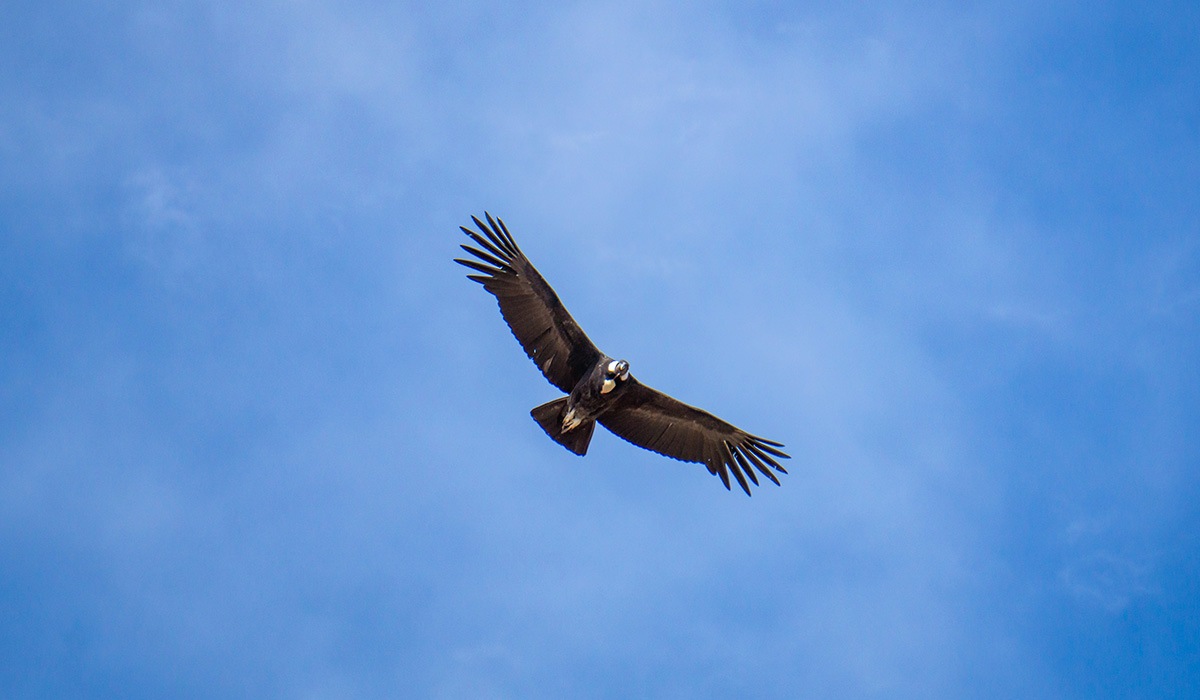
- It is the most famous viewpoint on the route, where Andean condors use the thermal currents to rise almost to the height of the visitors.
- The best time is the morning, usually between 8:00 and 9:00 am. At this time, the warm air currents begin to form and the condors come out to fly.
- Practical note: arrive early and bring warm clothes, as the temperature at the viewpoint can still be quite cold at that time.
If you already know the Sacred Valley in Cusco, the Colca will seem like a close cousin. Both are deep Andean valleys, dotted with traditional towns, pre-Hispanic farming terraces, and a strong cultural presence. The difference lies in the scale and character: where the Sacred Valley has a more historical and ceremonial feel (Pisac, Ollantaytambo), the Colca feels wilder and more natural, with the condor as the main star.
Towns and traditions of the Colca Valley
Beyond the canyon and its viewpoints, the Colca Valley holds another attraction that many travelers discover only when they are already there: its towns. Each one preserves its own character, inherited from the Collagua and Cabana cultures that lived in the area long before the arrival of the Incas. Among its towns are:
- Chivay is the starting point and the most lively in the valley, featuring an active local market and a good range of lodging. Just a few minutes away are the Chivay (or La Calera) hot springs, offering thermal waters of volcanic origin. These are ideal for relaxing the body after a long travel day or before the hike to the Condor’s Cross.
- Yanque, a quieter spot, surprises with its colonial church and traditional dance shows in the main square. This is a great chance to see the culture of the valley up close.
- Maca, on the other hand, keeps a more rustic and authentic feel, with its own colonial church and excellent views of the Sabancaya volcano.
One of the most visible symbols of this identity is the traditional textiles and outfits. The colorful embroidery, the distinct hats according to the town (a Collagua woman does not dress the same as a Cabana woman), and the hand-embroidered skirts tell, in every detail, the history of the community that wears them. Compared to the traditional Andean clothing of other areas of Peru, the Colca stands out for its colors and its uniquely shaped hats, while the Sacred Valley in Cusco tends to display geometric patterns more associated with Inca symbols.
Trekking and adventure in the Colca
For those looking for more than just a viewpoint and taking photos, the Colca Canyon is also enjoyed by walking. Trekking routes usually last between 2 and 3 days and combine a descent into the canyon, hidden villages at the bottom of the valley, and the return (usually the most demanding part) back to the surface.
The classic route goes down from Cabanaconde to the bottom of the canyon, passing through villages like San Juan de Chuccho and Cosnihua, until reaching the Sangalle Oasis: a small valley with natural pools and palm trees that contrasts completely with the dry landscape of the descent. Most hikers spend the night there before starting the climb back up the next day.
Some details to consider:
- Altitude: the starting point (Cabanaconde) is at about 3,300 masl, so it is recommended to have already spent a couple of days in Arequipa or Cusco to get used to the altitude.
- Difficulty: moderate to demanding, especially on the final climb, which can take between 3 and 4 hours of continuous climbing under the sun.
- Best time: from April to December, avoiding the rainy season (January-March), when the trails can become slippery.
- Preparation: good trekking shoes, sunscreen, enough water and, for those who prefer not to carry everything, it is possible to hire muleteers with mules for the luggage.
If you like this type of plan, the Colca fits perfectly into the most extreme and adventurous experiences in Peru. It is not a technical or high mountain hike, but it is one that tests your legs and rewards you with landscapes that few places in the world can offer.
When to go: weather and best season
Like a large part of the Peruvian Andes, Arequipa and the Colca Canyon have two well-marked seasons, and choosing the dates well can completely change the experience.
-
Dry season (April to December)
It is the best time to visit. The clear skies favor both the views of the canyon and the sighting of condors at the Cruz del Condor, and the trekking trails remain in good condition. Between June and August, the nights can be quite cold, especially in the valley, so it is a good idea to bring warm clothes.
-
Rainy season (January to March)
Rain is more frequent, the trekking paths can become slippery and the visibility at some viewpoints decreases. It is not impossible to travel in these months, but if the main goal is trekking or landscape photography, it is better to avoid them.
And how does it compare to Cusco?
The weather pattern is very similar to that of Cusco: same dry season, same rainy season, almost the same recommended months. The most noticeable difference is in the altitude and its effects. Arequipa (2,335 masl) is considerably lower than Cusco (3,400 masl), so you usually feel the cold and altitude sickness a bit less, although the Colca itself goes back up above 3,000 masl at several points on the route.
How to combine Arequipa with Cusco and Machu Picchu
One of the great advantages of Arequipa is how well it fits into an itinerary through the south of Peru. There is no need to choose between one destination or the other: with simple planning, both fit perfectly into the same trip.
-
Suggested route: Lima – Arequipa – Cusco – Machu Picchu
The most practical circuit usually starts in Lima, with a direct flight to Arequipa (about 1h 30min). There, between 3 and 4 days are spent on the city and the Colca Canyon, and then you continue by land or air to Cusco, where the second half of the trip begins: the imperial city, the Sacred Valley and, of course, Machu Picchu. If you are putting together this part of the itinerary, our complete guide from Lima to Machu Picchu details day by day how to organize that connection without problems.
-
The complete southern circuit
For those who have more time (10 days or more), there is the option to expand the route to a more complete southern circuit, adding Puno and Lake Titicaca between Arequipa and Cusco. This option adds one more stop —the floating islands of the Uros and the highland culture— before continuing to Cusco, although it is only worth it if the travel pace is not too tight, as it adds extra bus routes or flights.
In either case, the key is not to underestimate the acclimatization times: arriving in Arequipa (which is lower) before going up to Cusco and Machu Picchu helps the body adapt gradually to the altitude.
Practical tips
- Altitude and altitude sickness
Arequipa is located at 2,335 meters above sea level, an altitude much friendlier than Cusco (3,400 meters above sea level), so many travelers feel it is a good acclimatization point before going up. Even so, it is not completely free of it: the Colca Canyon goes over 3,000 meters above sea level in several sections, so it is a good idea to take it easy the first few days, hydrate well, and avoid alcohol until you adapt. Coca tea and pills for altitude sickness (sold over the counter in local pharmacies) are common allies among those who feel the first symptoms. - Estimated budget
Costs vary depending on the travel style, but as a general reference:- Budget: basic lodging, shared tours, and local food, an accessible range for those traveling on a tight budget.
- Mid-range: boutique hotels, private or small group tours, and a bit more food variety.
- High-end: luxury lodging, private transport, and exclusive experiences like panoramic dinners or custom tours to the Colca.
- What to bring
- Clothes in layers: mornings and nights are cold, but the midday sun can be intense.
- Sunscreen and sunglasses (the UV radiation at this altitude is stronger than it seems).
- Comfortable or trekking shoes, especially if you plan the hike to the bottom of the canyon.
- Reusable water bottle and some cash in soles, since in the valley towns there are not always ATMs or card access.
- ID documents at hand, required to enter some areas of the canyon and nature reserves.
