

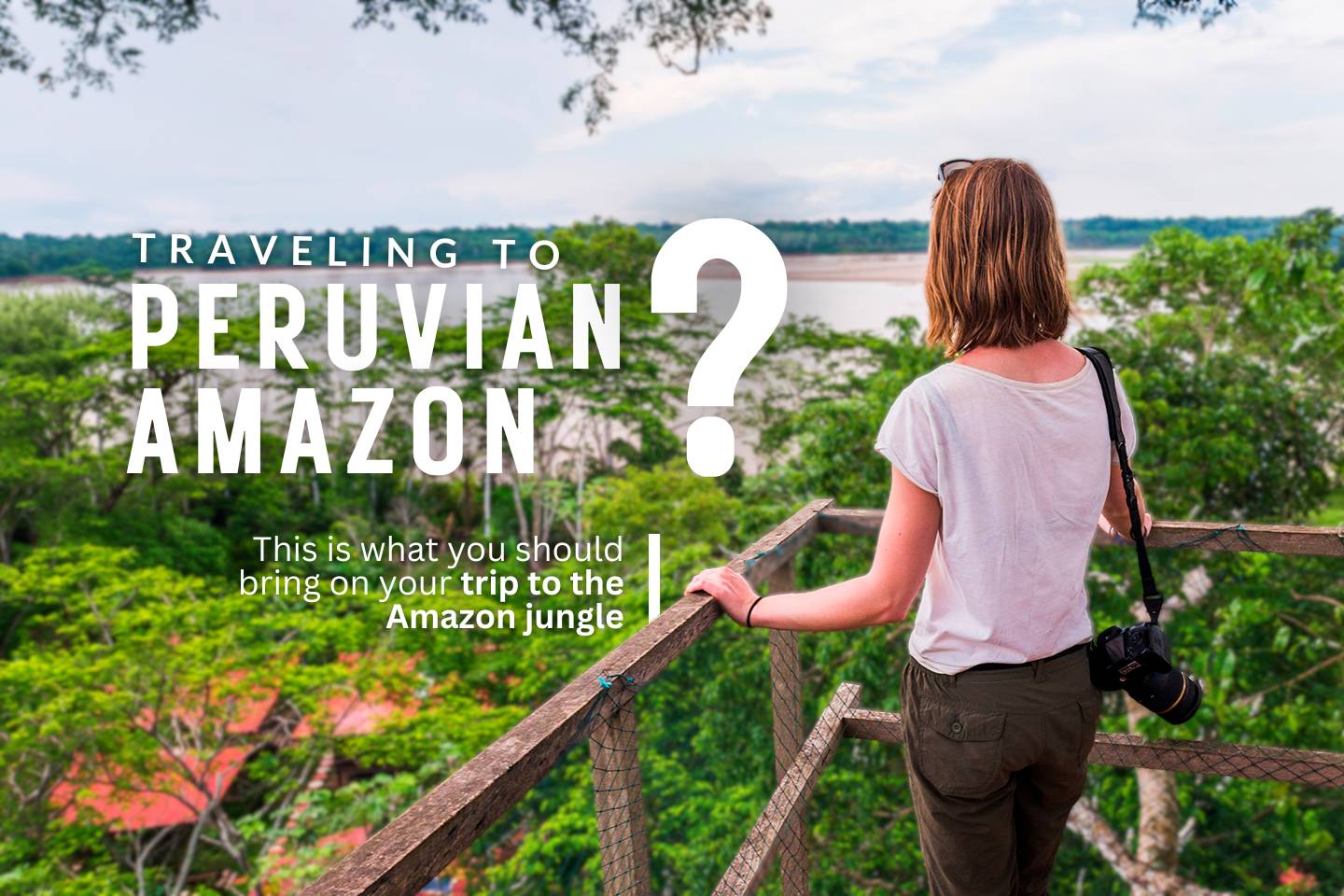
The Peruvian Amazon is a privileged destination for its natural landscapes, the biodiversity that lives in it, the ancestral customs of its inhabitants, and its delicious gastronomy with jungle flavor that will delight the most demanding palates. A trip to the Amazon rainforest is an immersion in the lungs of the world, where every corner offers a vital connection with nature.
The Peruvian jungle has very special charms that will captivate you as soon as you get off the plane and connect with the humid air, the warm weather, and the vibrant joy of its people. But for everything to go perfectly on your tour of the Peruvian Amazon jungle, you must carefully consider what to wear in the Amazon. To make your expedition comfortable and safe, our specialized executives have identified key items that cannot be missing from your luggage.
If you are going on vacation, knowing what to bring to the Peruvian Amazon, especially the first time, can be a logistical challenge. The tropical climate demands garments that protect you without suffocating you, especially when you prepare for an Amazon jungle hike through dense trails. Therefore, we have prepared this detailed guide so that you have the best experience possible in this 2026.
Factors to consider before packing
- Extreme Humidity: In the jungle, clothes hardly dry in the open air, so you can choose synthetic quick-dry fibers.
- Protection against Insects: Clothing is your first line of defense. Light colors and long sleeves are the golden rule.
- Specific Footwear: Depending on the level of your Amazon jungle hike, you might need everything from trekking sneakers to rubber boots (usually provided by the lodges).
Note: Avoid the use of perfumes or lotions with sweet smells, as they usually attract insects. For your tour of the Peruvian Amazon jungle, the ideal is to maintain hygiene with neutral soaps and use repellents with DEET or picaridin.
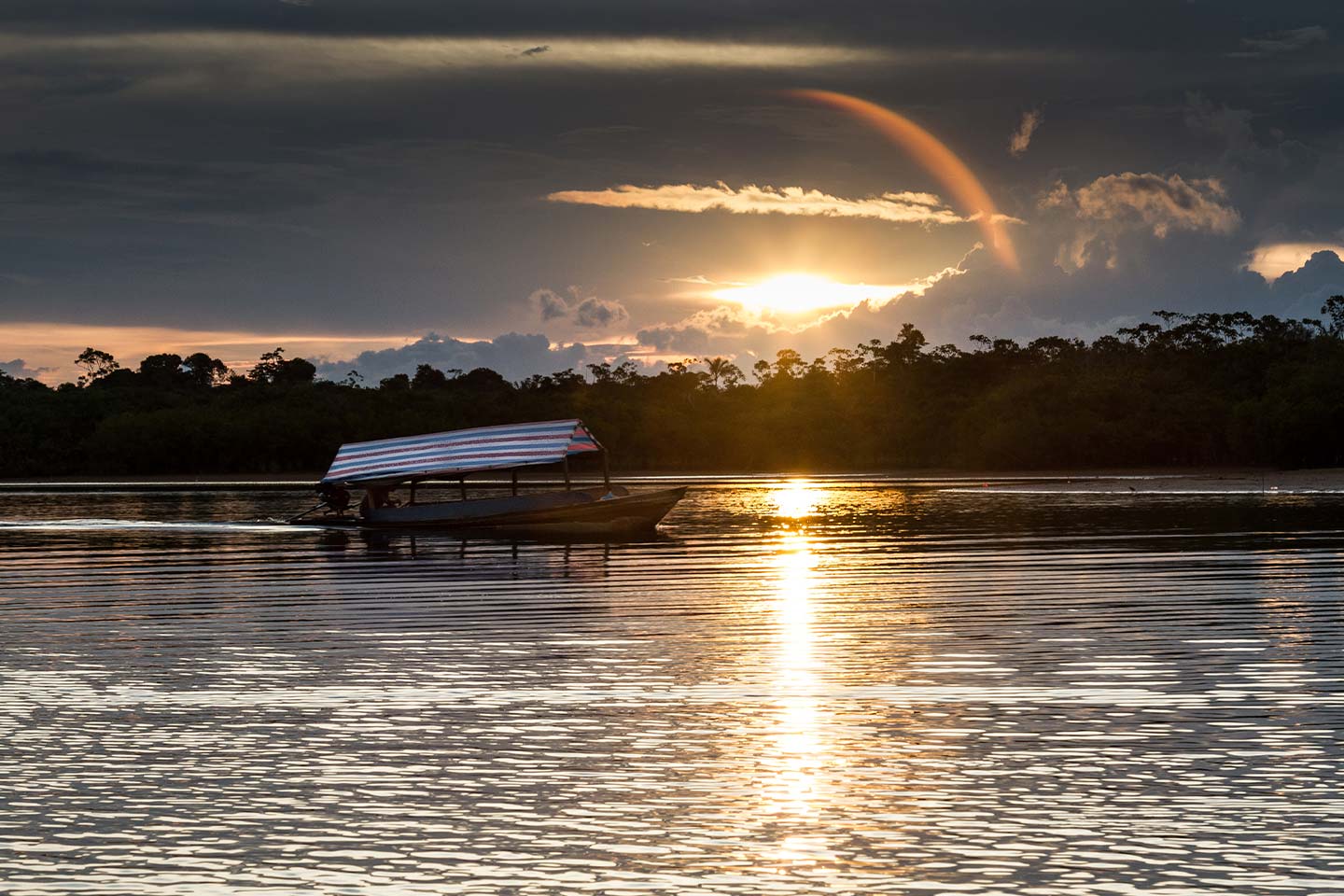
About the Peruvian Jungle: A Sanctuary of Biodiversity
The Peruvian Jungle is one of the largest and most fascinating regions in South America, covering almost 60% of the national territory. This vast territory is divided into two large sub-regions that define the type of “Amazon jungle trip” you will experience:
- High Jungle (Rupa Rupa): It is located on the eastern slope of the Andes (between 800 and 3,000 masl). It has a rough terrain with narrow valleys and deep ravines. Its climate is temperate-humid and it is the area with the most rain in the country, which gives life to the magical cloud forests.
- Low Jungle (Omagua): Below 800 masl, the immense Amazon plain extends. It is a warm and humid area, where rivers wind forming meanders. This is where biodiversity reaches its maximum expression in “firm land” ecosystems and flood zones.
In this region, you can find world-renowned protected areas like the Manu National Park and the Tambopata National Reserve, which for this 2026 continue to be the most important shelters for endangered species and the home of indigenous communities that keep their ancestral culture alive.
Important Fact: Peru has been officially recognized as the world leader in bird diversity, with an updated record of 1,879 species. The vast majority of these winged jewels live in the Peruvian Jungle, making any Amazon jungle walk a unique opportunity for bird watching.
What to expect from the climate in 2026?
- Dry Season (Low Water): From May to October. This is the ideal time for hiking, as river levels drop and the paths are easier to walk.
- Rainy Season (High Water): From November to April. The rivers grow, allowing navigation through areas that are inaccessible in the dry season; a visually stunning experience.
Suggestion: If you plan to visit Manu in this 2026, remember that the trip usually starts in the Andes (Cusco) and descends gradually, letting you see how the landscape changes from mountains to tropical jungle in a single day.
What to wear in the Peruvian Amazon?
In the jungle, the golden rule is versatility. You will need clothes that you can wear in layers and that dry quickly, as tropical climates have unpredictable rain and constant humidity. It is better to use light colors (beige, light gray, or pale green); this will keep you cool under the sun and will allow you to quickly see if any insect has landed on you.
We suggest the following technical list for your tour through the Amazon jungle of Peru:
- Long-sleeved t-shirts: Even if it is hot, long sleeves are your best shield. Avoid mosquito bites and contact with stinging plants during any hike through the Amazon jungle. Use at least two or three breathable t-shirts made of synthetic fibers; make sure the fabric is not too thin, as mosquitoes can bite through very thin materials.
- Exploration pants: They must be long and made of light material. It is recommended to bring at least two pairs in case they get wet or dirty in the mud. Zip-off pants are very functional to quickly change style when returning to the lodge.
- Raincoat or rain poncho: In the jungle it does not “rain”, water falls in an epic way! A light poncho is essential to keep you dry during boat excursions. Also, it will serve as a windbreaker if the temperature drops at night.
- Sturdy and strategic footwear: You do not need heavy leather mountain boots, as they take forever to dry. Choose synthetic trekking sneakers or basic footwear that you do not mind getting dirty. Important: Bring 3 to 4 pairs of high socks; insects usually attack the ankles, and keeping your feet dry is vital to avoid blisters.
- Head accessories: A wide-brimmed hat is better than a cap, as it also protects the neck. The Amazonian sun is extremely strong. Due to the humidity, hair often becomes wild, so bring elastic bands to keep it tied up and cool.
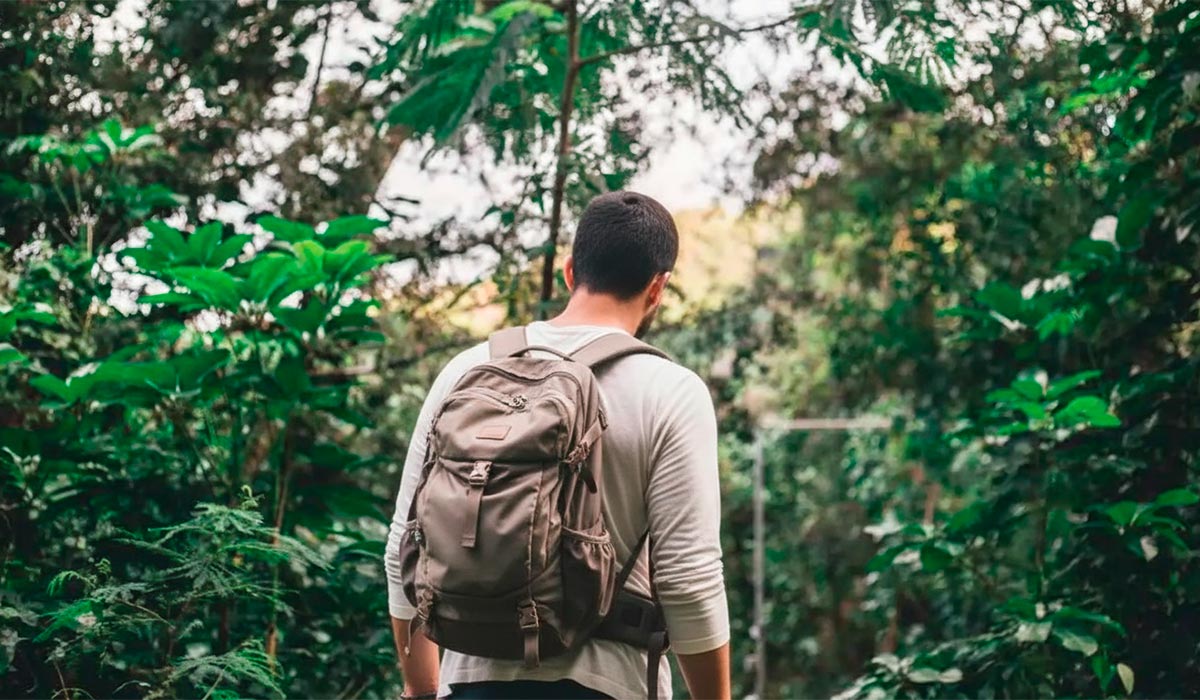
Additional luggage for maximum comfort
Besides the basics, do not forget to include these items on your trip to the Peruvvian Amazon:
- Rest clothes: Comfortable shoes (like sandals or crocs) to use inside the lodge.
- Light thermal layers: A sweater or light jacket for the nights or in case a “friaje” (cold front from the south) arrives.
- Water clothing: Swimsuit to enjoy lagoons or permitted rivers and thin shorts for relaxing moments in the hammocks.
- Eye protection: Sunglasses with UV filter for river navigation, where the sun’s reflection is intense.
Note: Many lodges in Tambopata or Iquitos provide rubber boots for hikes in muddy areas. We recommend bringing long socks that reach the knee to prevent the rubber from rubbing and hurting your skin during the walk.
In addition to what to bring to the Peruvian Amazon, we recommend bringing:
- Sunscreen
- Camera and related accessories: charger, memory card(s), possibly an extra battery, tripod, etc.
- Plug adapter
- Flashlight with batteries
- A copy of your passport for checkpoints
- Money
- Your usual medicines and bathroom items.
- Quick-dry towel if not provided by the accommodation
- Toilet paper
Safety and Logistics Tips for the Amazon
Although you will always explore with the company of experts, the jungle can present challenges if strict guidelines are not followed. Here are the key recommendations from our specialists:
- Packing strategy: Always prioritize comfortable and light-colored clothing; remember that dark tones attract insects. Keep your skin protected with long sleeves and use closed footwear or high boots, especially if your hike through the Amazon jungle crosses swampy or muddy areas.
- First Aid Kit: Do not forget painkillers and antihistamines to relieve possible headaches from the heat or reactions to bites. Repellent and sunscreen must always be at hand. Vital: Make sure you are vaccinated against yellow fever and tetanus before starting your tour through the Amazon jungle of Peru.
- Smart Hydration: Tropical heat dehydrates you quickly. Carry a water bottle and drink water constantly, but slowly: small sips every 10 minutes are much more effective for the body than drinking large amounts at once.
- Cultural Respect: If you visit an indigenous community, act with respect. Always ask for permission before taking photographs or recording videos. Be aware that, in some areas, it is a local custom to ask for a small contribution for photos.
- Expert Guide: Never try to explore on your own. Walking through the jungle is an incredible adventure, but the terrain can be confusing and dangerous. The company of a certified guide is mandatory to guarantee your safety.
- Tech Care: Humidity is the number one enemy of your devices. Keep your camera and cell phone in sealed plastic bags (Ziploc type) to prevent water vapor from damaging the internal circuits.
- Minimalist Luggage: The ideal is to travel with a single backpack. Carrying excess luggage will complicate transfers in small boats and make your experience less smooth. Remember: we are going to nature, not to an urban resort.
- Travel Insurance: This is the most important point for visiting Peru in 2026. Buy travel insurance online that covers medical evacuations and logistical problems. Traveling with support will give you the peace of mind needed to enjoy the Amazon wonder.
Final Suggestion: When packing, leave a small space to bring some local crafts. By buying them directly in the communities, you support the sustainable economy of the region and take an authentic piece of the Amazon home.
Tours through the Peruvian jungle
Exploring the Peruvian Jungle is discovering a world where biodiversity, cultures, and wild landscapes surprise at every step. From walks under the canopy of giant trees to river navigation through winding rivers, tours through this region offer a total immersion in nature. Local communities not only share their ancestral traditions but also teach us the importance of preserving these unique ecosystems.
In this 2026, the trend is to combine Andean history with Amazonian mystery. These are the most popular tours you cannot miss:
- From Machu Picchu to the Amazon jungle: The most complete package for those who want to see the wonder of the world (Machu Picchu) and, right after, visit the Tambopata reserve or Iquitos. It is the ideal transition between stone and infinite green.
- Inca Trail and Amazon adventure: An experience that balances the physical demand of the journey through the Inca Trail to Machu Picchu with adrenaline activities in the Peruvian Amazon, such as canopy, alligator spotting, and piranha fishing.
- Tours to Manu from Cusco: One of the most biodiverse routes on the planet. Starting from the imperial city, this tour crosses the cloud forests until reaching the lowlands of Manu, the purest refuge for wildlife.