

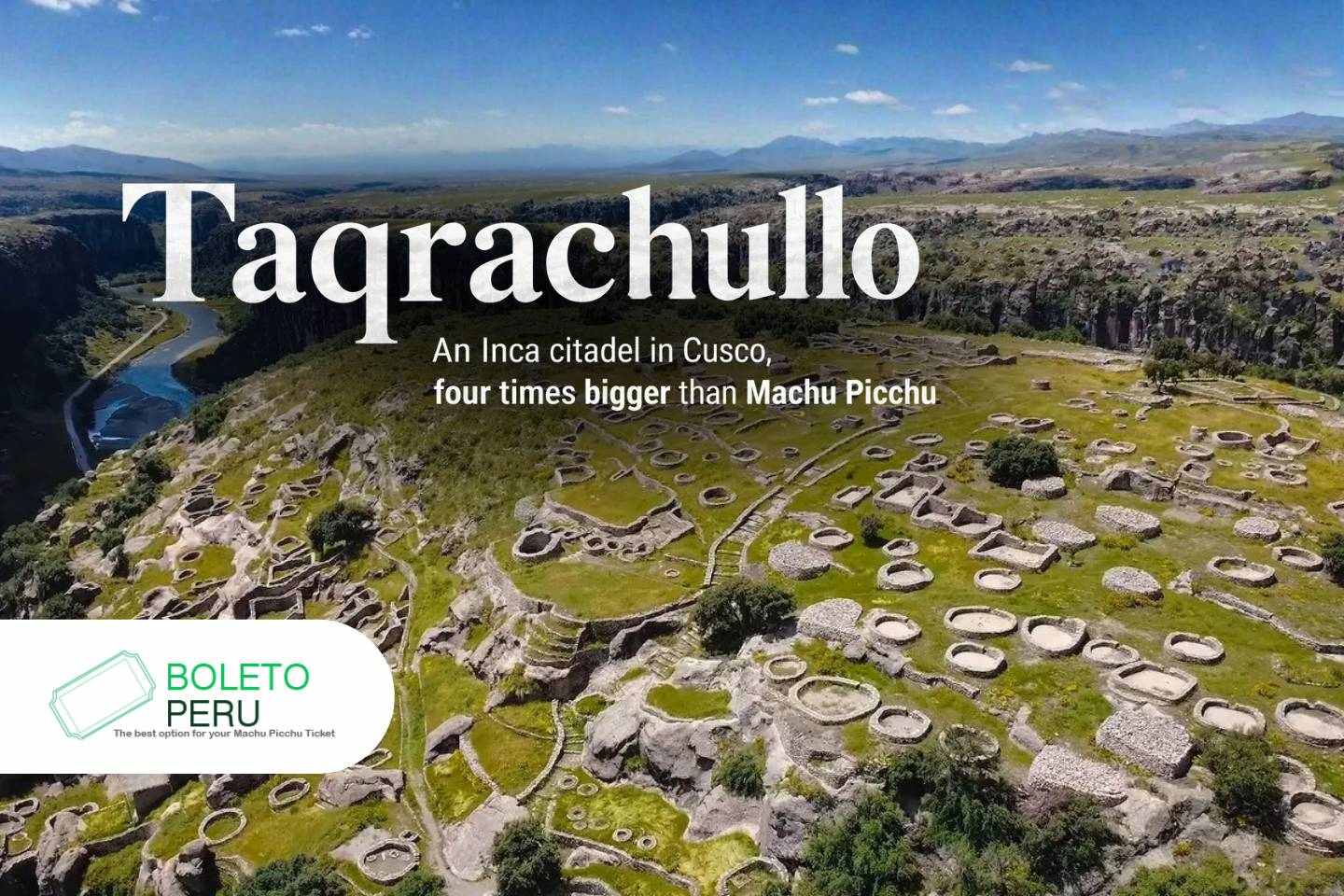
Maria Fortress or Taqrachullo, as they know it locally, is one of those places that still feel like a real discovery. The site sits on a steep cliff with direct views of the Three Canyons landscape, in one of those locations that the Andean towns chose with a clear goal: to dominate the territory, read it, and control it. Therefore, being up there and understanding why they built it exactly there is part of the experience; what makes this destination especially interesting is its timing.
In December 2024, Maria Fortress officially opened to tourism after a restoration process that highlighted more than 300 archaeological structures. Moreover, it is not a site that has been receiving visitors for decades: it is new, well preserved, and almost nobody knows it yet.
If you are thinking about what to see in the Espinar province in the Cusco region, outside the usual circuits, this is what you are looking for. In this guide, we tell you exactly what this place is, where it is, how to get there, and why more and more travelers are adding it to their route through Cusco.
What is Taqrachullo? The fourth most important temple of the Tahuantinsuyo
Taqrachullo is an Inca archaeological complex, built in the south of the Cusco department. Because of its size, diversity of structures, and historical weight, it is in a different category than most archaeological sites in the region. Consequently, experts place it among the four most important temples of all the Tahuantinsuyo.
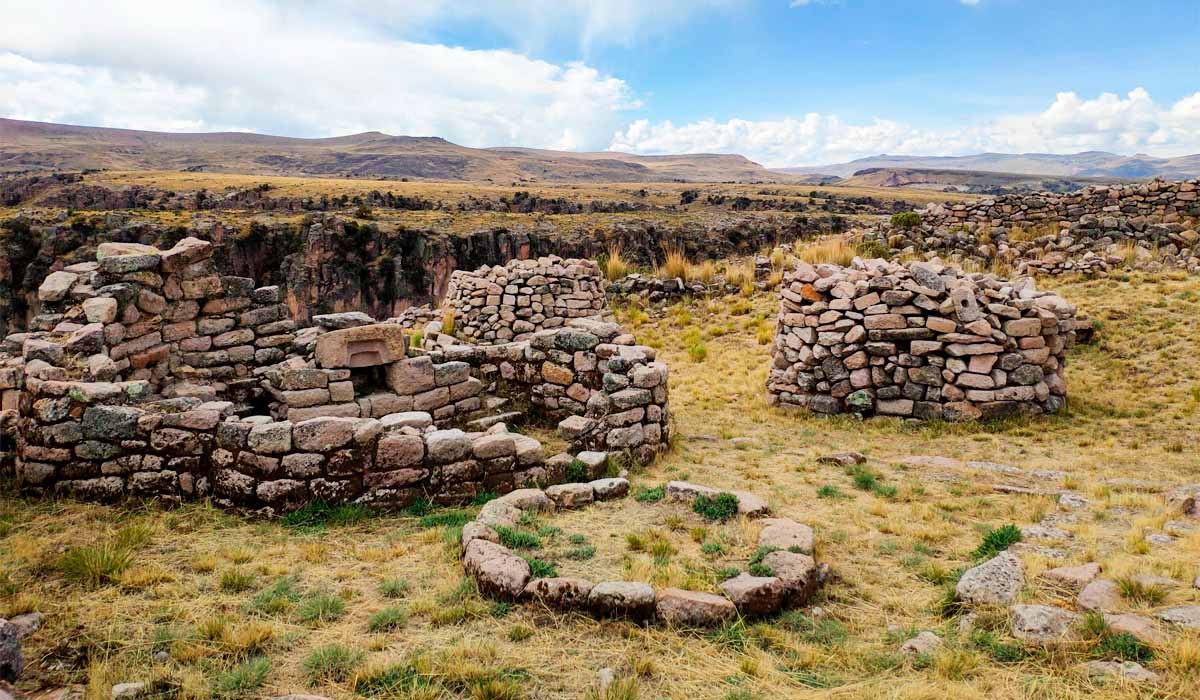
The site houses more than 600 buildings: living areas, burial sites, imperial storage houses, ceremonial spaces, and original sections of the Inca road system. The combination of circular and rectangular structures is not accidental. Rather, it responds to a well-defined architectural hierarchy, where each shape had a function: religious, administrative, or social. It was a city designed, organized, and built to last.
Its importance was officially recognized in 2010, when it was declared a Cultural Heritage of the Nation. However, tourist access was only enabled in December 2024, after years of archaeological work, restoration, and consolidation of structures. Ultimately, that makes it a destination that has practically just opened to the world, with all that this implies for those who arrive in these first years.
What does Taqrachullo mean in Quechua?
The name says it all, if you know how to read it. Taqrachullo comes from Quechua and is made up of two words:
- T’acra: the mother rock, the base stone of the territory.
- Chullo: the frozen water, referring to the natural water deposits that characterize the environment.
Together, they describe the place as a rock fortress on a high plateau, where water remains trapped in the landscape. It is not a poetic or symbolic name in the abstract sense, it is simply an exact description of what is there.
That says a lot about how the Incas related to their territory. They did not name places on a whim or by empty tradition, they named them for what they were: their geography, their resources, their function. Taqrachullo is rock and frozen water because that is exactly what defines that corner of the high plateau. A name that has been for centuries, without meaning to, the best summary of the site.
History of Taqrachullo: the Inca Empire on the routes of the Qhapaq Ñan
The size of Taqrachullo impresses, but what really makes it unique is the place it occupied within the imperial system.
The site was part of the Qhapaq Ñan, the road network that connected the four regions of the Tahuantinsuyo (of which the Inca Trail is a part), and its position in the heights of Espinar is no coincidence. From there, the pass between the high plateau and the productive zones of the southern Andes was controlled, a mandatory transit point that the Incas knew perfectly how to use. Whoever controlled that pass, controlled the flow of resources, troops, and information through one of the most strategic routes of the Empire.
That position explains a lot: the architectural density of the site, its material wealth, and the place it occupies today in the Inca religious hierarchy according to current research. It was not a passing settlement. It was a node.
The role of Taqrachullo in the administration of the Tahuantinsuyo
One of the most revealing elements of the site are its colcas, the stone warehouses that appear spread throughout the area. To understand their importance, you have to understand how the Inca State worked: there was no coin, there was no market in the modern sense. What existed was redistribution, since the farming and livestock surpluses were gathered in these warehouses and from there they were distributed to state workers, the army, and local communities. It was the mechanism that kept the whole Inca Empire moving.
The amount and scale of colcas in Taqrachullo rules out any idea that this was a secondary provincial post. The logistics managed here were of high rank within the imperial system.
And along with that administrative function lived another equally important one: the religious one. The ceremonial spaces of the site confirm that T’aqrachullo was also a worship center, a place where political power and sacred power worked together, as was usual in the great centers of the Tahuantinsuyo. That combination, administration and ritual in the same complex, is what makes it one of the most complete and meaningful sites known of the Inca Empire.
Taqrachullo and Maria Fortaleza: are they the same place?
Yes, it is the same site. The two names refer to the same archaeological complex, but they come from different historical moments.
Taqrachullo is the original name in Quechua, the one used by the ayllus that lived in this area of the high plateau before and during the Inca Empire. With the arrival of the Spanish, the place was renamed as Maria Fortaleza, and it is under that name that it still appears in some official documents and on local signs in the Espinar province.
Today, however, the Quechua name is gaining ground, driven in part by the international coverage that the work of National Geographic has generated at the site. If you are researching how to get there or looking for references about this destination, it is worth keeping the two names handy: depending on the source, it can appear under either of the two identities.
About the more than 600 structures: what was found in Taqrachullo?
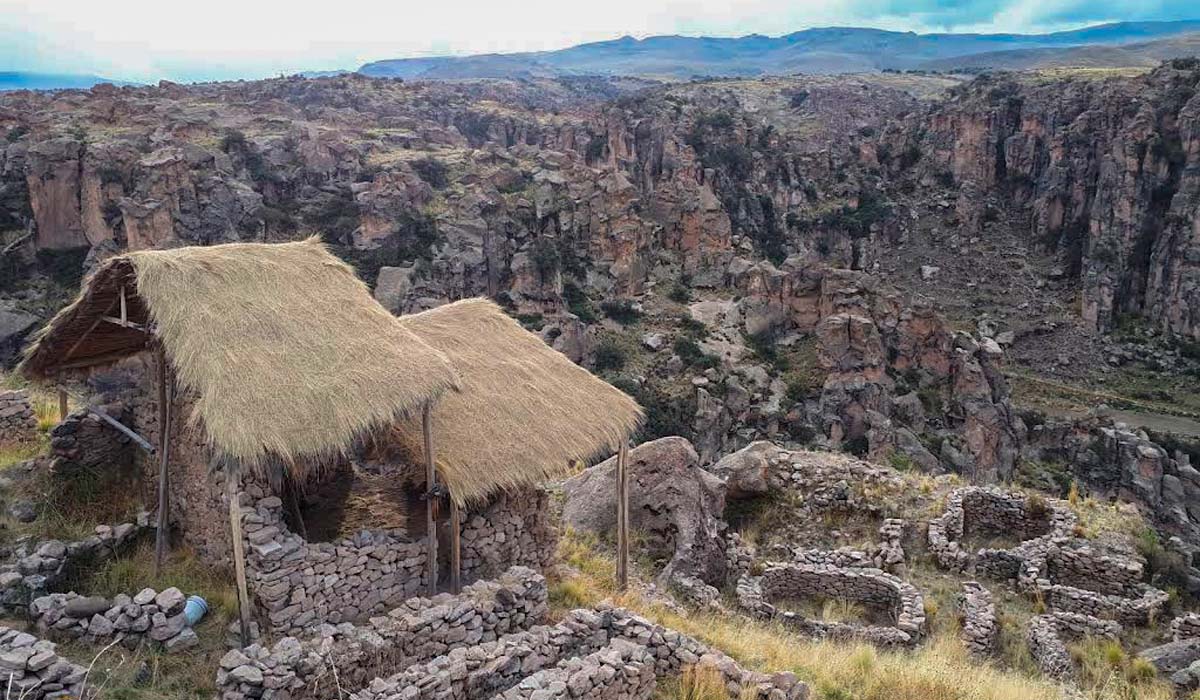
Excavations and restoration works have been revealing a site with a practical complexity that few expected. What is there is not a fortress with a single function, but a complex where very different uses lived together:
- Residential spaces of different sizes, which point to a large permanent population.
- Funerary structures accompanied by thousands of metalwork pieces, pottery, and ritual objects recovered during the excavations.
- Imperial colcas, the warehouses of the Tahuantinsuyo, from where resources were managed and redistributed along the Qhapaq Ñan.
- Ceremonial spaces that confirm the high sacred rank of the site within the Inca religious system.
- Original sections of stone path that connected the complex directly with the road network of the Empire.
All this in one place, at a high altitude, on a cliff with visual control over the Three Canyons. It was not a checkpoint or a military fortress in the traditional sense. It was a node where administration, worship, and imperial logistics crossed, and that combination is exactly what makes it different from other archaeological sites in the Cusco region.
Where Taqrachullo is: location and distance from Cusco
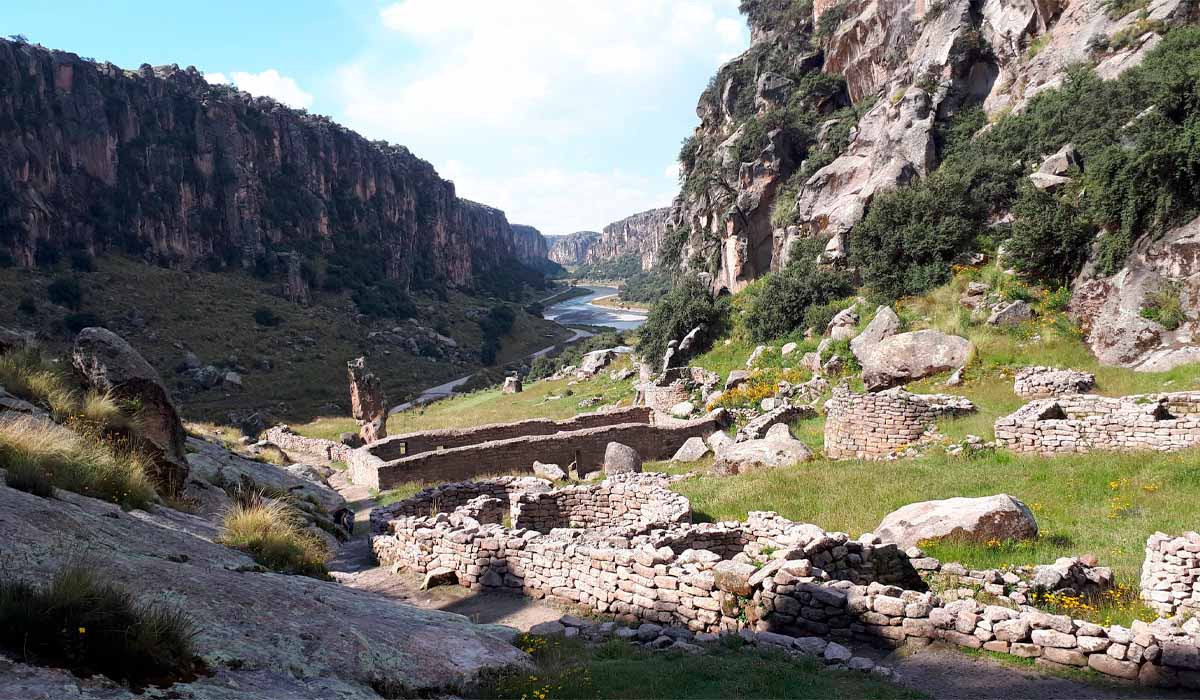
Taqrachullo is in the Suyckutambo district, Espinar province, in the far south of the Cusco department. The complex sits on a rocky cliff with direct views of the Virginniyoc river canyon, right where it meets the Totorani river.
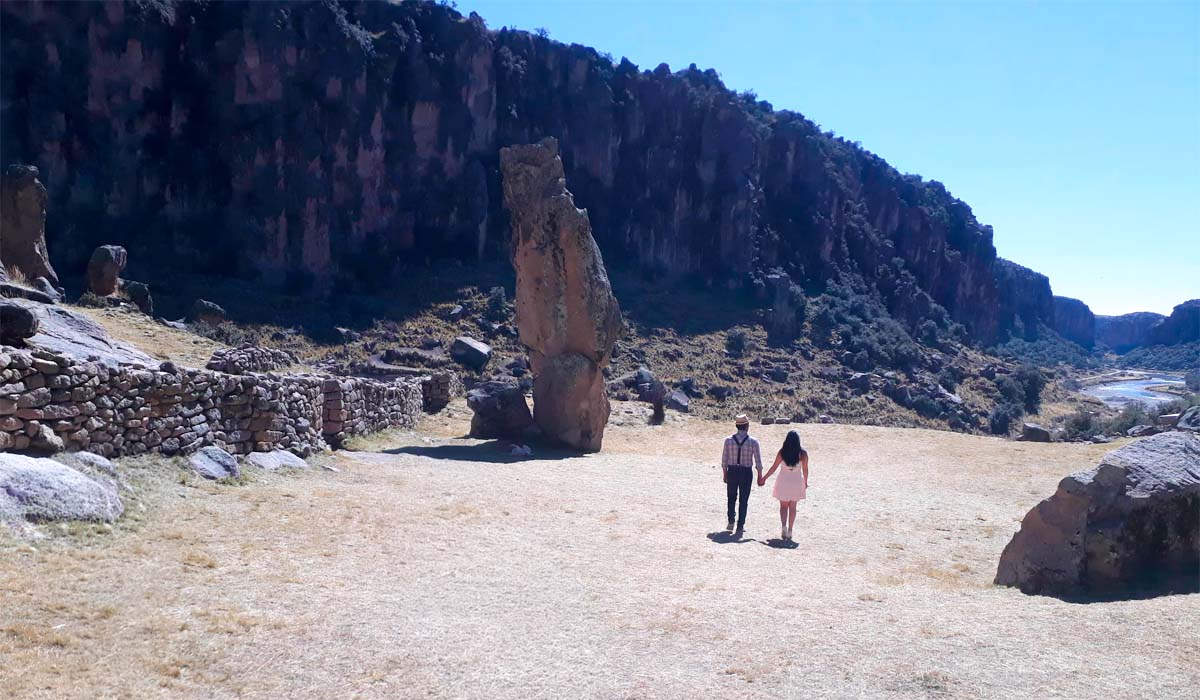
It is a location that impacts you from the moment you arrive: the plateau, the canyons, and the altitude combine to create a landscape that is unlike any other archaeological site in the region. You do not need to have read anything about the place to understand, as soon as you see it, why the Incas chose to build there.
How to get there from Cusco
There are three ways to get there, and the choice depends a lot on the type of traveler:
- Private tour from Cusco — The most recommended option, especially for a first visit. A local guide with private transport takes care of everything: hotel pick-up, round-trip transfer, and historical background during the visit. The difference a good guide makes in a site like this is big; there is much you do not see if you do not know where to look.
- Public transport — The cheapest alternative, but also the most complex. From the land terminal in Cusco, there are buses to Espinar (Yauri), a journey of between five and six hours. Upon arriving in the province, you have to arrange extra local transport to get closer to the site. It works, but it requires time, patience, and some experience traveling through Andean rural areas.
- Own vehicle — Possible, but recommended only for those who have experience on Andean routes. A 4×4 is essential: the final sections to the site require it. During the dry season, the dirt road is manageable; in the rainy season, the route can become quite complicated and it is not worth the risk.
Taqrachullo and National Geographic: why the world is talking about this sanctuary
There are archaeological sites that have been well documented in literature for decades, without the public knowing they exist. Taqrachullo was one of them.
Declared Cultural Heritage of the Nation in 2010 and restored over years of quiet work, the site opened to tourism in 2024 without too much noise. What changed everything was the report that National Geographic published in 2026. In a matter of days, T’aqrachullo went from being a destination known by archaeologists and very specialized travelers to becoming one of the most searched Andean sites in Peru.
That NatGeo dedicates a feature of that size to a site is no accident. The institution does not cover minor places: when they put the focus on something, it is because the scientific data and the archaeological context justify it. And in this case, they justified it more than enough.
What did National Geographic reveal about Taqrachullo?
The report put on the table information that until that moment had not reached the general public:
- The real scale of the complex — more than 600 structures with different functions inside the same stone city, a number that surprised even those who already followed the site closely
- Its connection with the Qhapaq Ñan — it documented its role as a strategic node inside the road network of the Empire, a role that explains both its size and its wealth
- The archaeological findings — funeral material and goldsmith pieces that, in the words of archaeologist Emerson Pereira, have no comparison with what was found in other sites of the region
- Its place in the Inca hierarchy — Pereira places it as the fourth most important temple in all of the Tahuantinsuyo, a statement backed by the excavations
The photos in the report are impressive. But there is something that no magazine can give you: being there, with the highland wind in your face and those stones in front of you. That is something else, and it only happens when you arrive on your own.
Is Taqrachullo bigger than Machu Picchu?
It is the most common question since the international report put the site on the map, and it deserves an honest answer. In terms of structures, yes: Taqrachullo has over 600 registered buildings, compared to the approximately 200 found inside the walled area of Machu Picchu. In extension, there is no discussion: this one is considerably bigger.
But the most interesting comparison is not about size, but about the experience.
Machu Picchu impresses with the precision of its architecture and that almost unbelievable location among cloud forest mountains. Meanwhile, T’aqrachullo is wider, rougher, and completely integrated into a puna landscape that has not been modified. There are no crowds, no infrastructure, nothing that stands between the visitor and the site. The impact is different, but not less.
Regarding historical weight, both sites play in a similar league, although with important details. If current theories are confirmed, T’aqrachullo would have had a religious hierarchy even higher than that of Machu Picchu within the Inca system. What Machu Picchu does have, and T’aqrachullo does not yet, is over a century of accumulated research. This site is just starting to tell its story.
The comparison helps to understand the scale of the discovery, but whoever arrives at T’aqrachullo looking for an alternative version of Machu Picchu is going to find something completely different. A site with its own logic, its own landscape, and its own kind of wonder; and that, in reality, is exactly what makes it interesting.
Frequently asked questions about Taqrachullo
- Is T’aqrachullo open all year?
Yes, the site has received visitors all year since its opening in December 2024. That said, the dry season (April, June, July, August, September, and October) is clearly the best time to go: the terrain is easier to handle and the views are notably better. There is no official closure in the rainy season, but if you are planning a visit between January and March, it is a good idea to check the road access conditions before leaving. - How much time is needed to tour the site?
The full tour of the complex takes between three and four hours of walking. If we add to that the trip from Cusco (between four and five hours each way), it is clear that this is a full-day excursion. You have to leave early and arrive with energy. - Are there services in Taqrachullo?
The services are basic, as usually happens in recently opened sites that still keep their most natural state. There are toilet facilities in the entrance area, but there are no restaurants or points of sale inside the site. Organized tours include lunch and supplies for the route. If you go on your own, take everything you need from Cusco: water, food, and some extra warm clothes. - Is it accessible for older people or those with reduced mobility?
The terrain is rocky, uneven, and with considerable uphill sections, so we must be realistic: completing the full circuit can be physically demanding for people with reduced mobility or joint problems.
