

Machu Picchu receives about 1.5 million visitors every year. It is one of the most sought-after wonders in the world, and that popularity brings full trains, buses going up and down the Hiram Bingham road, and thousands of people walking the same citadel every day. With that volume of movement, it is natural that incidents also happen: some related to transport, others to the health of the travelers themselves in an environment of considerable altitude.
This does not mean that Machu Picchu is a risky destination. The vast majority of those who visit the citadel return with the experience they were looking for, without problems. But knowing what has happened in recent years, and why, helps to make better decisions before the trip: what transport to choose, how to prepare physically, and what to expect from a responsible agency.
This article gathers verified information about the most relevant incidents that have happened recently, along with practical recommendations to travel with peace of mind and a guide to choose a certified agency. The idea is not to cause alarm, but to give the necessary tools so that the visit to Machu Picchu is, besides unforgettable, safe.
Incidents recorded in recent years
-
Fall on the Inca Trail (May 2026)
On May 20, 2026, Matthew Cameron Paton, a 53-year-old Australian tourist, died after falling down a 400-meter cliff at kilometer 106 of the Inca Trail. It is the most serious case recorded on the trekking route to Machu Picchu so far this year, and it reinforces an important point: the Inca Trail is not just any path, it has narrow sections, with steep drops, where going with a certified guide and respecting the group’s pace is not a formality, it is what reduces the real risk.
-
Death due to a health breakdown in the citadel (June 2026)
On June 26, 2026, Thierry Francois Roger, a French tourist, suffered a health breakdown during his tour of Machu Picchu. He was taken in an ambulance to a health center in the town of Machu Picchu, but he died on the way. It is the second case in a little over a year (after the one in June 2025) of a visitor dying from a health breakdown inside the citadel, which confirms that altitude and physical effort are a recurring risk factor, not an isolated case.
After these events, the Regional Manager of Foreign Trade, Tourism, and Crafts of Cusco (Gercetur) pointed out that both tourists received immediate attention according to protocol, and urged visitors to hire formal agencies and certified guides. On their side, the Association of Professional Tour Guides of Cusco (PROGATUR) raised the need to improve emergency care in the area, proposing to install defibrillators and strengthen immediate response protocols.
-
Train crash on the Ollantaytambo route (December 30, 2025)
On December 30, 2025, two tourist trains from the companies PeruRail and Inca Rail crashed head-on near the Pampacahua area, on the route that connects Ollantaytambo with Machu Picchu. The accident left at least one railway worker dead and dozens of passengers injured, including national and foreign tourists. Early reports point out that one of the trains entered the track given to the other, allowing both trains to travel in opposite directions on the same section, something that the railway rules strictly forbid.
After the crash, the railway company stopped the service on the line that connects Machu Picchu with Cusco, and about 2,000 passengers were evacuated from the Machu Picchu station to Ollantaytambo during the early morning. The case showed a clear rule failure: two trains from different companies sharing the same section without the coordination required by the rules. It is the clearest example of why railway transport, despite being the most used option by visitors, needs constant checking.
-
Death of a tourist during the tour (June 2025)
In June 2025, an Argentine tourist died inside the citadel while taking part in a guided tour. According to her husband’s statement to the authorities, the woman started to feel general sickness and vomiting during the tour, which is why emergency medical care was requested. The medical staff moved her in an ambulance to the local health center, where the doctor on duty could only confirm her death due to a cardiac arrest.
This case is not related to transport or building failures, but with a factor that many travelers underestimate: the altitude and the physical effort of the tour. Machu Picchu is located at more than 2,400 meters above sea level, and the climb inside the citadel requires a real cardiovascular effort. It is a case that directly connects with the importance of acclimatization and knowing your own health conditions before going up.
-
Bus accident on the Hiram Bingham road (September 2024)
In September 2024, a bus from the Consettur Machu Picchu company, which was taking tourists back from the citadel, went off the Hiram Bingham road. The accident left at least 23 people injured, mostly tourists, including Italian and Mexican citizens.
The Hiram Bingham road is a road with tight curves and a steep slope, the only land route that connects Aguas Calientes with the entrance to Machu Picchu. This incident is a good starting point to talk about something very practical: not all access routes have the same level of risk, and the choice of transport (and the company that runs it) matters as much as the choice of the tour agency.
Each of these cases points to a different risk factor: railway coordination, the physical condition of the traveler, and the state of land transport roads. They are exactly the three main points that we are going to develop in the next section, the one about recommendations for a safe trip.
Safe trip to Machu Picchu: Facts for a safe trip
Transport: train, bus, or walk
The way you get to Machu Picchu is not a small detail, each option has its own demands and it is good to know them before deciding.
- The train is the most used option, it operates between Cusco (or Ollantaytambo) and Aguas Calientes, with PeruRail and Inca Rail as the two main companies. It is a good idea to book in advance, choose a comfortable schedule according to the rest of the itinerary, and confirm the ticket details (name, document, date) before traveling, since any mistake can complicate the entry.
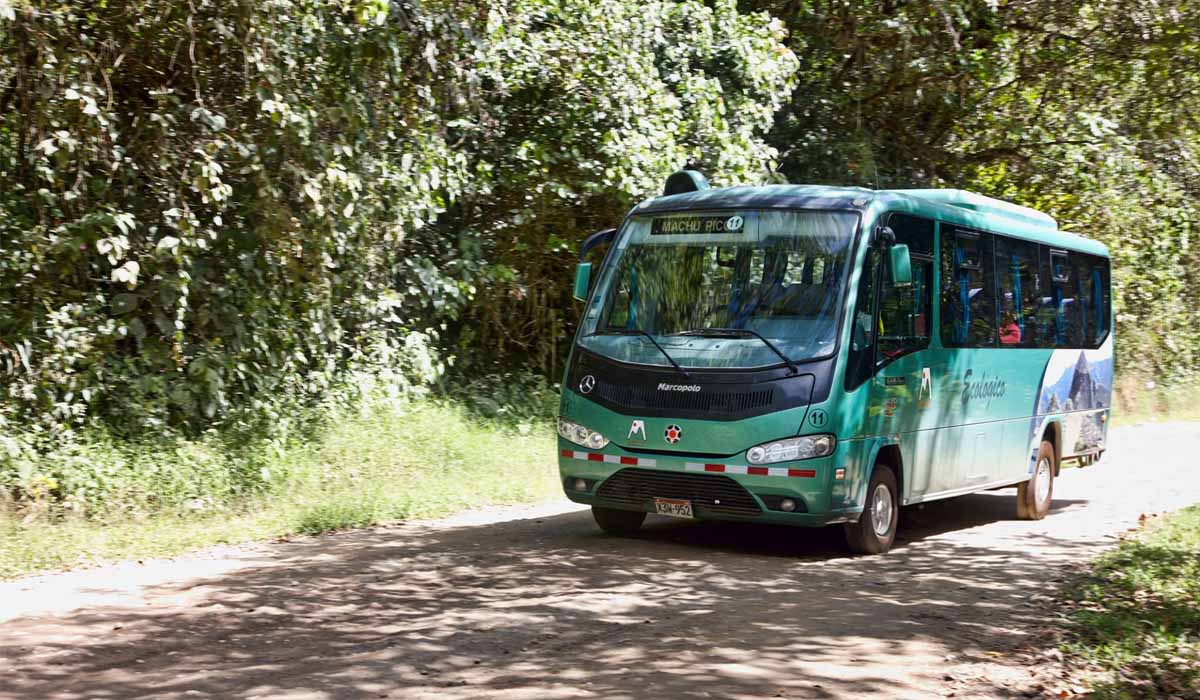
- The bus, which connects Aguas Calientes with the entrance to the citadel through the Hiram Bingham road, is short but demanding: sharp curves and steep slope. The service is exclusively operated by Consettur, the only authorized company for this route, so there are no alternative options to evaluate here, just make sure to buy the official ticket (at the authorized ticket window or in advance) to avoid long lines at peak hours.
- The walk, whether it is the classic Inca Trail or alternative routes like Salkantay, is the most complete experience, but also the one that demands more physical preparation and respect for the terrain. Always going with a certified guide, keeping the group’s pace, and not separating from the marked trail are simple measures that make a difference in narrow sections or with steep drops.
Health and altitude
Cusco is at 3,400 meters above sea level, and Machu Picchu, although lower (2,430 meters above sea level), still demands a considerable cardiovascular effort because of the stairs and slopes inside the citadel. The two registered cases of health breakdown (June 2025 and June 2026) happened inside the tour, not on the previous climb.
Some specific measures:
- Spend at least 1-2 days in Cusco before going up to Machu Picchu, to acclimatize.
- Hydrate constantly and avoid alcohol the days before.
- If you have a cardiovascular condition, high blood pressure, or any relevant medical history, consult with a doctor before the trip and bring the necessary medication.
- Know the warning symptoms (intense dizziness, constant nausea, difficulty breathing) and do not minimize them: asking for help immediately is better than “holding on” to not interrupt the tour.
Necessary documentation
- Valid passport or ID, the same one used to book the ticket (the details must match exactly).
- Machu Picchu entrance ticket, bought in advance: daily spots are limited and usually sell out weeks in advance in high season.
- If the plan includes the Inca Trail, the corresponding permit, which also has limited spots and is booked months in advance.
- Train or bus ticket, depending on the chosen transport option.
Weather and season
Cusco has two marked seasons: the dry one (May to October), with clear skies, but low temperatures at night, and the rainy one (November to April), where trails become slippery and visibility can drop a lot, especially on trekking routes.
If the trip is planned in the rainy season, it is a good idea to bring shoes with good grip, waterproof clothes, and be prepared for possible delays or changes in the itinerary due to the condition of the roads. In the dry season, the biggest risk is not the weather but the crowd of visitors, which fills up trains, buses, and accesses.
An option that cannot be missing: Travel insurance
No insurance prevents an accident, but it completely changes what happens after one. A proper travel insurance for this area should cover:
- Emergency medical expenses, including ambulance transfers.
- Medical evacuation, especially relevant in areas like the Inca Trail, where the closest care can be hours away.
- Trip cancellation or interruption, useful in situations like the suspension of the train service after the 2025 accident.
- Repatriation, in case of a serious emergency.
It is worth confirming that the policy covers high altitude activities and trekking, since some basic insurances exclude them.
What to do in case of emergency
- In Machu Picchu and Aguas Calientes: the town’s health center is the first point of care; serious cases are usually sent to Cusco.
- In Cusco: the hospitals with the largest capacity to treat tourists are the Regional Hospital of Cusco and private clinics like Clinica Pardo.
- Always save the emergency number of the hired agency and the assistance line of the travel insurance, both physically and digitally, since the signal in trekking areas can be limited.
- Inform the itinerary to someone you trust outside the group, with specific dates and routes.
Certified travel agencies: how to choose well?
In Peru, every travel and tourism agency must be registered with the Mincetur (Ministry of Foreign Trade and Tourism) as a tourist service provider. This record is mandatory for any company that organizes, coordinates, or sells tourist services, and can be checked publicly in the Directory of Tourist Service Providers of the Mincetur.
For the Inca Trail specifically, the requirement is even greater: the Peruvian government only gives permits to authorized tour operators, and independent trekking is not allowed under any circumstances. This means that any agency that offers the Inca Trail must have a specific license to operate it, not just the general travel agency record.
In Cusco, besides, there is the “Safe Travels” seal, a biosafety and good practices certification given by the Gercetur (Regional Management of Foreign Trade and Tourism of Cusco) to agencies, guides, and places that meet certain standards.
Signs of a reliable agency
Beyond formal certifications, there are practical signs that help tell apart a good agency:
- Transparency in the itinerary: It details exactly what each day includes, what transport is used, and what is under the traveler’s responsibility.
- Own transport or with verified providers: It avoids hiring informal or last-minute transport.
- Certified guides: With official training in tourism, not just practical experience.
- Verifiable reviews: On platforms like TripAdvisor or Google, with enough volume to be representative.
- Clear communication for unexpected events: A serious agency explains what protocol it follows in an emergency or an itinerary change, not just what happens if everything goes well.
Recommended options
- Tierras Vivas: With more than 20 years of experience operating in the region, Tierras Vivas specializes in the Inca Trail, alternative trekking routes, and tours to Machu Picchu. Its operation includes direct work with local communities of Cusco (like the Cocoyoc community, in Lares, where several of its porters live) and its own reforestation program, which shows an operation with a constant presence in the area, not just seasonal.
- Inca Trail Machu: Founded in 2017 and with more than 8 years operating the Inca Trail and tourism packages in Peru, this agency based in Cusco specializes in adventure trekking, cultural experiences, and nature tourism, working in small groups to minimize the environmental impact. It also works with the Responsible People Foundation in programs to support Andean communities and reforestation.
