

Cusco is not just a city, it is the center from which the Inca Empire organized one of the largest territories in pre-Columbian history. Today, that heritage is felt in every street of the historic center, in the stone walls that survived centuries, in the markets where Quechua is still the day-to-day language. Add to that a natural environment that few cities in the world can match: colored mountains, lagoons, valleys, archaeological centers, and trekking routes that connect Andean landscapes with ruins that still hold unanswered questions.
In this article, we go through the most important tourist attractions in Cusco, from the historic center and the nearby archaeological sites to the natural destinations and the places that still escape mass tourism.
What can you visit in the historic center of Cusco?
The historic center of Cusco is, in itself, an attraction. You do not have to leave it to understand why the city was declared a World Heritage Site by UNESCO in 1983. The streets of the center keep an uncommon architectural overlap: Inca stone bases on which colonial churches, convents, and mansions were built. Walking through its streets does not require a specific plan; in fact, it is the best way to discover the first tourist attractions of Cusco, such as:
-
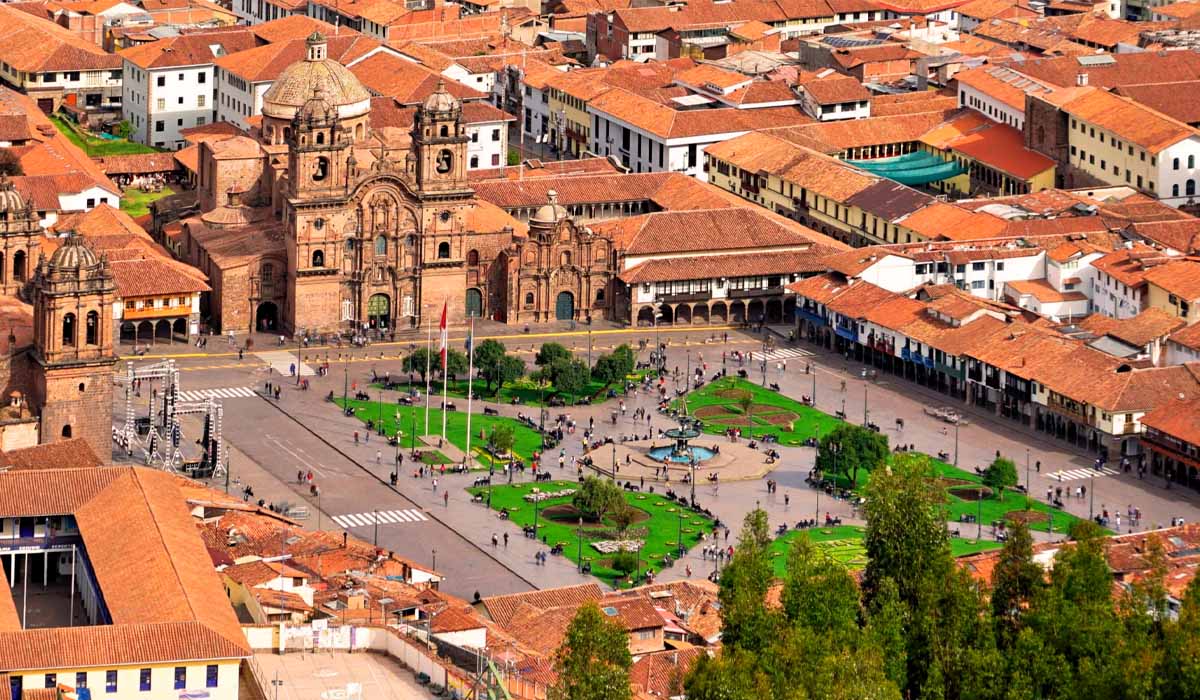
The Main Square
The Main Square is the heart of the historic center and the reference point for almost any tour of the city. In the times of the Tahuantinsuyo, it was called Huacaypata, and it was the setting for ceremonies, celebrations, and meetings of the Empire. Today it is surrounded by the Cathedral of Cusco, the Church of the Society of Jesus, and a series of arcades with restaurants and stores. It is a very busy space, especially during the mornings and afternoons, but it is worth taking the time to sit down and observe.
-
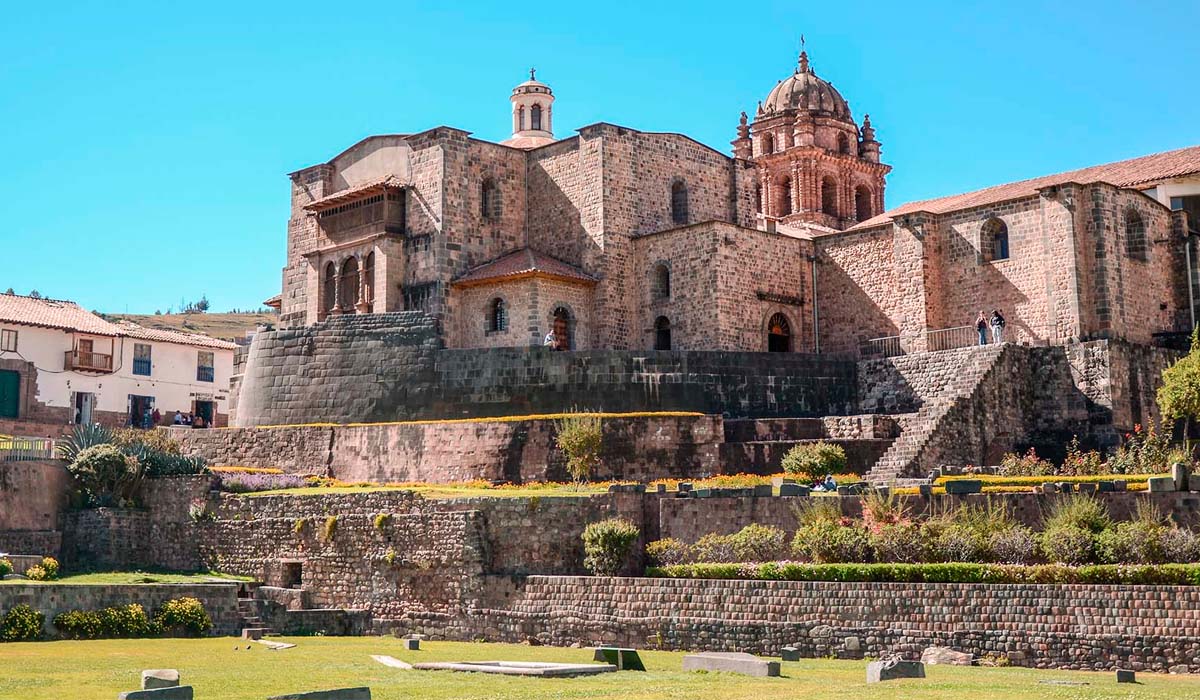
Qorikancha (Temple of the Sun)
The Qorikancha was the most important temple of the Inca Empire, dedicated to the worship of the sun. Its original walls, built with an assembly precision that still surprises engineers, are still standing under the convent of Santo Domingo, built by the Spanish on top of the ruins. From inside the convent, you can clearly see where the Inca stone ends and where the colonial construction begins.
-
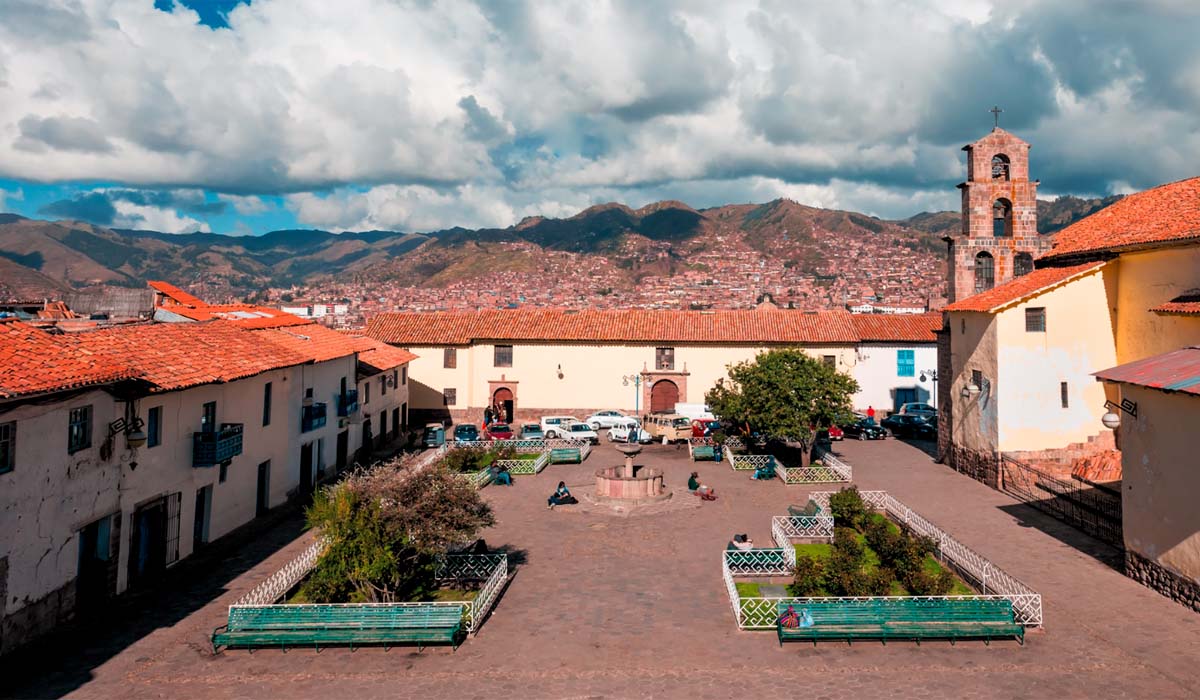
San Blas Neighborhood
San Blas is the artisan neighborhood of the historic center, located uphill from the Main Square. Its streets are narrow, its slopes are steep, and on every corner there is a workshop, a gallery, or a small store of Cusco artisans. The church of San Blas, one of the oldest in the city, keeps a wood-carved pulpit that is considered one of the most elaborate pieces of colonial art in Peru. The neighborhood is also a good place to stop to eat or have a drink, with cafes and small restaurants that offer views over the roofs of the center.
-
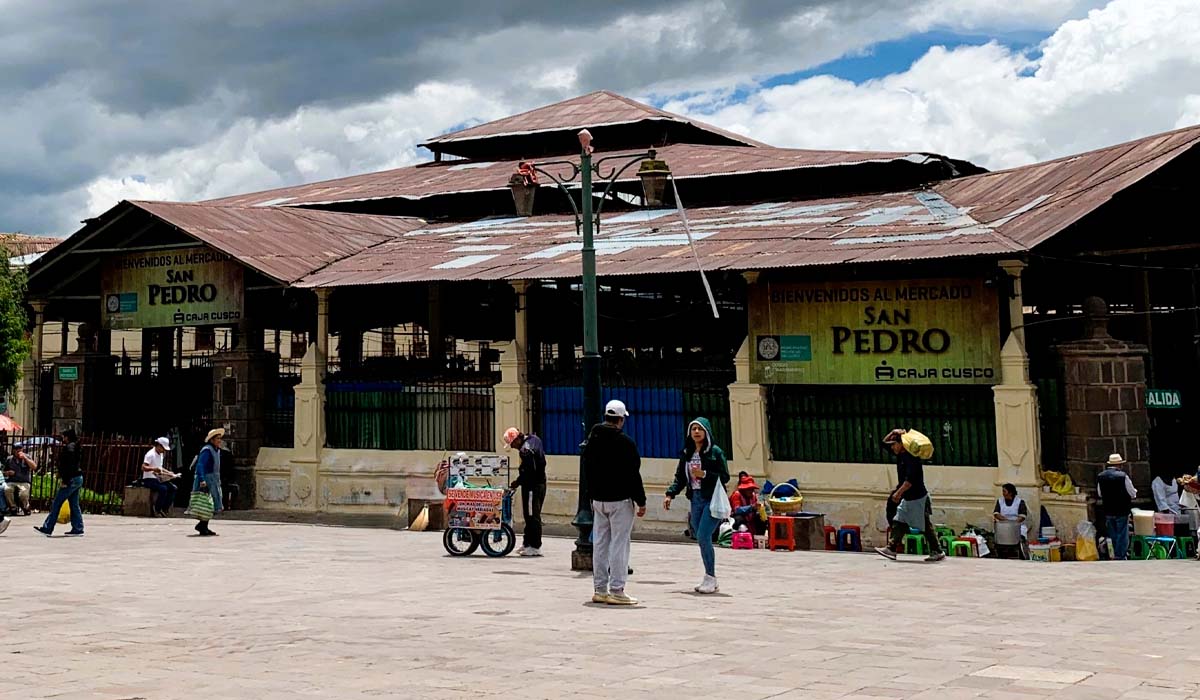
San Pedro Market
The San Pedro Market is the central market of Cusco, and it has been working since the 19th century. It is not meant for tourists, although many visit it: it is a neighborhood market where locals do their daily shopping. Inside, you can find stands with Andean fruits, medicinal herbs, fresh juices, chicha, food, and all kinds of local products. It is one of those places where the daily life of the city is shown without filters.
Archaeological sites around the city
A few kilometers from the historic center, the city gives way to a group of archaeological sites that were part of the Inca empire. They were not isolated buildings: each one had a specific function within the ceremonial, military, and administrative system of the Empire. Today you can reach all of them by taxi, on foot, or by bicycle, and the Cusco Tourist Ticket (BTC) covers the entrance to most of them. So, exploring the archaeological sites is one of the best ways to know the tourist attractions of Cusco, since each one reveals a chapter of the history and ingenuity of the Inca civilization. Among them are:
-
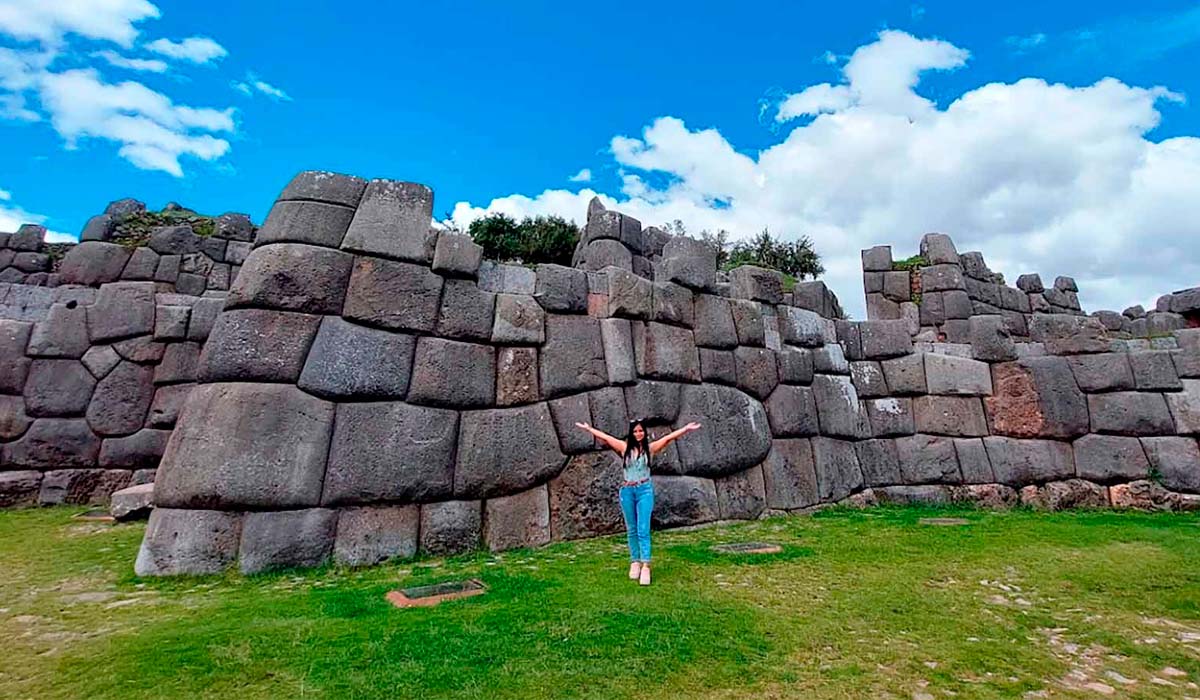
Sacsayhuaman
Sacsayhuaman is the most impressive archaeological site around Cusco. It is located about 2 kilometers from the historic center, at an altitude of 3,700 meters, and from there you have a wide view over the whole city. The first thing that catches the eye are its stone blocks: some weigh more than 100 tons and are fitted together with high precision.
Archaeologists still debate whether it was a military fortress, a ceremonial center, or both. What is not up for discussion is the scale of the work: Sacsayhuaman took decades to build and required the work of thousands of people. Today it is also the main stage for the Inti Raymi festival, every June 24.
-
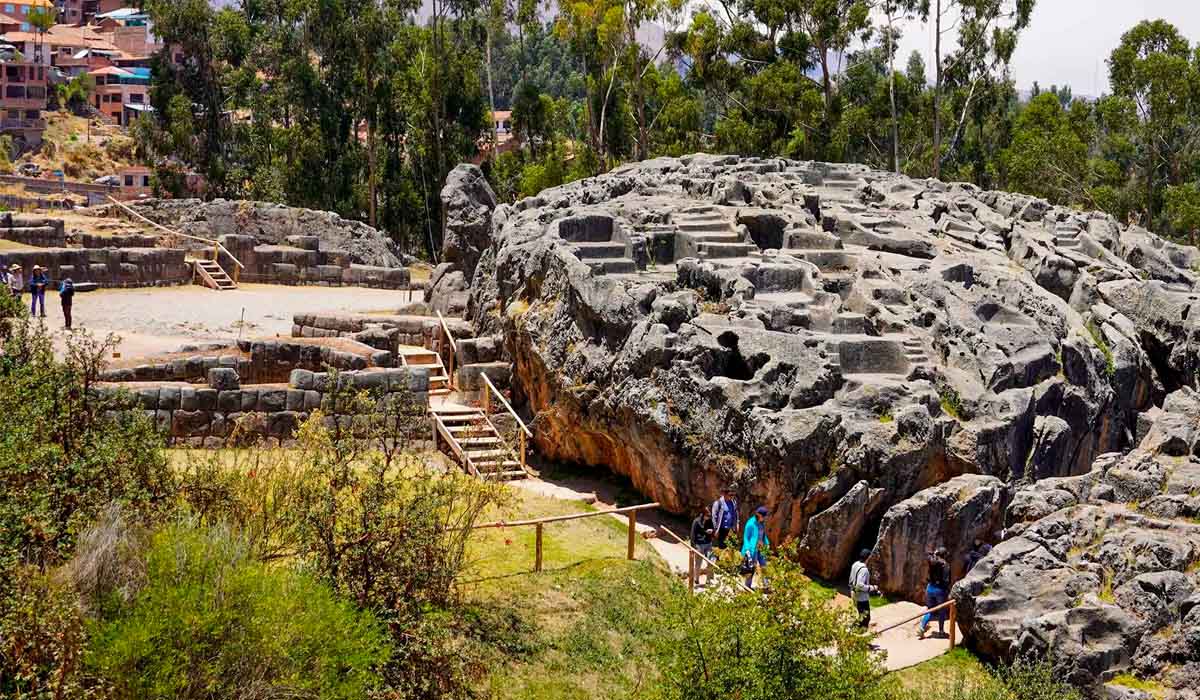
Qenqo
About 500 meters from Sacsayhuaman is Qenqo, an Inca sanctuary carved directly into a large rock. The name means “labyrinth” in Quechua, and it makes sense: the site is full of channels, niches, and passages carved into the stone with amazing precision. At the bottom there is an underground chamber that is believed to have been used for rituals related to death and the world of the ancestors.
-
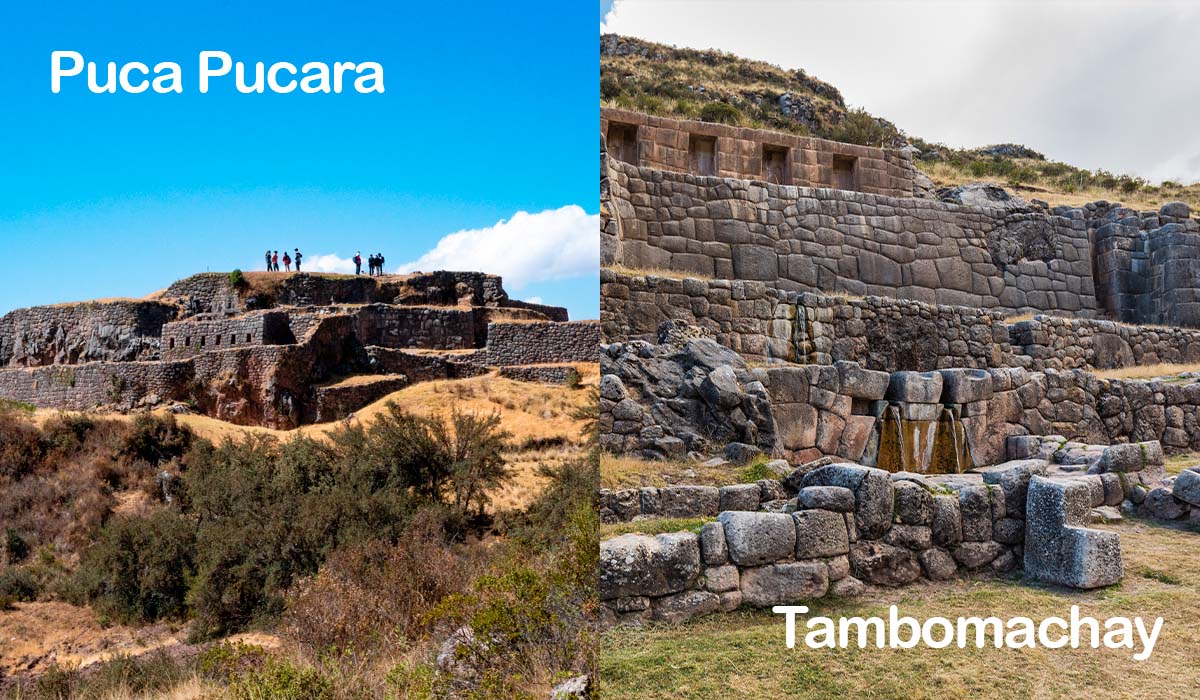
Puca Pucara and Tambomachay
These two sites are located in front of each other, about 7 kilometers from the center of Cusco, on the road that leads to the Sacred Valley.
- Puca Pucara, whose name means “red fortress” in Quechua, is a group of rooms, platforms, and terraces that would have worked as a military checkpoint or a rest stop on the route between Cusco and the Sacred Valley. Its reddish stone walls give it a different look from other sites in the region.
- Tambomachay, a few steps from there, is known as the “Inca Bath”. It is a system of channels and fountains that to this day keeps a steady flow of water, which shows the Inca mastery of water engineering. It is believed that the site had a ceremonial use linked to the worship of wate.
Unmissable natural attractions
The natural environment of Cusco is as notable as its archaeological heritage. The region is crossed by the Andes Mountains, snowy peaks, and high landscapes that in recent years have gained importance among travelers. Therefore, the three tourist attractions of Cusco that follow are outside the city, require a transfer and some physical effort, but the landscape they offer more than justifies the adventure. Among them are:
-
Mountain of 7 colors (Vinicunca)
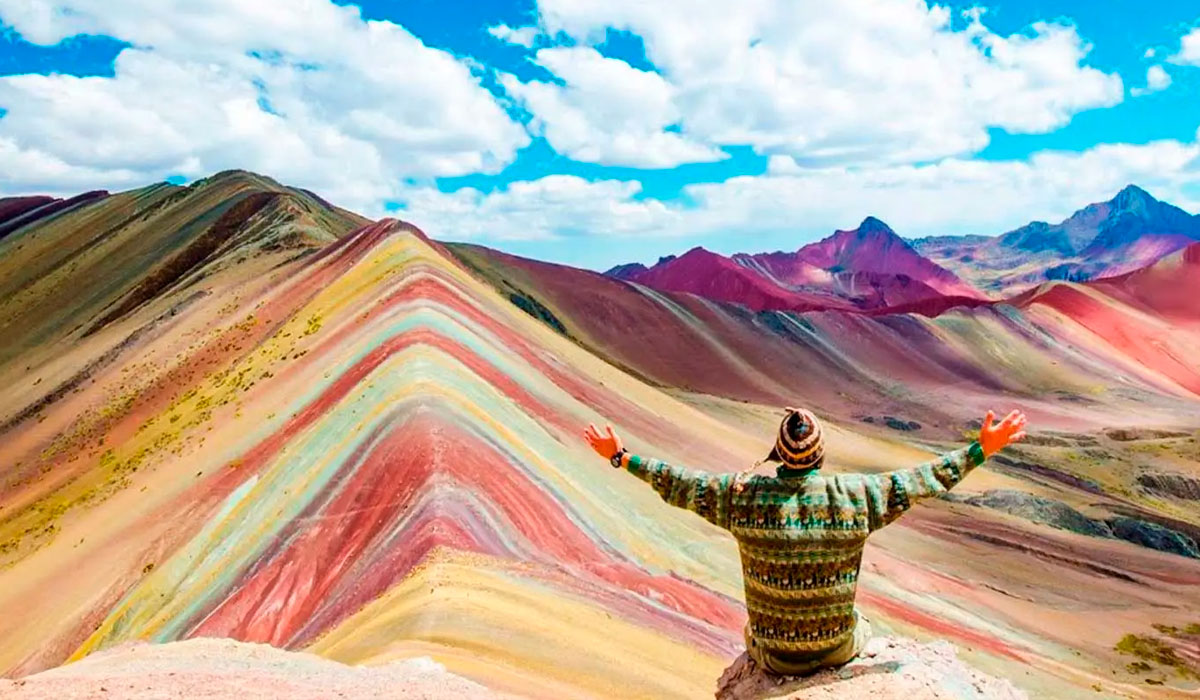
Vinicunca, popularly known as the Mountain of 7 colors, is located at 5,036 meters above sea level, in the Vilcanota mountain range. Its color stripes, which go from red to ocher, from green to purple, are the result of the mineral composition of the rock: clays, sulfates, and iron oxides gathered over millions of years. Furthermore, until a little over a decade ago it was covered with snow and was practically unknown.
Today it receives thousands of visitors a month. The route from the starting point in Cusipata involves a round-trip walk of about 6 kilometers at high altitude, which is why it is recommended to have spent at least one day in Cusco before trying it. The view from the top, with the Ausangate snowy peak in the background, is one of the most remembered by those who visit the region.
-
Humantay Lake
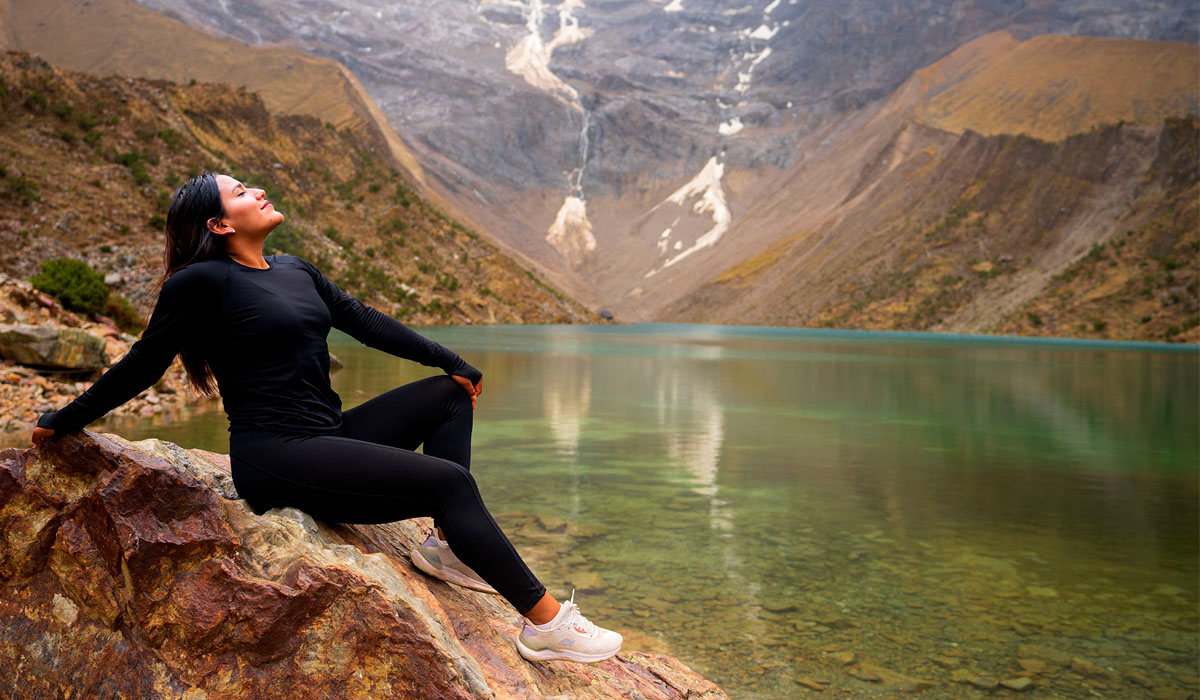
Humantay Lake is at 4,200 meters of altitude, at the foot of the snowy peak of the same name, on the route to the Salkantay. It is a glacier lake with waters between turquoise and deep green, surrounded by snowy peaks that reflect on its surface. You get there from the town of Soraypampa after a walk of about 2 hours with a moderate slope. Consequently, the route is easy to reach for most travelers with a basic physical condition, as long as they have gotten used to the altitude well.
-
Palcoyo Mountain and Pallay Punchu
Those looking for a less crowded alternative to Vinicunca have two interesting options in the same Vilcanota mountain range.
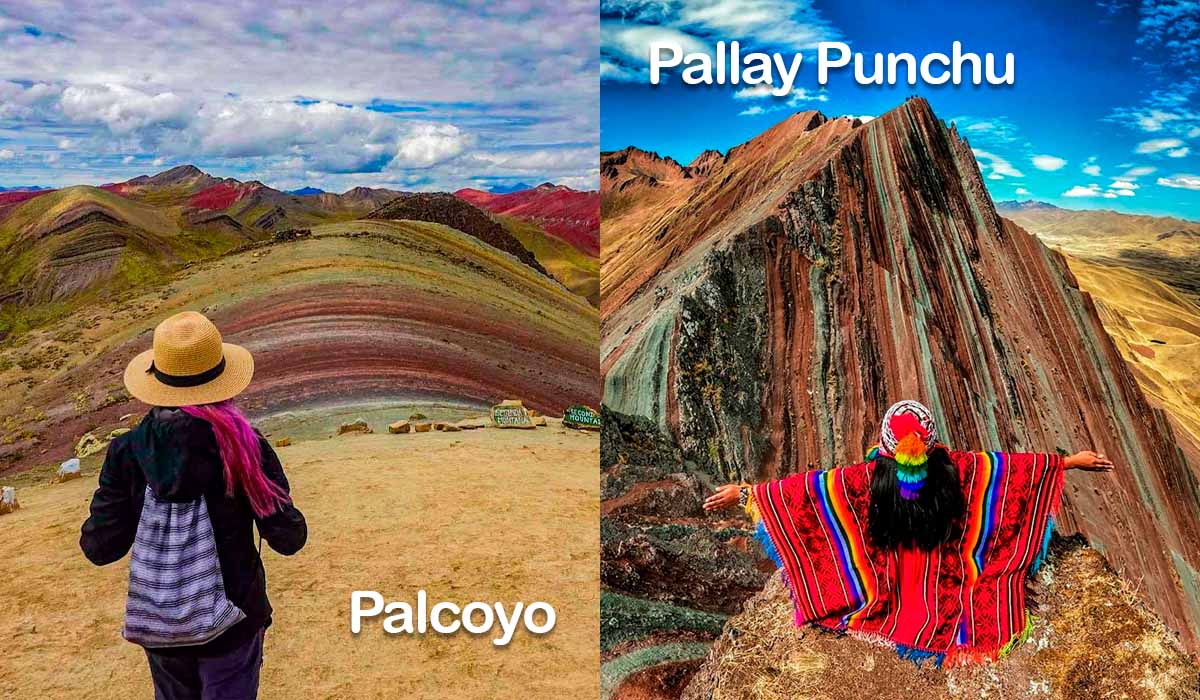
- Palcoyo Mountain, at about 4,900 meters of altitude, presents a color palette similar to that of Vinicunca but with a shorter and easier walk. In its surroundings there is a naturally formed stone forest and it is common to find llamas and alpacas grazing freely. Being less crowded, it offers a quieter experience.
- Pallay Punchu, a little further away and even less known, stands out for its reddish and purple tones, especially intense in the rainy months. The walk to get there is longer and harder, which keeps the number of visitors low and the landscape almost intact. For those who already know Vinicunca or simply prefer to avoid crowds, it is one of the best options in the region.
Exploring the Sacred Valley of the Incas
The Sacred Valley of the Urubamba stretches between Cusco and Machu Picchu, along the river of the same name. It was one of the most important territories of the Inca Empire: its mild climate, fertile soil, and strategic position made it a farming area, a resting place for the nobility, and a mandatory passage between the capital and the jungle. Today it is one of the most complete tours that can be done from Cusco, combining archaeological sites, traditional towns, and Andean landscapes that change texture at every curve of the road. Among the places to explore are:
-
Ollantaytambo
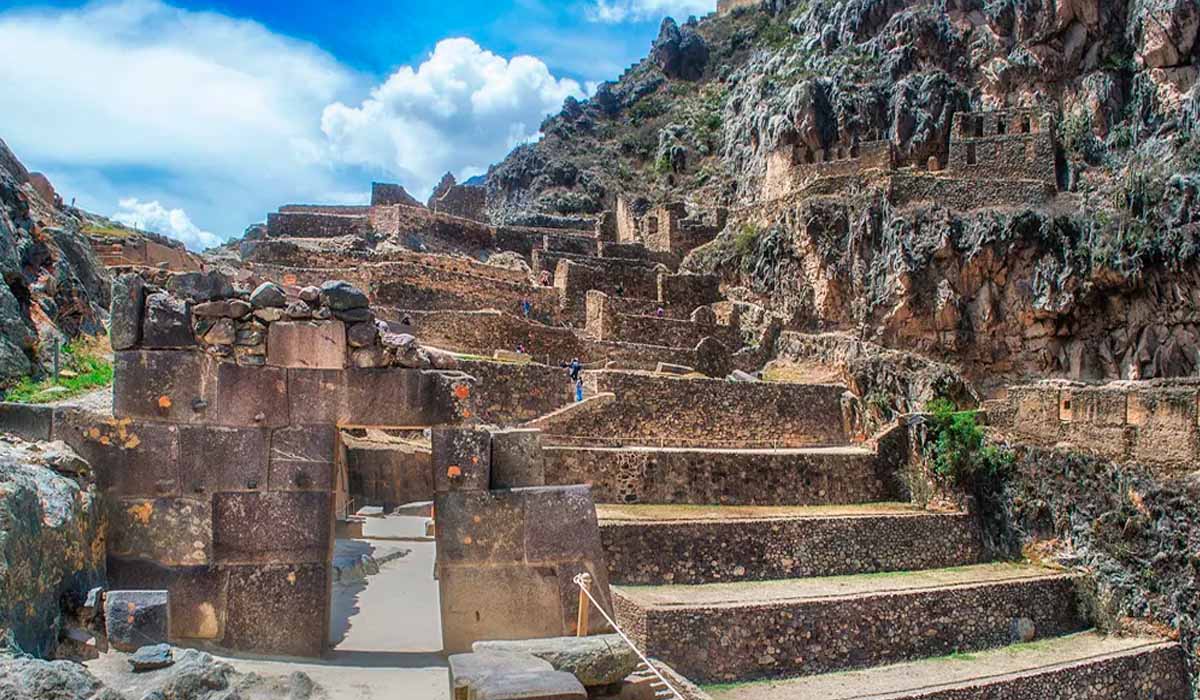
Ollantaytambo is the only example of an Inca city that has survived with its original urban layout practically intact. Its narrow streets, its working water channels, and its terraces are still inhabited and used by the families of the town.
The archaeological complex that dominates the hill, with its huge terraces and the unfinished Temple of the Sun, gives an idea of what Inca architecture was at its moment of greatest expansion. Ollantaytambo was also the scene of one of the few Inca military victories against the Spanish conquerors, in 1537. Besides its historical value, the town is the boarding point for the train to Machu Picchu, so many travelers choose to spend at least one night there.
-
Pisac: ruins and market
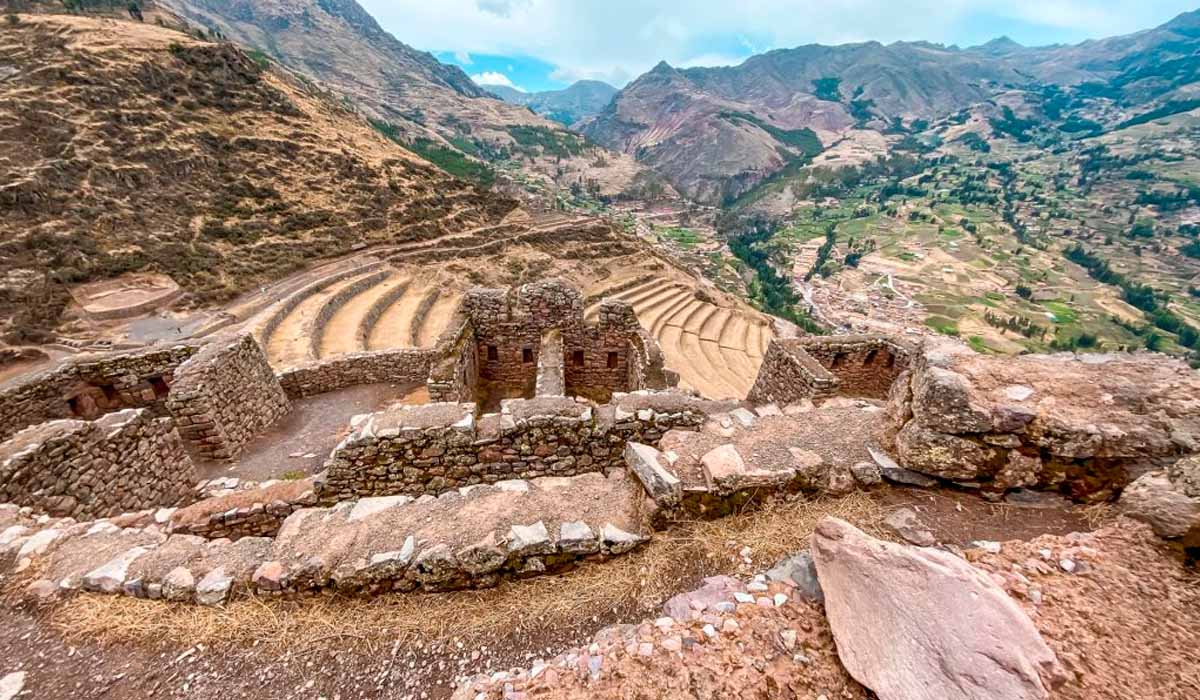
Pisac offers two different experiences that complement each other well in a single visit. In the high part of the hill is the archaeological complex, one of the most extensive in the Sacred Valley, with farming terraces, ceremonial enclosures, and a funeral sector that shows the importance the site had within the Inca system.
In the town, the craft market gathers communities from all over the region with textiles, ceramics, and local products. It is not an exclusively tourist market: artisans live together with local merchants and families that come down from the hills to stock up. It is worth visiting both on the same day if time allows.
-
Chinchero
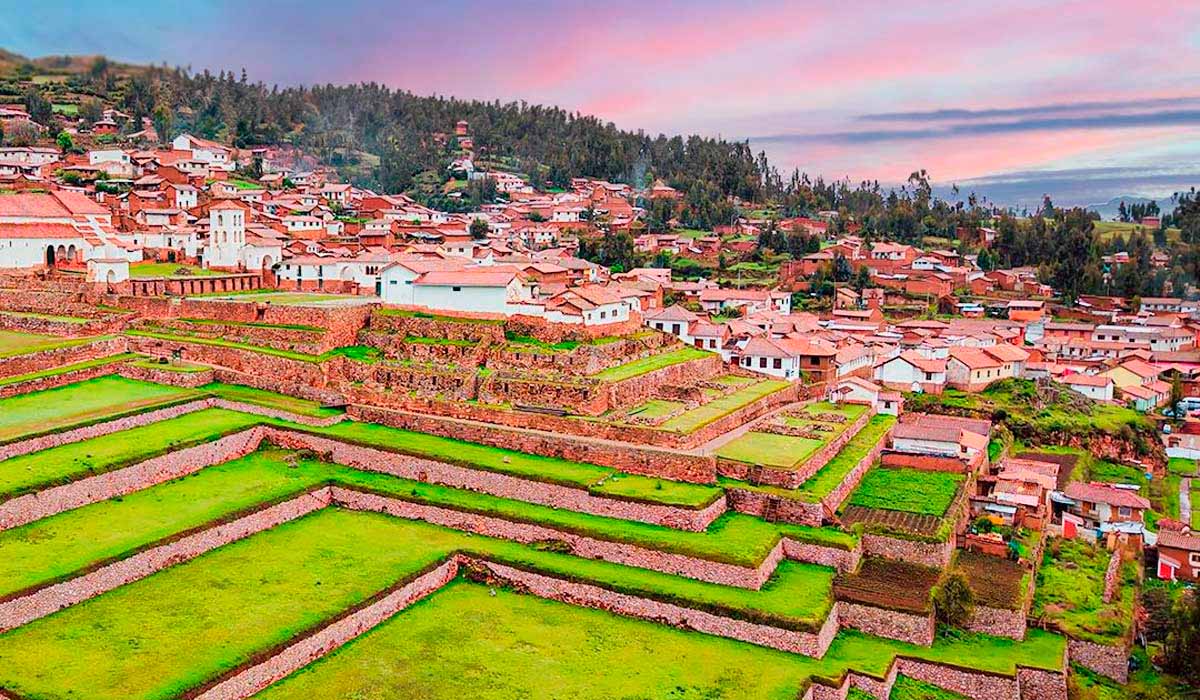
Chinchero combines archaeology, colonial architecture, and textile tradition in a small space. The town sits on an Inca platform with terraces and walls that still mark the public space. Over the ruins, the Spanish built a 16th-century church with well-preserved interior frescoes.
But what makes Chinchero different from other towns in the Sacred Valley is its textile heritage: several families keep alive the practice of weaving with backstrap looms and natural dyes taken from plants, minerals, and insects. Some community centers open their doors to show the complete process, from washing the wool to the finished weaving. It is one of the most direct and honest experiences you can have in the region.
-
Moray and the Maras Salt Mines
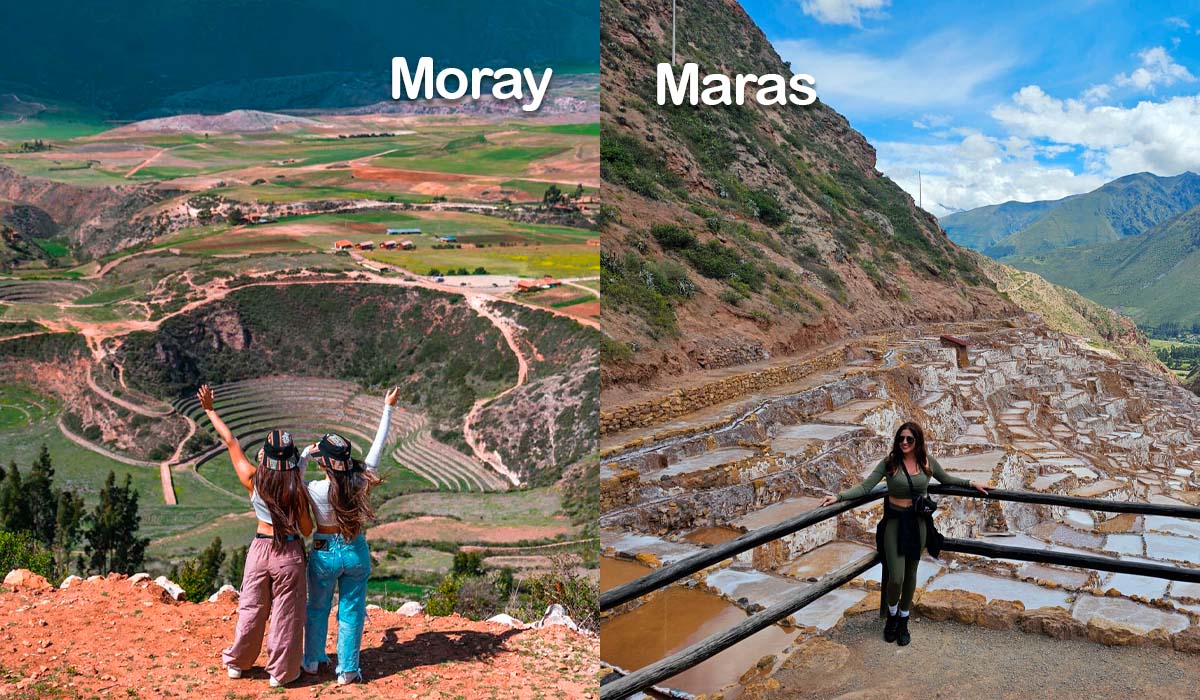
These two sites are usually visited together and are located a short distance from each other, in the area of the Sacred Valley known as the Maras plateau.
- Moray is a set of concentric circular terraces dug into the earth, with a temperature difference of up to 15 degrees between the top and bottom level. The most accepted theory is that it worked as a farming laboratory where the Incas experimented with different microclimates to adapt crops. Seen from above, the site has a geometry that does not seem completely natural.
- The Maras Salt Mines, a few kilometers from there, are a system of more than three thousand salt evaporation pools that are fed by a saltwater spring that flows from the mountain. They have been in use since pre-Inca times and today they continue to be worked by local families in a traditional way. The visual contrast between the white pools, the green of the valley, and the mountains in the background is one of the most photographed in the whole region.
Practical information for your visit
To discover the tourist attractions of Cusco smoothly and with enough time, basic planning is key. Therefore, these are the most important things you should be clear about before arriving.
-
When to go to Cusco: seasons and weather
Cusco has two well-defined seasons. The dry season goes from April to October and is the most recommended to visit: the days are clear, rains are rare, and the conditions for trekking or visiting archaeological sites are great. July and August have the highest number of tourists, so it is a good idea to book accommodation and activities in advance. The nights at this time can be cold, even in the warmest months of the year.
Furthermore, the rainy season goes from November to March, with January and February as the months with the most rain. Traveling at this time has its advantages: fewer tourists, greener landscapes, and lower prices. However, some trekking routes can become difficult or close temporarily, and access to certain natural attractions can get complicated due to road conditions.
-
About the Cusco Tourist Ticket (BTC): what it includes and how to buy it
The Cusco Tourist Ticket, managed by the COSITUC, is the access document to most of the archaeological sites, museums, and monuments in the region. It exists in three options: the full ticket, which gives access to the 16 included attractions for 10 days, and two partial circuits of shorter time that cover specific areas of the region.
Among the attractions it covers are Sacsayhuaman, Qenqo, Puca Pucara, Tambomachay, Moray, the Maras Salt Mines, Pisac, Ollantaytambo, Chinchero, and several museums in the historic center. Sites like the Qorikancha and Machu Picchu have their own ticket system and are not included in the BTC.
It can be bought at the COSITUC offices in the center of Cusco, at the ticket offices of the included attractions, and at some authorized points in the city. It is not officially sold online, so it is a good idea to buy it as soon as you arrive in the city to avoid wasting time in the first few days.
-
How to get to Cusco
- By plane: The fastest and most common way to arrive is through the Alejandro Velasco Astete International Airport, located about 15 minutes from the center. There are direct flights from Lima in about an hour, and also connections from other cities in Peru. Several airlines operate this route daily.
- By bus: From Lima, Arequipa, Puno, and other cities in southern Peru, there are interprovincial bus services with regular departures. The trip from Lima can take between 20 and 26 hours depending on the route; from Puno, around 7 hours. It is a slower but much cheaper option, and it allows you to see the Andean landscape throughout the journey.
- By train: From Puno, there is a tourist train service that connects Lake Titicaca with Cusco crossing the high plateau. It is an experience in itself, although it is not the fastest or the cheapest option.
-
Tips for the altitude (soroche)
Cusco is at 3,400 meters above sea level, and most of the natural attractions in the region are located above 4,000 meters. Altitude sickness, known locally as soroche, is a common experience among visitors arriving from sea level, especially in the first 24 to 48 hours.
The most common symptoms are headache, tiredness, lack of appetite, and, in some cases, nausea. To reduce its impact, it is recommended not to do physical effort the first day, drink plenty of water, avoid alcohol and heavy meals, and take the time to acclimatize before going out to the highest attractions. Coca tea is a widely used local remedy that many travelers find useful. If the symptoms are intense or persistent, the best thing is to consult with a local doctor or pharmacist, who can guide you on options to manage soroche.
Frequently Asked Questions About the Tourist Attractions in Cusco
- ¿What are the most important tourist attractions in Cusco?
Among the most important tourist attractions in Cusco are the historic city center, declared a UNESCO World Heritage Site, the archaeological complex of Sacsayhuaman, the Qorikancha or Temple of the Sun, the Sacred Valley sites of Ollantaytambo, Pisac, Chinchero, Moray, and the Maras Salt Mines, and natural attractions such as the Rainbow Mountain (Vinicunca) and Humantay Lake. Machu Picchu, while requiring additional travel from Cusco, remains the most visited destination in the entire region. - How many days do you need to explore Cusco?
A minimum of 5 days is recommended to comfortably visit the main tourist attractions in Cusco. The first day is best spent acclimatizing and exploring the historic center. The following days allow for visits to the nearby archaeological sites, the Sacred Valley, and at least one of the natural attractions. Travelers who want to include Machu Picchu, the Southern Valley, or trekking routes such as the Inca Trail or Salkantay Trek will need between 7 and 10 days. - Is the Tourist Ticket required to visit the archaeological sites?
Yes, the Cusco Tourist Ticket (BTC) is required to enter most of the region’s archaeological sites and museums, including Sacsayhuaman, Qenqo, Puca Pucara, Tambomachay, Ollantaytambo, Pisac, Chinchero, and Moray, among others. It comes in three versions: the full ticket covering all 16 attractions, and two partial circuit options by area. It can be purchased at the COSITUC offices in Cusco or directly at the ticket booths of the included sites. Machu Picchu and Qorikancha have their own entry systems and are not included. - What is the best time to visit the attractions in Cusco?
The best time to visit the tourist attractions in Cusco is during the dry season, from April to October. Days are clear, trekking conditions are favorable, and most natural attractions are easily accessible. June, July, and August are the busiest months. The rainy season, from November to March, offers greener landscapes and fewer crowds, though some routes may have limited access during this period.
