
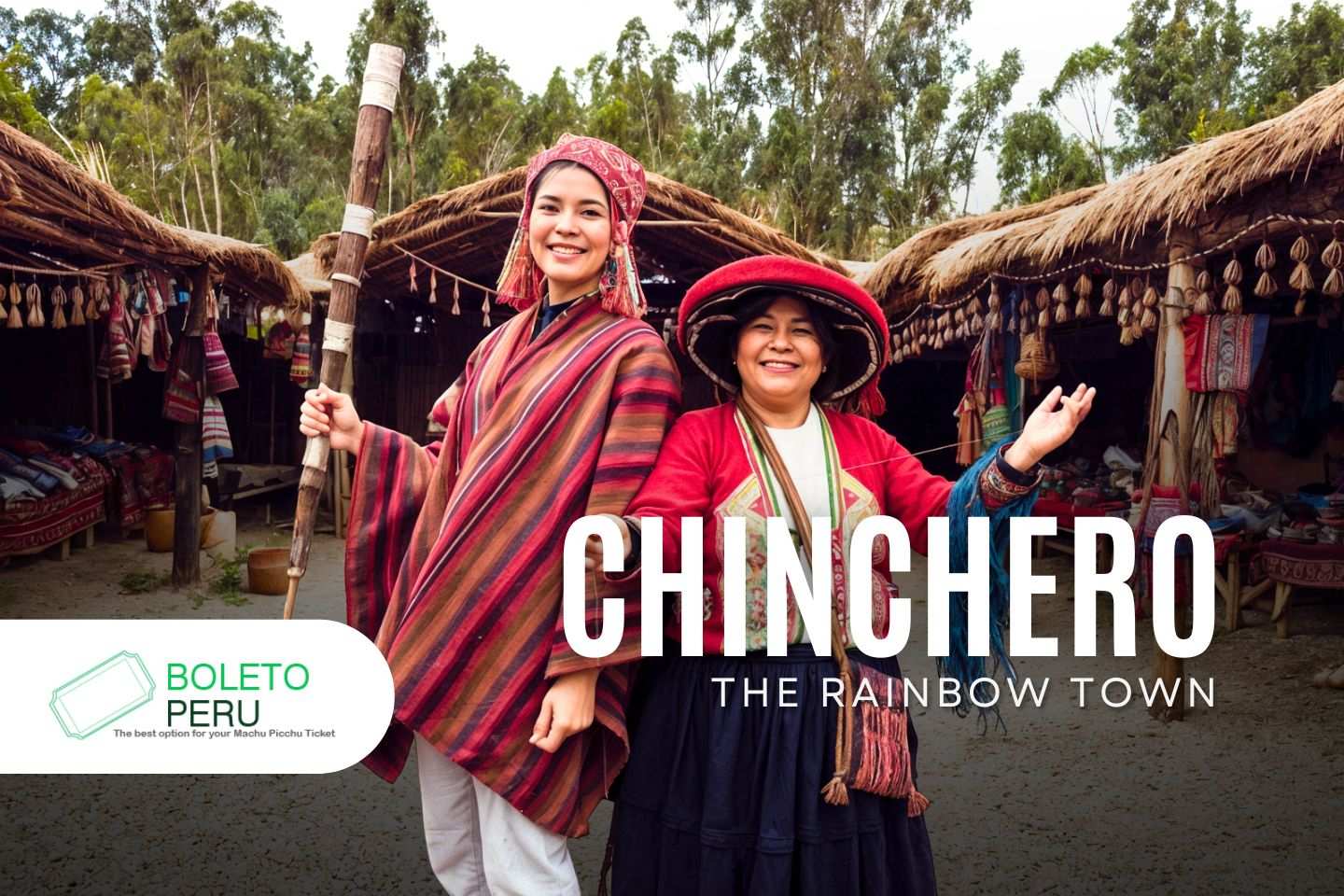
Chinchero is a key and representative town of the Sacred Valley of the Incas. More than a tourist attraction, it is one of the few Inca settlements that has maintained a native population from the pre-Hispanic era until today. This place was chosen by Inca Túpac Yupanqui as his royal residence or panaca, which explains the scale of its constructions and large agricultural terraces.
Its appeal centers on a deep historical and cultural blend. The main square is a testament to its Inca culture, with ancient walls, which form the base of the old Inca palace, which now serve as the foundation for a colonial church. In addition to this architectural legacy, Chinchero is recognized internationally as an essential center for the Andean textile tradition, through which its communities preserve and demonstrate the ancient techniques of spinning and natural dyeing.
The cultural and historical value of Chinchero makes it an important tourist spot, forming part of the Sacred Valley Tour route. This guide will provide all the information to discover the culture and tradition of Chinchero, detailing its tourist attractions and the logistics for your visit.
Where is the Town of Chinchero located?
The town of Chinchero is located in the Cusco region, within the Urubamba province. Its elevation (situated at 3,762 meters above sea level) is clearly higher than that of Cusco city (3,399 meters above sea level), a fundamental fact for acclimatization. Geographically, the location overlooks a vast pampa landscape that offers wide views of the Sacred Valley.
Logistically, Chinchero is located approximately 30 kilometers northwest of Cusco city; the trip on paved road takes between 40 and 50 minutes. The road that crosses Chinchero is the main route that connects Cusco with the towns of Urubamba and Ollantaytambo, confirming its role as a key transit center.
About Chinchero: The “Rainbow Town”
Chinchero is popularly known as the “rainbow town”. This nickname is due to the frequent appearance of this weather event in the sky, an event that happens mainly during the rainy season (November to March). The combination of the high altitude of the area (3,762 meters above sea level), the presence of humidity, and the intense sun radiation creates the perfect conditions for rainbows to form regularly over the high plateau.
The town is considered one of the most typical of the Sacred Valley, since its inhabitants (grouped into twelve Andean communities) still maintain the ancient system of social organization based on the ayllus (family and communal units), inherited from the Inca Empire. Its residents are dedicated to agriculture, herding, and tourism, and are surrounded by snowy peaks like Salkantay, Verónica, and Soray, as well as the Huaypo and Piuray lagoons.
-
Cultural Legacy and Organization
In Chinchero, Inca traditions and Andean culture noticeably last. Its inhabitants are of Inca ancestry and the main language is Quechua. The town is organized into communities that still maintain signs of the ancestral ayllu system (family and social organization). Thanks to the tourist flow, many of its customs have been revalued and are openly displayed, with the Sunday fair being a clear example of this cultural and commercial exchange.
-
Economic Support: Agriculture and Craftsmanship
The town’s living relies on two main parts: agriculture and craftsmanship. Its fertile lands (the Chinchero pampa) are essential for the production of traditional Andean tubers like potato, olluco, and oca, as well as cereals. Agriculture still makes up the main core of local trade.
Important fact: Chinchero is also one of the most recognized textile centers in Peru. Here, the town’s women preserve traditional techniques of dyeing and weaving with alpaca and llama wool, using only natural ingredients (like cochineal, roots, and mosses) for coloring their clothes and designs inspired by Andean symbols.
Main Attractions in Chinchero
The main attractions of Chinchero Peru are centered in the main square and its neighboring archaeological area, and are completed by the textile demonstration centers and the surrounding natural landscapes. These sites are the essential stops for any visit to the town, and among the most notable attractions are:
-
The Main Square: Inca and Colonial Fusion
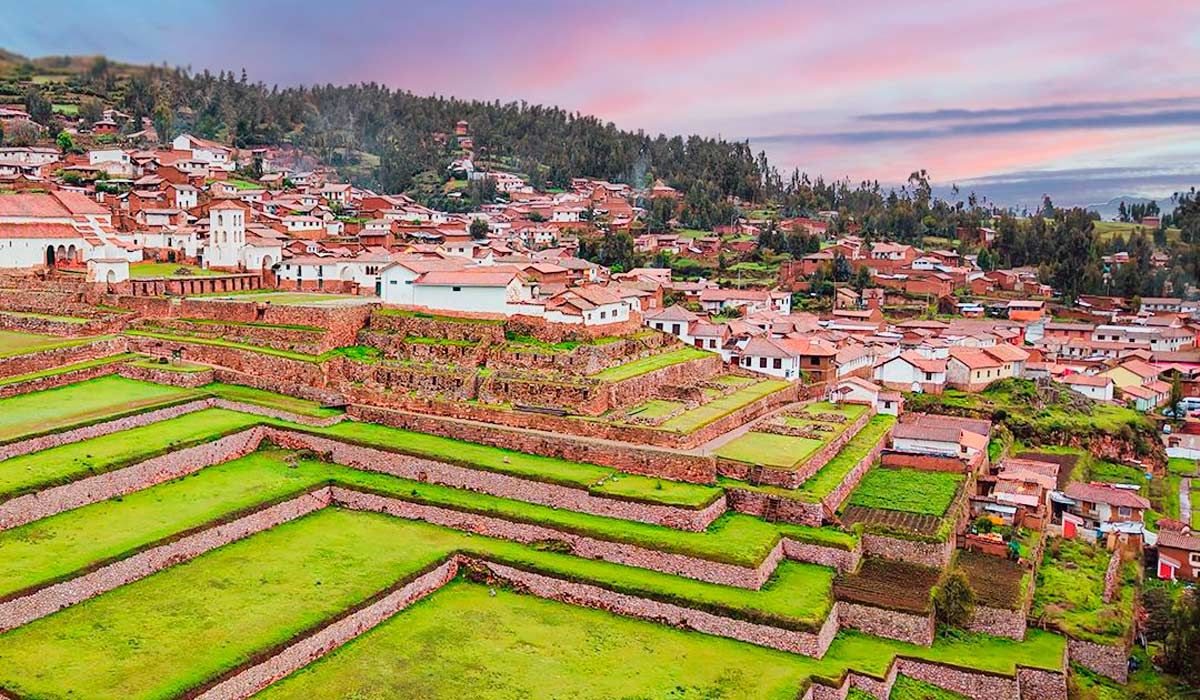
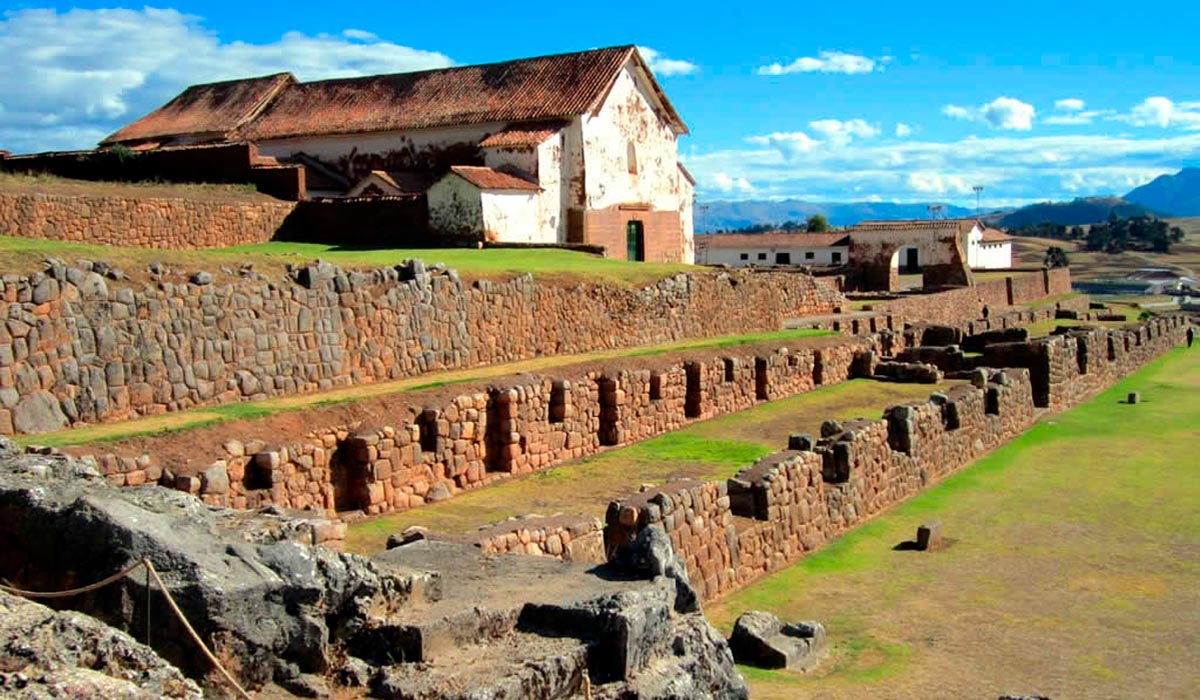
The central square of Chinchero is a point of historical merging that fuses Inca and colonial architecture. The square is dominated by the remains of the palace of the Inca Tupac Yupanqui, where a ceremonial Inca wall with ten trapezoidal niches is still preserved, showing the high quality of the Inca stonework.
On the foundations of this palace stands the Church of Our Lady of Monserrat (built between 1572 and 1607). This church is a remarkable example of Cusco religious art, with an altar decorated in gold leaf and walls that display works from the Cusco School (including pieces attributed to Diego Quispe Tito).
-
The Archaeological Site and Terraces
The archaeological site extends over an area of approximately 43 hectares, known for a vast system of agricultural terraces and Inca paths that surround the main square. This complex was not only an elite residential center but also an important agricultural production area, where studies show that the fertile lands were used even before the arrival of the Incas by the Killke culture.
Entry to the archaeological site is included in the Cusco Tourist Ticket, making it easy to visit along with other key centers of the Sacred Valley (like Pisac and Ollantaytambo). Historically, the site was damaged during the war of conquest, when Manco Inca ordered it to be burned to deny resources to the Spanish army.
-
The Textile Centers and the Sunday Market
Chinchero is world-famous for its living textile culture. The town groups dozens of textile centers where women, dressed in traditional clothing, show the process of spinning, dyeing, and weaving. Alpaca and llama wool is dyed using only natural dyes coming from plants, mosses, and insects (like the cochineal).
The highlight of the commercial activity is the Sunday Fair in the main square, where agricultural products are exchanged and handicrafts (textiles and ceramics) are sold, sometimes following the ancient tradition of bartering.
-
Piuray and Huaypo Lagoons
The natural setting of Chinchero is marked by the Piuray and Huaypo lagoons, located about 18 kilometers from the town. These lagoons have historically been a natural source of water that supplies the city of Cusco and several towns in the Sacred Valley.
The area offers a scenic landscape, framed by the guardian snowy peaks of Soray and Salkantay, and is a popular destination for water adventure sports like kayaking and stand up paddle. A well-known Inca legend tells that these lagoons were formed from the children of Manco Capac.
Adventure Sports in Chinchero
The high plateau and the valleys next to Chinchero are an ideal starting point for several adventure activities. The geography of the area, which allows you to descend quickly from the plain to the valleys, makes it easy to practice sports that combine adrenaline with cultural exploration.
-
Quad Bike Routes (ATV Tours)
The quad bike adventure is one of the most requested activities in the region. The routes start from Chinchero and go through the fields of the area, connecting with the Moray complexand the Maras Salt Mines. This is a popular tour because it allows you to combine the visit to two key sites with the excitement of driving an all-terrain vehicle.
-
Paragliding
Paragliding is usually done from Cerro Sacro, located in the upper part of Chinchero. This location offers the necessary wind conditions for free flight, allowing participants to fly over the Sacred Valley. The activity is booked through specialized agencies in Cusco that provide certified equipment and expert guides.
-
Mountain Biking and Hiking
The Chinchero area is crossed by ancient Inca paths and secondary routes that are suitable for mountain biking and hiking. Although it is possible to do these routes on your own, it is strongly recommended to hire a tourism agency that provides the proper equipment (bicycle, helmet) and assistance, ensuring safety on the trails.
Note on Safety: Adventure activities such as paragliding and quad bike tours must always be booked with an authorized tourism agency that meets all safety standards, has insurance, certified guides, and equipment in optimal condition.
How to get to Chinchero?
The route to Chinchero begins once the traveler has arrived in Cusco. The transfer from the Imperial City can be done using local public transport or through organized tours that make it easier to explore the rest of the Sacred Valley.
Local Public Transport (Economic)
For an economic and direct trip, public transport is the best option.
- Starting Point: Buses and ‘colectivos’ (shared taxis) going to Chinchero leave from the station or stop located on Pavitos Street in Cusco.
- Cost and Duration (Bus): The cost of the ticket is approximately S/ 5.00 Peruvian soles per person. The travel time is about 45 minutes to the town.
- Private Taxi: If a direct and private service is preferred, a taxi can cost between S/ 60 and S/ 120 for the complete journey, depending on the negotiation and the season.
Organized Tours (Comfort)
If the goal is to visit Chinchero along with the rest of the key towns in the Sacred Valley (like Pisac, Urubamba, and Ollantaytambo) in a single day, it is recommended to choose an organized tour. This is the most comfortable and practical option, as it includes round-trip transport, the professional guide, and often the entry ticket logistics, which allows you to make the most of the travel time.