

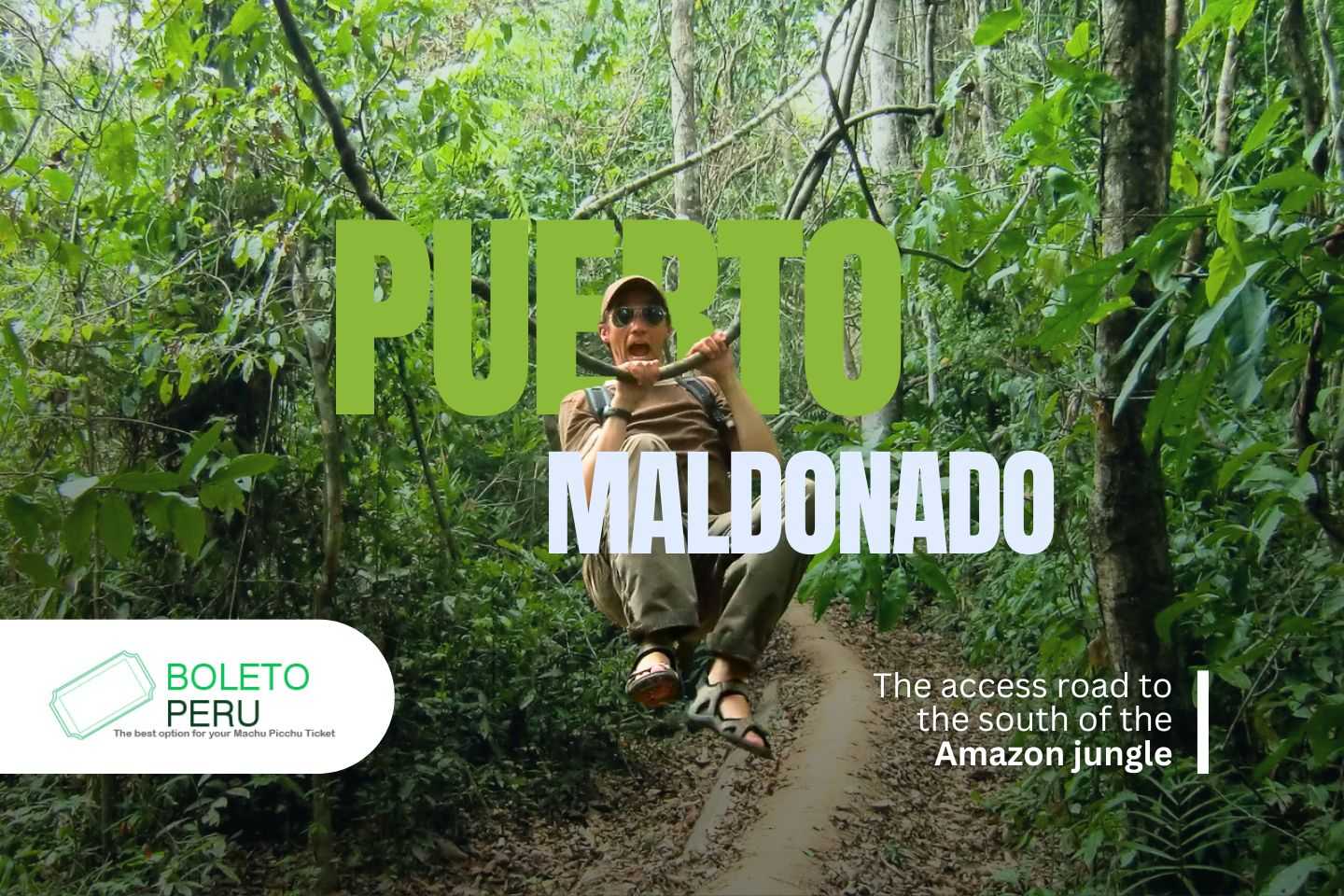
Start your trip at the true gateway to the Peruvian jungle. If you are looking for an immersive experience in nature without getting too far from the main tourist route, Puerto Maldonado Peru, is your ideal destination.
Located where the Madre de Dios and Tambopata rivers meet, this city serves as the official starting point for exploring the southern Amazon of Peru. Unlike other remote destinations, getting here is surprisingly easy: a scenic flight of only 45 minutes from Cusco will transport you from the Andes to the lush tropical jungle.
Known as the Biodiversity Capital, Puerto Maldonado offers direct access to some of the most important protected areas in the world, such as the Tambopata National Reserve and the Bahuaja-Sonene National Park. Here, the adventure starts the moment you get off the plane.
In this complete guide, we will help you plan the perfect jungle trip, covering everything from the best wildlife activities to essential logistical tips for travelers.
Table of Contents
Why Visit Puerto Maldonado?
Puerto Maldonado is much more than a tropical city; it is the logistics center for some of South America’s most intense wildlife experiences. Located in the southeast of Peru, where the Madre de Dios and Tambopata rivers meet, this region offers unique benefits for every traveler.
Accessibility: Puerto Maldonado vs. Iquitos
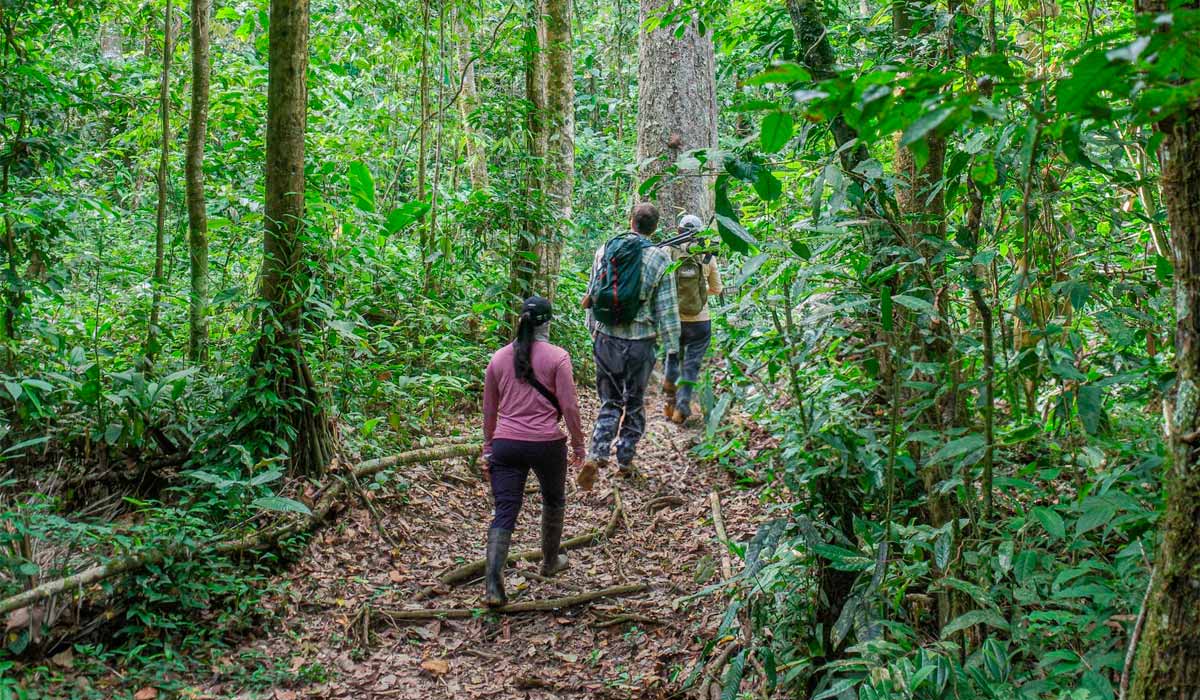
One of the most common questions from travelers is which part of the Peruvian Amazon to visit. While Iquitos (in the north) requires a separate flight from Lima and usually means more travel time, Puerto Maldonado is the more accessible option, especially if you already plan to visit Machu Picchu.
Its location lets you combine the Andes and the Amazon in a single, efficient itinerary. You can wake up in Cusco in the morning and be canoeing toward your jungle lodge (eco-lodge) in the afternoon. Entire days are not wasted on transfers, which maximizes your time exploring nature.
The Capital of Biodiversity
Peru holds world records in biological diversity, and Madre de Dios is the epicenter of this richness. This region serves as a buffer zone for legendary protected areas like the Tambopata National Reserve and the Manu National Park.
What makes this place unique?
- Macaw Clay Licks: It is one of the few places in the world where you can see hundreds of macaws and parrots feeding on clay walls at sunrise.
- Accessible wildlife: Unlike denser forests, here the chances of sighting Caimans, Giant River Otters, monkeys, and, with luck, the elusive Jaguar, are significantly high.
- Species records: Home to over 600 species of birds and 1,200 types of butterflies, it is an undisputed paradise for photographers and nature lovers.
Top 7 Things to Do in Puerto Maldonado & Tambopata
Although many use the city only as a transit point, the Madre de Dios region offers unmatched activities for both adventurers and families. Here are our main recommendations:
- Exploring the Tambopata National Reserve (Sandoval Lake and Clay Licks)
This is one of the main reasons to travel here, as with over 1.5 million hectares, the Tambopata National Reserve protects one of the most biodiverse ecosystems on the planet.
– Sandoval Lake: Sailing this lake in a canoe is a magical experience. It is home to a resident family of Giant River Otters (in danger of extinction), black caimans, and howler monkeys.
– Macaw Clay Licks (Clay Licks): Visit the Collpa Chuncho or the Collpa Colorado. You will witness a unique natural show where hundreds of macaws and parrots descend to eat mineral-rich clay. A dream for photographers! - Canopy Walk (Hanging Bridges)
To understand the immensity of the Amazon, you must see it from above. Many ecological lodges (Eco-lodges) and private reserves have systems of hanging bridges (Canopy Walkways) that lift you more than 30 meters above the ground. From here, you can observe toucans, sloths, and other species that live exclusively in the treetops, all with a privileged view of the dense forest. - Visit to the Tambopata Butterfly Farm (Butterfly Farm)
Did you know that Peru has the Guinness Record for the greatest diversity of butterflies? Conveniently located near the airport, the Tambopata Butterfly Farm is an excellent stop for your first or last day. In its dreamy garden you can walk surrounded by hundreds of live Amazonian butterflies and learn about their life cycle and metamorphosis. - Biodiversity Viewpoint
If you have a free afternoon in the city, visit this 47-meter high observation tower. Its design is inspired by the chestnut tree (Brazil Nut), a vital resource for the local economy. Climbing here will give you the best panoramic view of Puerto Maldonado and the meeting of the two rivers, especially beautiful during sunset. - Cultural Experience in Native Communities
Tourism in the Amazon is also about the people. Through the Tambopata Ecotourism Corridor, you can visit native communities (like the Ese Eja ethnic group). Here you will learn about their ancestral traditions, the use of medicinal plants, hunting and fishing techniques, and their worldview, directly supporting the local economy. - Fishing and Relaxation at Valencia Lake
For those looking for an off the beaten path experience, Valencia Lake is ideal. Located 4 hours from the city, near the border with Bolivia, it is an exceptional place for piranha fishing and bird watching in a much calmer and private setting. - Expedition to Manu National Park
Mentioned as a UNESCO World Heritage Site, Manu is the next level of exploration. Keep in mind that visiting Manu requires more time and logistics than Tambopata. It is an expedition for true nature lovers who seek to venture into the virgin jungle and have the best opportunities to see large mammals like the Jaguar.
How to Get to Puerto Maldonado
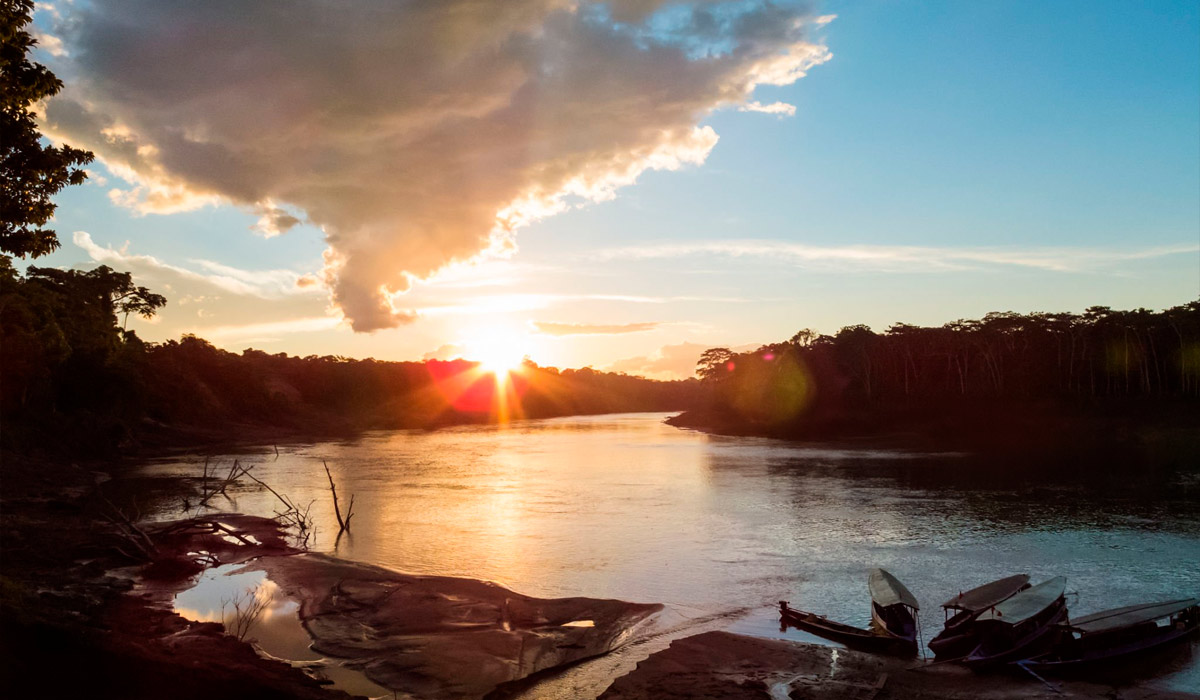
Puerto Maldonado is the most accessible gateway to the Amazon in Peru. The city has the Padre Aldamiz International Airport (PEM), which receives daily flights from the main tourist destinations in the country.
Here are the best options for getting there:
By Plane (The fastest and most recommended option)
For the great majority of international travelers, flying is the best option to maximize time in the jungle.
- From Cusco: This is one of the most popular routes. The flight lasts just 45 minutes. It is literally a quick jump from the Andes to the Amazon.
- From Lima: There are direct flights that take approximately 1 hour and 30 minutes.
- Airlines: The main airlines that operate these routes are LATAM Airlines and Sky Airline. We recommend booking in advance, especially during the high season (June to August), to secure availability and good prices.
By Bus (The scenic route along the Interoceanic Highway)
If you have more time and enjoy road trips, you can choose ground transport via the Interoceanic Highway.
- The Route: The trip connects Cusco with Puerto Maldonado.
- Duration: Approximately 10 hours.
- The Experience: Although it is a long trip, it is visually stunning. You will be able to witness the dramatic transition from the snowy Andean landscapes to the deep green of the cloud forest and finally the tropical jungle.
- Recommendation: There are day and night buses. If you choose this option, be sure to book with trustworthy transport companies that offer comfortable seats (“bus cama” type) to guarantee a pleasant trip.
Best Time to Visit Puerto Maldonado
One of the most frequent questions is: When should I go? The short answer is that the Amazon is a year-round destination, but your experience will change depending on the season.
In Puerto Maldonado there are two marked seasons, and choosing the right one depends on what type of adventure you are looking for.
Dry Season (May to October)
For the majority of travelers, this is considered the best time to visit.
- The Climate: The days are sunny and hot, but the nights can be cool.
- Advantages:
- Accessible trails: With less rain, the paths inside the jungle are less muddy, which makes long hikes easier.
- Fewer mosquitoes: Although there are always insects in the jungle, their activity decreases considerably in these months.
- Macaw Sightings: It is an excellent time to visit the collpas (clay licks), as the birds’ activity is very intense.
- Things to consider: During these months “friajes” (Antarctic cold fronts) can occur that lower the temperature for a few days, so bring a light jacket.
Rainy Season (November to April)
Don’t let the name scare you. The “rainy season” does not mean it rains all day without stopping; it is usually strong but brief downpours, followed by radiant sun.
- The Climate: It is more humid and hot.
- Advantages:
- More Wildlife: This is the fruiting season for many trees. More fruit means more active and visible monkeys and birds feeding.
- Access by boat: The river level rises, which allows boats to navigate deeper creeks that are dry the rest of the year, bringing you closer to the aquatic fauna.
- Reptiles and Amphibians: It is the ideal time for herpetology lovers.
- Things to consider: The trails will have mud. It is part of the adventure, and lodges usually provide rubber boots (wellington boots) for these conditions.
Travel Tips & Safety: What You Need to Know
Traveling to the Amazon jungle is a safe adventure as long as you go prepared. Here we resolve the most important questions for your health and comfort.
Vaccines and Health
A very common question is about Yellow Fever.
- Is it mandatory? Currently, the Peruvian government does not require the yellow fever vaccination certificate to enter the country if you come directly from the United States or Europe.
- Is it recommended? Yes. For any trip to the tropical jungle (including Puerto Maldonado), it is strongly recommended to get vaccinated at least 10 days before your trip as a precaution.
- Malaria: The risk in the tourist areas of Tambopata is extremely low, but we always suggest consulting with your primary care physician before the trip.
Essential Packing List
The secret to enjoying the jungle is to wear the right clothes. Here is your checklist:
- Insect Repellent: Do not skimp here. Bring a repellent with a high concentration of DEET (minimum 20-30%). It is your best defense against mosquitoes.
- Clothing: Opt for long-sleeved shirts and quick-drying long pants. Pro Tip: Use light or neutral colors (beige, khaki, light green). Avoid black and dark blue, as these colors attract insects.
- Footwear: Good waterproof trekking boots are ideal for hikes. However, many lodges will provide you with rubber boots (wellington boots) for very muddy areas.
- Sun Protection: Sunglasses, wide-brimmed hat, and biodegradable sunscreen.
- Extras: A headlamp is essential for night walks and limited electricity in some lodges.