

Today, Machu Picchu is once again under the world’s spotlight—but not for its beauty, history, or global recognition. This time, the attention is focused on a growing problem: the lack of available tickets.
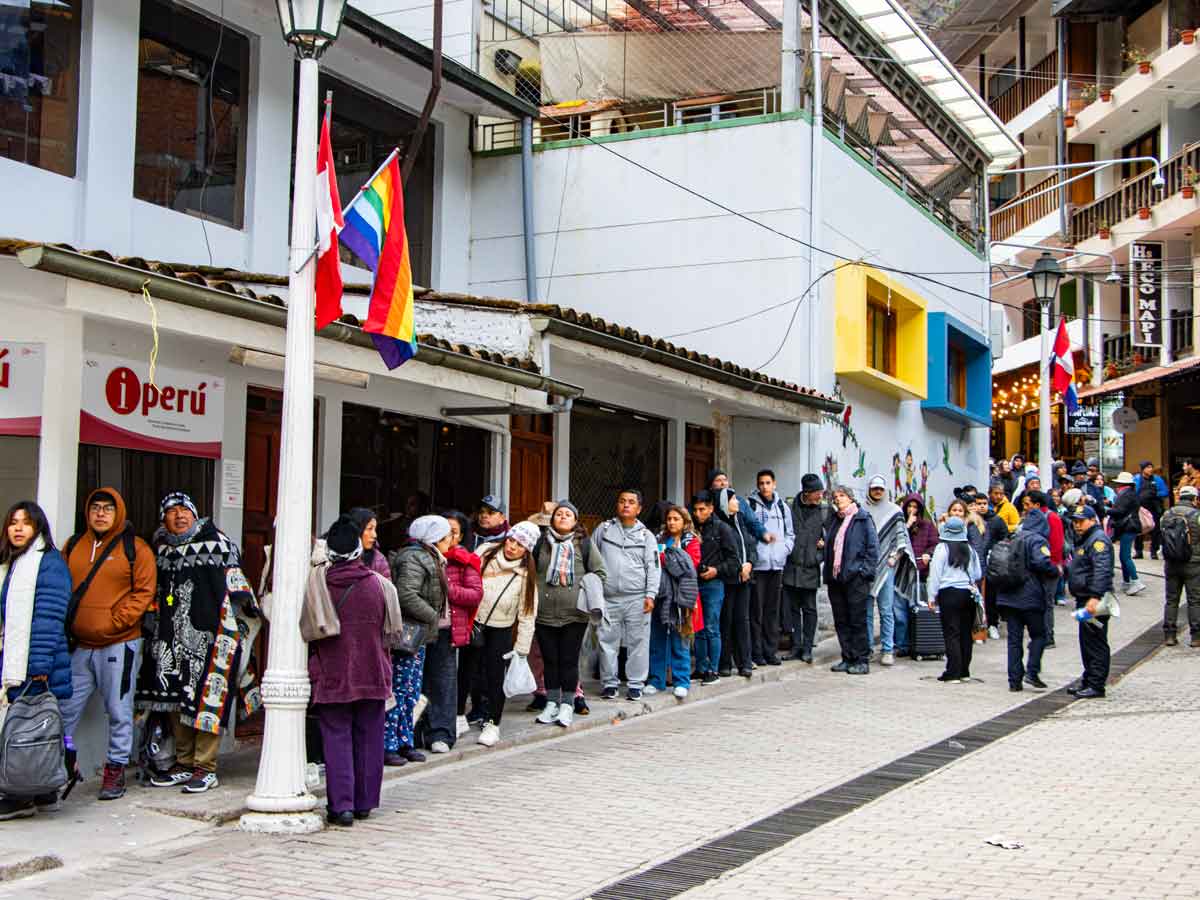
Every day, travelers arrive full of excitement, believing they are just one step away from visiting one of the world’s most iconic destinations. Instead, many find themselves standing in long lines for hours in Aguas Calientes, hoping to secure a last-minute entrance. For some, that hope turns into frustration.
Because tickets are limited, not everyone succeeds. Out of every 10 travelers who decide to stay and try their luck, only about 6 manage to buy a ticket. The rest are forced to extend their stay, often for another day, in a town where prices quickly rise as demand increases. What was meant to be a dream visit can suddenly become an unexpected expense—and a stressful experience.
Although the Ministry of Culture has introduced the option to purchase tickets two to three days before entry, availability remains extremely restricted. This creates a cycle where more and more visitors arrive without tickets, increasing pressure on an already limited system.
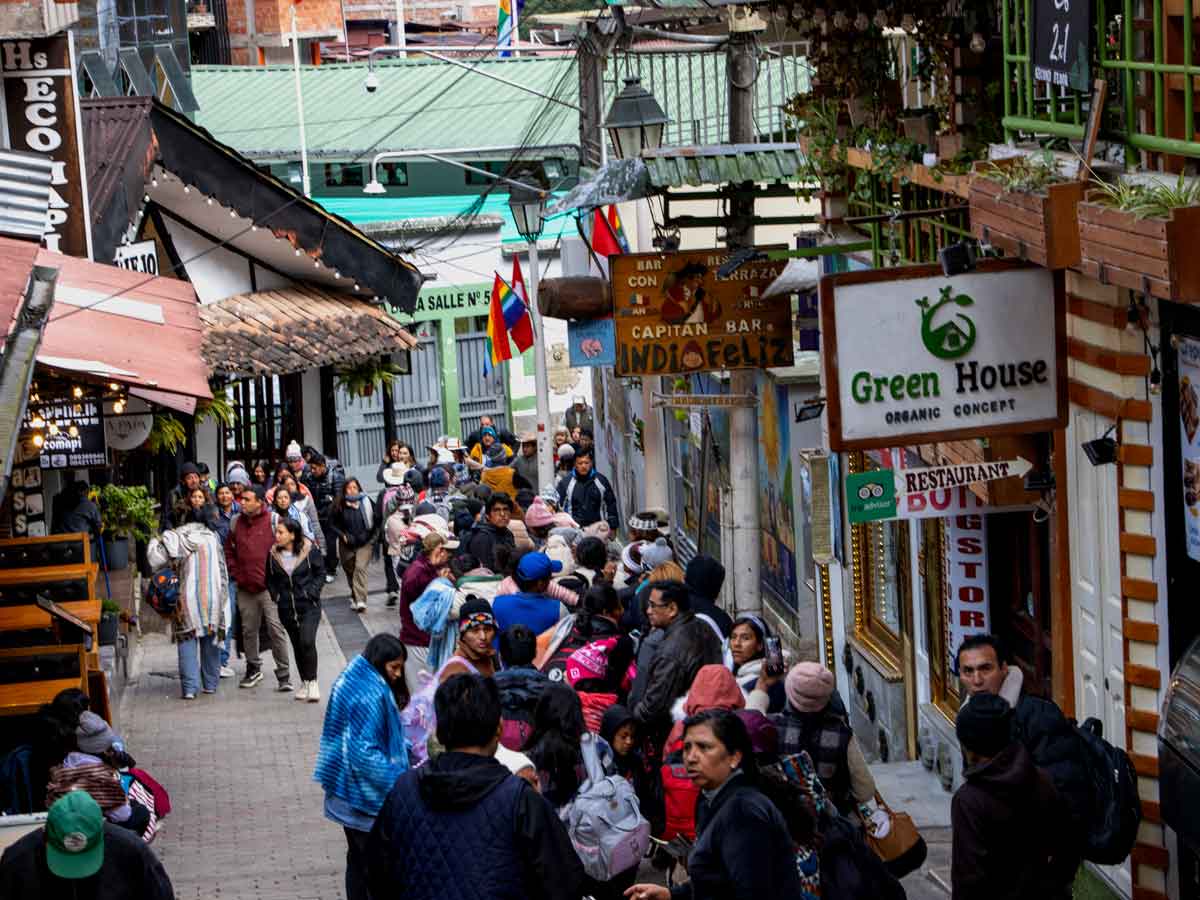
The situation becomes even more challenging during the high travel season. For most travelers, peak season runs from April to September. However, officially, only June, July, August, and December are considered peak months. This mismatch adds confusion and leaves many visitors unprepared for the reality on the ground.
Meanwhile, online ticket sales range between 4,500 and 5,600 entries per day during busier periods, while only 1,000 tickets are reserved for in-person purchase in Aguas Calientes. As a result, hundreds of travelers continue to arrive each day hoping to secure one of these limited spots—often without success.
Behind the breathtaking views and ancient stone walls, a different story is unfolding—one of limited access, rising demand, and a system struggling to keep balance. For many visitors, the journey to Machu Picchu no longer begins at the Sun Gate, but in a long line, waiting and wondering if they will even get the chance to enter.
Machu Picchu’s Real Problem: Fewer Visitors, Not More
The public debate surrounding Machu Picchu has repeatedly focused on ticket sales, waiting lines, and tourist congestion during certain times of the year. However, few analyses address the underlying structural issue: the sustained reduction in admission capacity at the Historic Sanctuary of Machu Picchu – National Archaeological Park compared to the pre-pandemic period.
Until 2019, virtually every visitor arriving in Machu Picchu Pueblo was able to enter the Inca citadel without major restrictions. At that time, the authorized capacity reached approximately 5,940 visitors per day. During peak seasons, even more visitors were allowed, which was not a sustainable practice. In addition, around 500 tourists from the Inca Trail network entered daily, bringing the total to nearly 6,500 visitors per day.
In 2020, taking advantage of the COVID-19 pandemic—and without sufficient formal studies—the number of visitors was drastically reduced to 2,244 per day. Since then, admission capacity has gradually increased, although it has not yet fully recovered to pre-pandemic levels.
During 2024 and part of 2025, a daily capacity of 4,500 visitors was authorized during the low season, and up to 5,600 during the high season. These figures did not include the approximately 500 daily visitors from the Inca Trail network. In real terms, the total flow reached around 6,000 visitors per day.
For 2026, the authorized distribution includes 4,500 tickets per day: 3,000 through online sales, 1,000 through in-person sales, and 500 allocated to the Inca Trail network. During peak season, the site can accommodate up to 5,600 visitors. However, in comparative terms, Machu Picchu is currently receiving approximately 1,000 fewer visitors than in 2019 and nearly 500 fewer than in 2025. This is the core of the current issue. The reduction in effective visitor capacity largely explains why Machu Picchu has not yet fully recovered its pre-pandemic tourism levels and why a decline in visitor arrivals to the country’s main destination is evident in 2026.
Furthermore, the visitor distribution for 2026 reveals significant operational inefficiencies. Of the ten hours of daily operation, only about 375 visitors per hour enter during seven of those hours, distributed across three circuits and ten routes. In contrast, peak entry times are concentrated at 7:00, 9:00, and 10:00, with 750, 550, and 575 visitors respectively. This imbalance creates congestion at specific times, while large portions of the day remain underutilized. For example, the first entry slot allows only 375 visitors, whereas in 2019 up to 800 visitors were permitted during the same time period.
Consequently, it is essential to address this issue from a technical perspective and through a comprehensive destination management approach. A key priority is the development and updating of specialized studies on tourist carrying capacity and Limits of Acceptable Change (LAC), to be conducted by the Ministry of Foreign Trade and Tourism (MINCETUR). These studies would establish objective parameters for the sustainable management of the site and help project the future of tourism in the country.
Similarly, it is important to follow the recommendations made by UNESCO, particularly those aimed at ensuring that the economic resources generated by Machu Picchu are directly reinvested in conservation, management, and improvements to tourism infrastructure. This would enable more efficient visitor flow, enhance the visitor experience, strengthen conservation efforts, and potentially allow for a sustainable increase in capacity beyond the current limit of approximately 375 visitors per hour during much of the day.
In this context, the debate surrounding Machu Picchu should not be limited solely to ticket availability. Instead, it should focus on a deeper technical discussion about operational capacity, sustainability, reinvestment, associated services (such as trains and buses), and the governance of Peru’s most important tourist destination.
The Silent Decline of Machu Picchu Tourism
Machu Picchu is currently experiencing an internal crisis sparked by local residents who oppose the new company, Torontoy, which recently won the tender to operate the shuttle buses along the Hiram Bingham route to Machu Picchu.
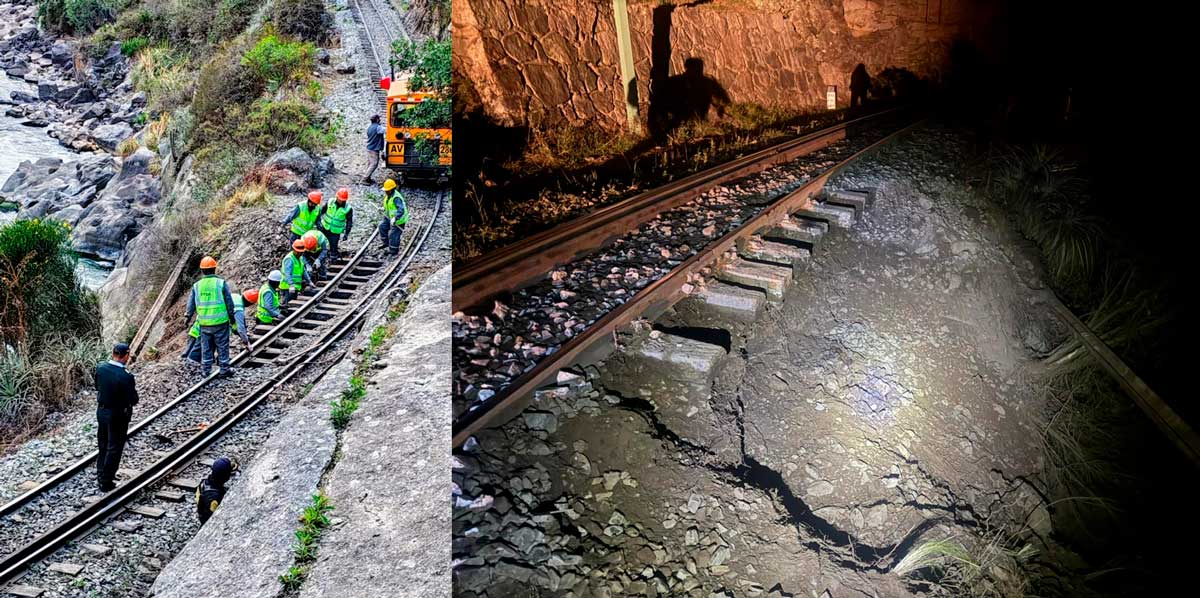
On September 5, 2025, the contract of the company, CONSETTUR, which had been operating this route for years, officially ended with the municipalities of Aguas Calientes and Urubamba. As soon as Torontoy was set to take over, local residents began striking to oppose the change. Protesters have blocked the railway, preventing Torontoy from entering Aguas Calientes and disrupting train services to Machu Picchu.
Why Is Machu Picchu in the Spotlight Right Now?
The Peruvian government has not yet intervened, leaving both locals and visitors in uncertainty. This conflict has severely affected travelers planning to visit one of the New Seven Wonders of the World.
Currently, it is impossible to reach Machu Picchu by train or bus. Both Inca Rail and Peru Rail have suspended operations due to the strike, while shuttle buses are blocked by protesters. Visitors already in Aguas Calientes are forced to walk up to Machu Picchu on their own.
So far, the government has issued no official statement, and the situation continues to disrupt the travel plans of thousands of tourists.
How Does This Affect Travelers?
At the moment, it is impossible to reach Machu Picchu by train or shuttle bus. Tourists already in Aguas Calientes are being forced to walk up to the citadel on their own. Meanwhile, those in Cusco or the Sacred Valley cannot access the town at all due to the blocked railways.
The only available alternative is the so-called “Amazon Route”:
Cusco → Santa María → Santa Teresa → Hidroeléctrica → 4-hour walk to Aguas Calientes → Machu Picchu.
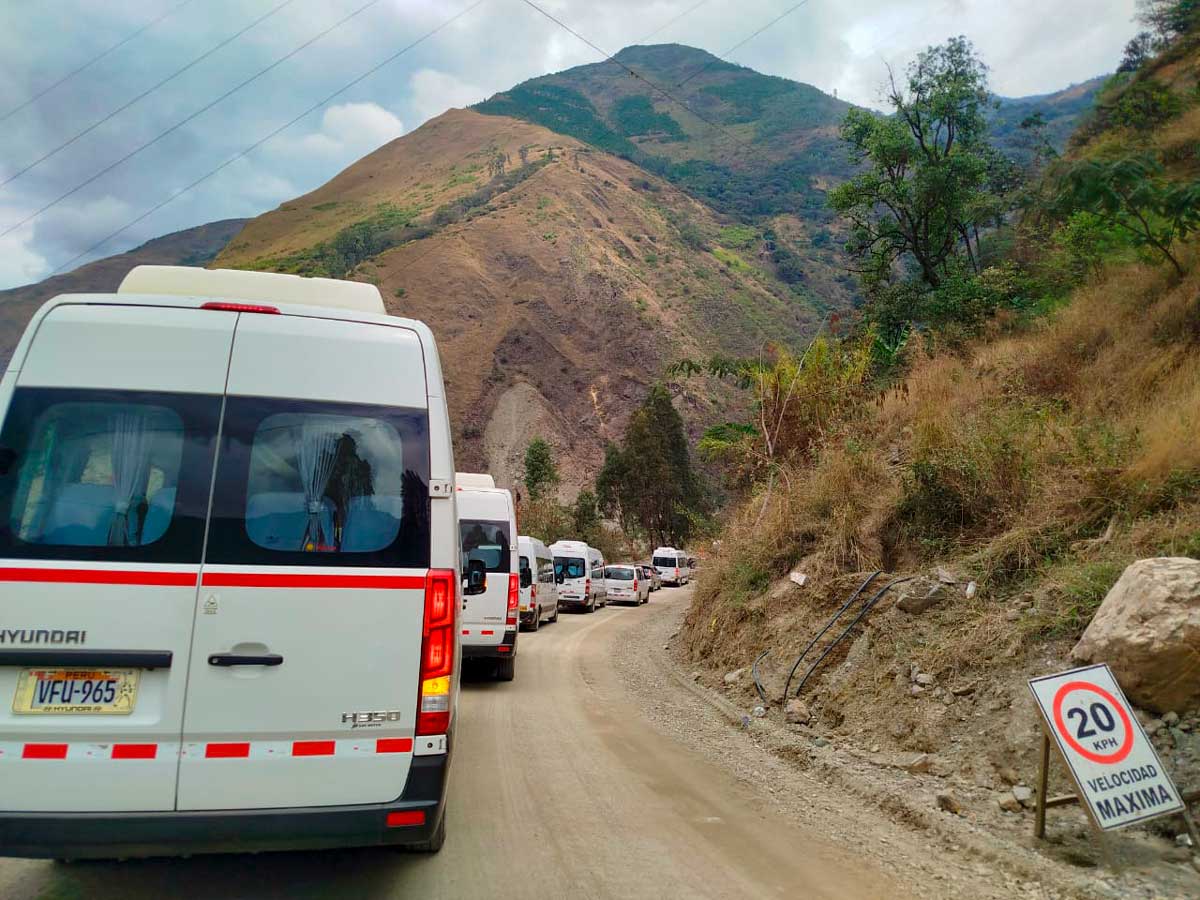
However, this detour has its downsides. Many drivers on this route have raised their prices, taking advantage of stranded tourists.
Is Machu Picchu at Risk of Losing Its Wonder of the World Status?
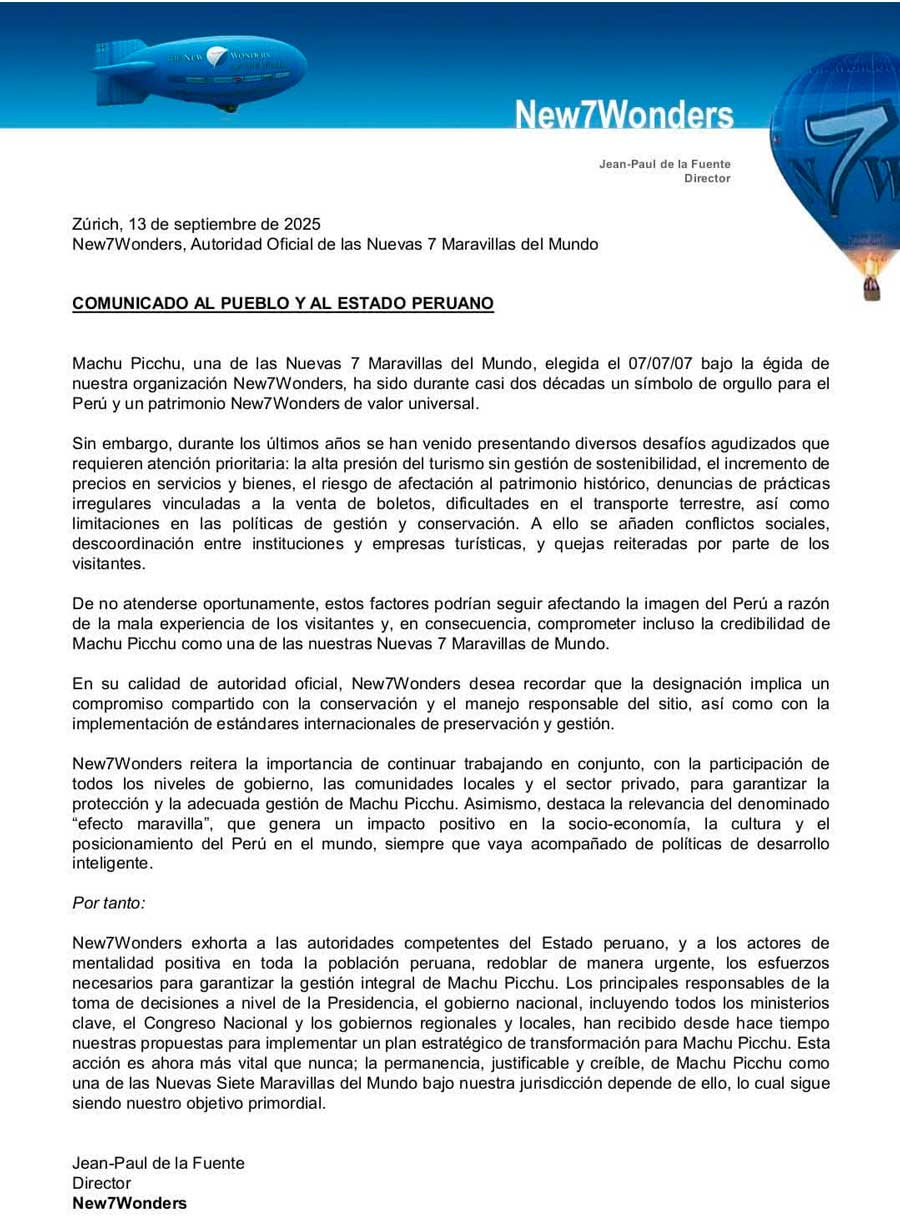
Just yesterday, the international organization that oversees the New Seven Wonders of the World expressed concern over the ongoing crisis and warned that Machu Picchu could be at risk of losing its Wonder status if the situation continues.
Constant abuses and repeated problems during visits to Machu Picchu have generated growing anxiety and concern. The site is now caught in the middle of political conflicts and local population disputes, while the government has taken no effective action to restore order.
Final Thoughts:
Machu Picchu has always been a dream destination for travelers worldwide, but today, that dream is turning into a nightmare for many. Until the Peruvian government intervenes and negotiations resolve the conflict, visitors should expect serious disruptions and reconsider travel plans.