
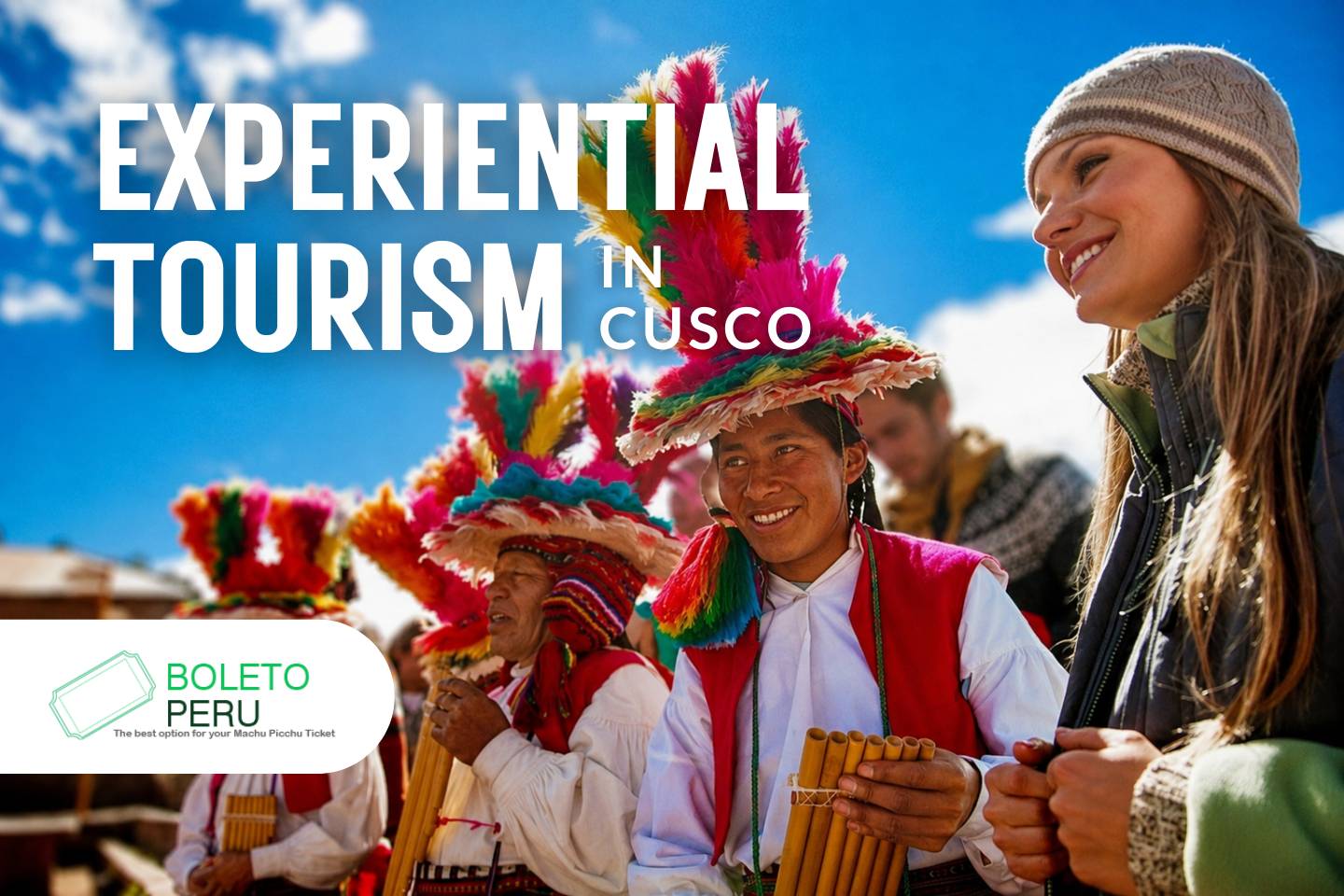
There is a moment, during any trip to Cusco, when photos in front of Machu Picchu are no longer enough. One begins to wonder how the people who live in these mountains really live, what they eat, how they weave, what they celebrate and what stories do not appear in any tourist guide. That is exactly the starting point of experiential tourism in Cusco: the chance to stop looking at the Andean culture from the outside and start being part of it, even if just for a few hours or a few days.
In this guide you will find everything you need to know to live that experience in a real and responsible way: what experiential tourism is and how it differs from classic tourism, the different types that exist, and a tour through the Andean communities of Cusco that open their doors to travelers, from Raqchi and its legendary Temple of Wiracocha to the weavers of Willoq and the mysterious Potato Park. You will also find practical tips so that your visit truly helps the families that welcome you, and not just a middleman.
Later, in individual articles, we will dive deep into each community, into the food cooked on firewood in the Andes, into the textile art passed down from generation to generation and into the Andean ceremonies that are still practiced in these heights. But it all starts here: understanding what it really means to travel like a local and feel like an Andean.
What is experiential and community tourism?
To understand what experiential tourism is, you have to stop thinking about a destination and start thinking about living together. It is a way of traveling in which the visitor not only watches, but takes part: cooks with an Andean family, helps in the farm, learns to weave on a backstrap loom or simply shares a talk by the warmth of a wood stove. There is no script or fixed schedule; there are people, time and willingness to learn.
-
Origin and goal of this type of tourism
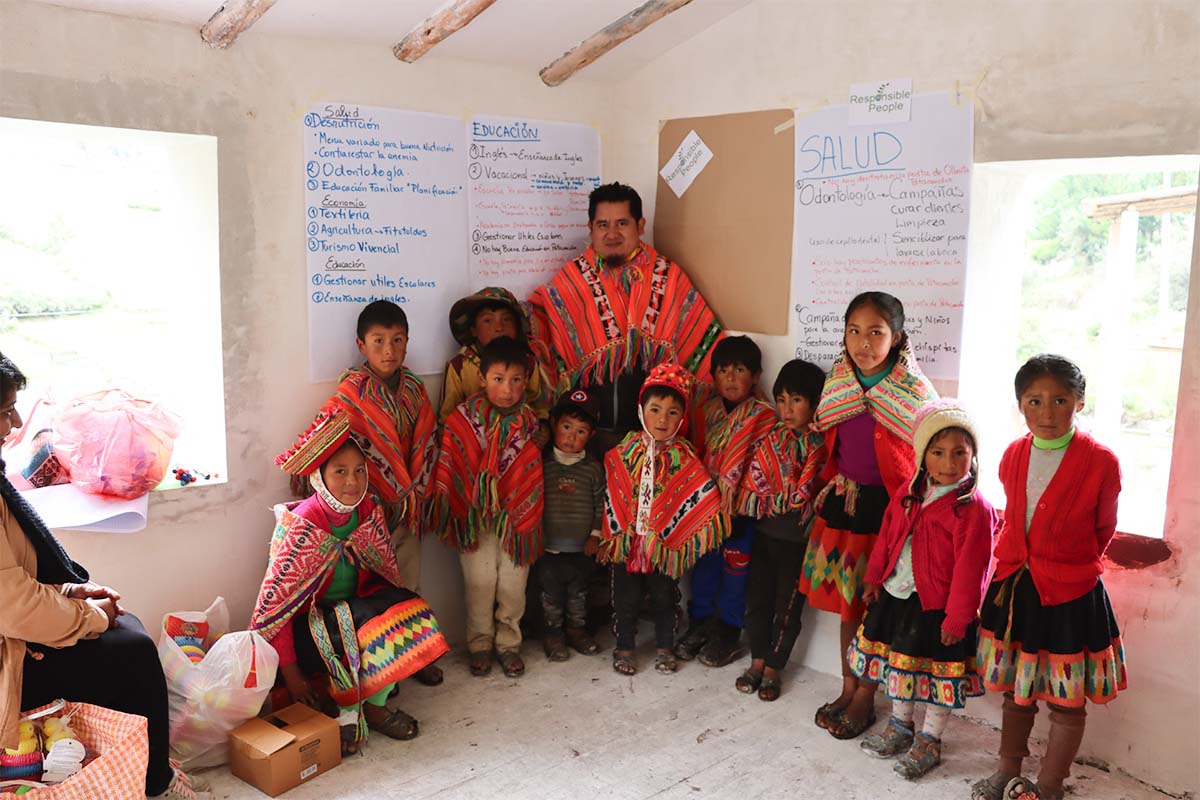
Experiential tourism in Cusco was born as an answer from the Andean communities themselves to a tourist model that left them out of the loop and its financial benefits. Since the early 2000s, different farming families began to organize themselves to welcome travelers into their own homes, showing their day to day without acting or staging. The goal was never just money: it also sought to value the Quechua language, the traditional clothing, the ancient farming and other practices that ran the risk of being lost with the new generations.
-
Difference between “experiential” and “community”
Although they are often used as the same thing, they are not exactly the same. The experiential refers to the personal experience of the traveler: the deep dive, the direct learning, “living” the culture in the first person. The community part, on the other hand, describes the management model: who organizes the experience and who gets its benefits. In Cusco, most experiences are both things at the same time (experiential in form and community in organization), since it is the communities themselves, and not outside agencies, who decide how, when and under what conditions they welcome visitors.
Classic tourism vs. experiential tourism: comparison chart
The difference between experiential and classic tourism is not only in the activities, but in the whole logic of the trip. One is organized around a destination and a schedule; the other, around a human relationship. Seeing both models side by side helps to understand what to expect from each one and, above all, to choose the one that best fits what you are looking for during your time in Cusco.
| Aspect | Classic tourism | Experiential tourism |
|---|---|---|
| Itinerary | Fixed, with preset schedules and stops | Flexible, adapts to the community’s pace |
| Lodging | Hotels and hostels | Family homes (homestay) or community camping |
| Contact with locals | Limited, through a guide | Direct, living with a family |
| Economic impact | Centered in agencies and large operators | Shared directly among local families |
| Level of personalization | Low, large groups | High, close and adaptable experience |
| Ideal type of traveler | Seeks efficiency and comfort | Seeks connection, learning and meaning |
Why choose experiential tourism on your trip to Cusco?
Choosing experiential tourism does not mean giving up visiting Machu Picchu or the Sacred Valley, but adding to that visit with something that no classic tour can offer: real time with the people who keep that culture alive. It is an especially valuable option for those who already know the main archaeological sites and are looking for a deeper level in their trip, for families who want to show their children a different way of life, and for any traveler who prefers that their money goes directly to those who receive it, instead of being lost in a chain of middlemen.
Types of experiential tourism in Cusco
Not all experiential experiences are the same. Within this type of tourism there are different approaches, each with a different kind of activity and connection with the community. Knowing these types of experiential tourism helps to choose the experience that best fits your interests.
- Community tourism (living with families): It is the most common way in Cusco, the traveler stays with a local family, shares their meals and takes part in their daily routine. There is no “programmed” activity in a strict sense, but a real coexistence that can include anything from cooking together to taking care of animals or just talking by the fire.
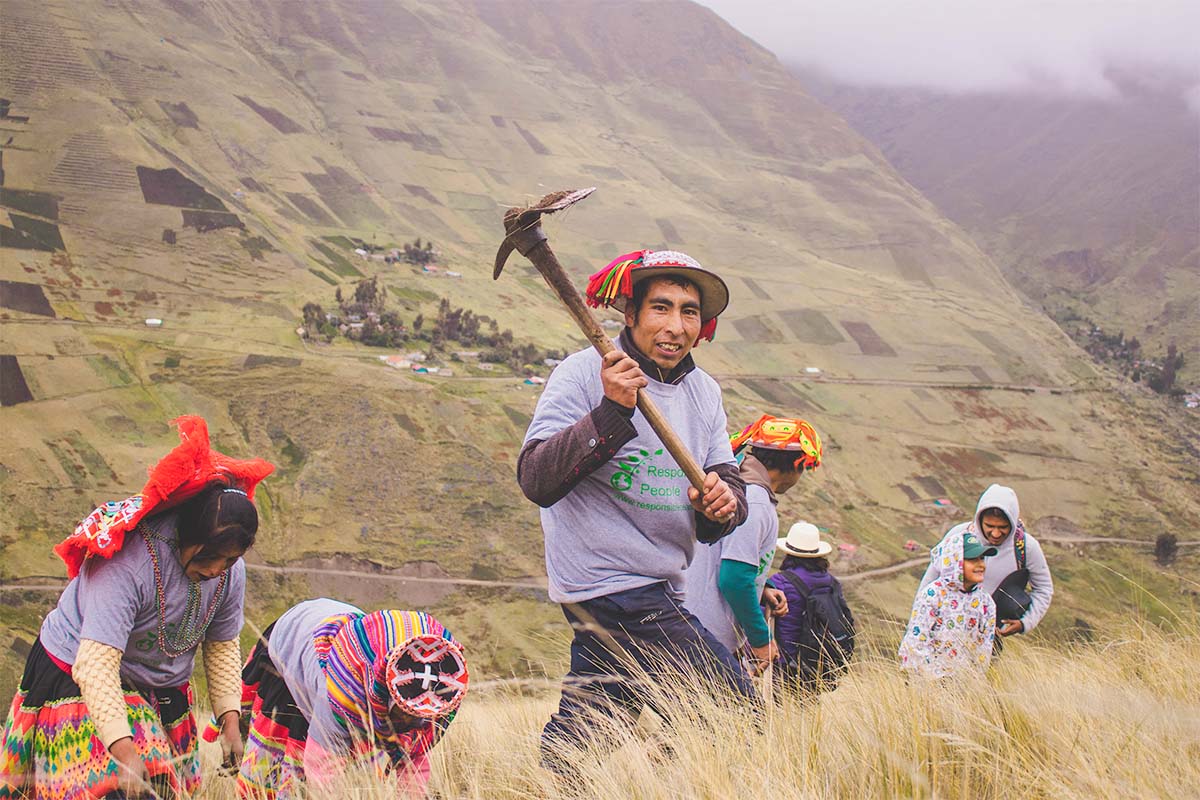
- Agrotourism (taking part in planting/harvesting): Here the focus is the land. The visitor takes part directly in farming tasks (planting native potatoes, harvesting quinoa, plowing with traditional tools) and learns firsthand the ancient high-altitude farming techniques that Andean communities have perfected for centuries.
- Experiential ecotourism (nature + community): It combines cultural immersion with walks and outdoor activities: climbs to apus (sacred mountains), tours of lakes and native forests, always guided by community members who know the land better than any map.
- Spiritual/ceremonial tourism (payment to the earth, Andean ceremonies): For those looking for a deeper connection with the Andean worldview, some communities offer the chance to take part in traditional ceremonies like the payment to the earth (offering to the Pachamama) or flowering baths, always guided by a local paqo (Andean priest).
- Community volunteering: It combines the experiential stay with a real contribution: support in educational, community health or environmental projects. It is ideal for travelers who have more time and want their time in the community to leave a contribution beyond money.
The best communities for experiential tourism in Cusco
Cusco gathers some of the most famous experiential tourism communities in the Peruvian Andes, each with its own identity. Here is a first look at eight of them:
Raqchi (Wiracocha Temple, ecological farming)
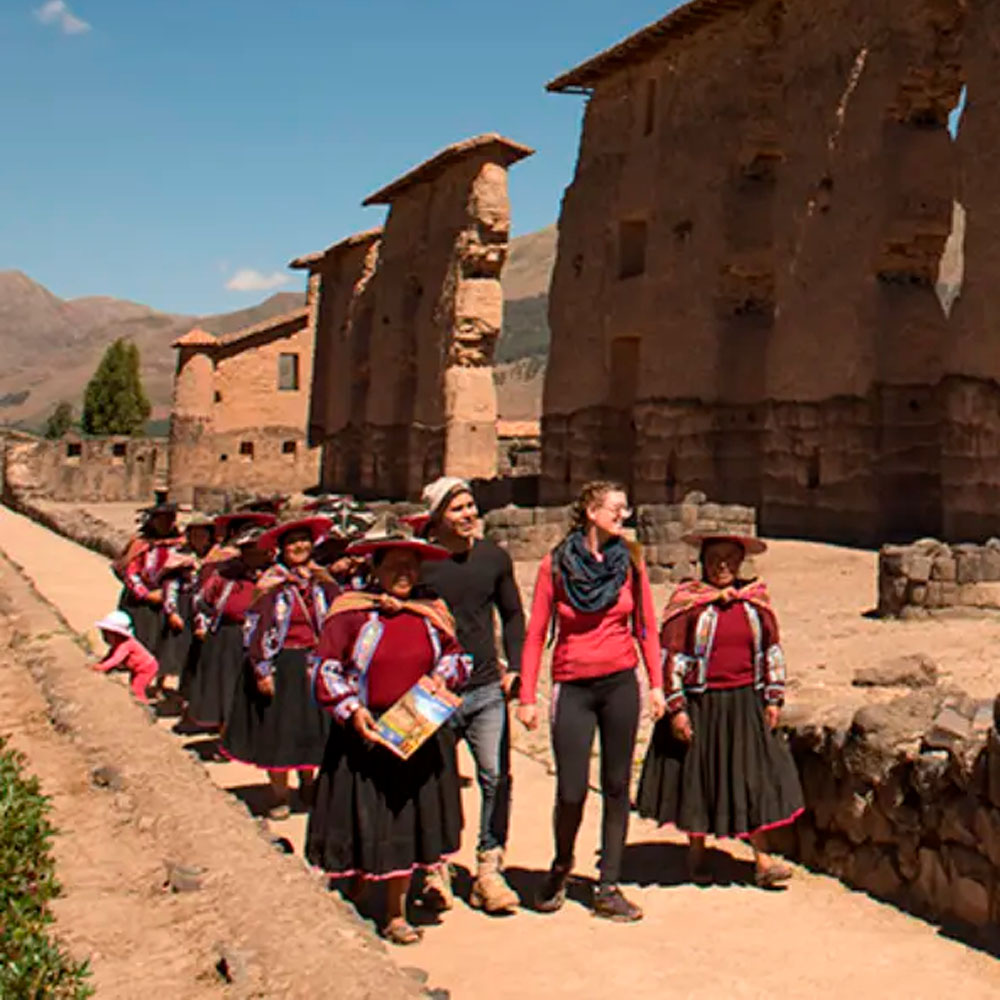
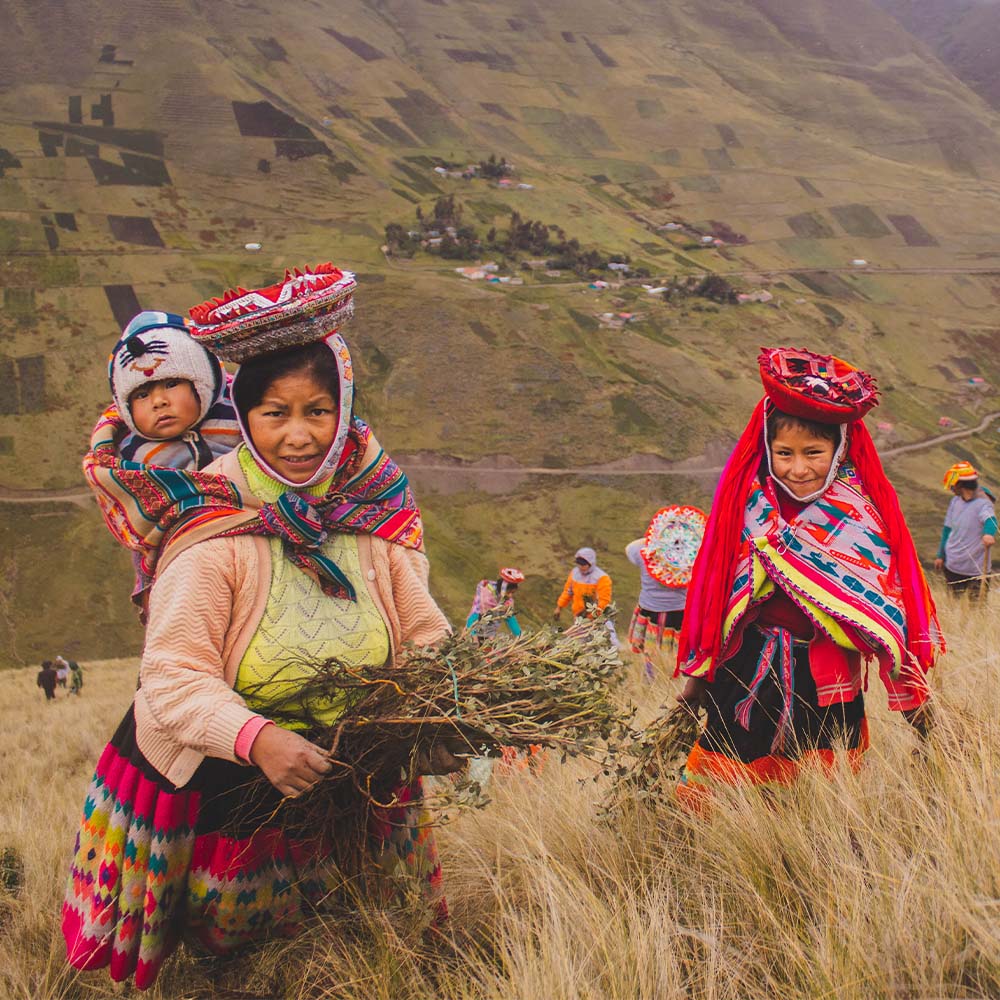
A few hours from Cusco, on the way to Puno, Raqchi is home to about 80 families and the impressive Wiracocha Temple, one of the largest Inca archaeological complexes in the region. Besides its historical value, the community stands out for its ecological farming practices and for a walk to the extinct Kinsachata volcano, one of its local apus.
Willoq and Umasbamba (textiles and traditional clothing)
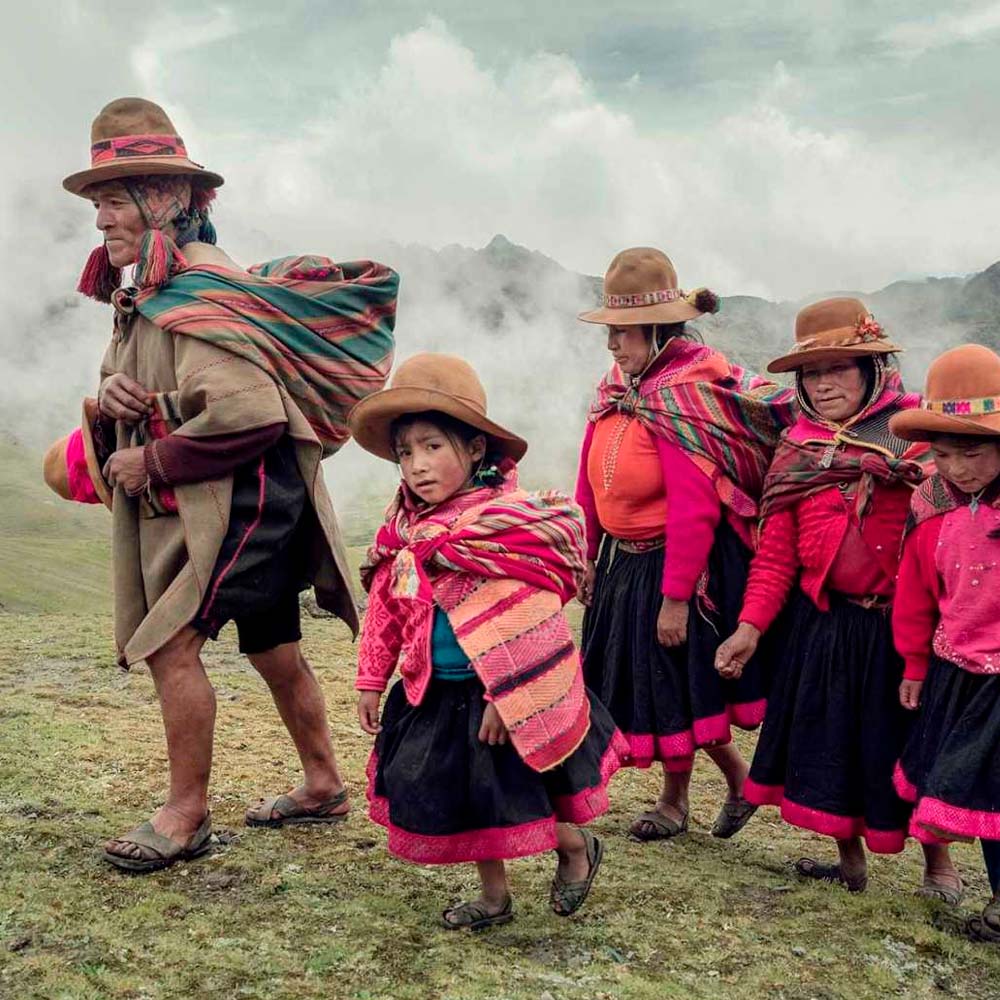
Near Ollantaytambo, these Sacred Valley communities are known for keeping one of the most alive textile traditions in Cusco. Its people, dressed in bright colored suits, keep spinning and weaving techniques passed down from generation to generation, as well as local celebrations that few travelers get to see.
Q’eros Community (the “last Incas”)
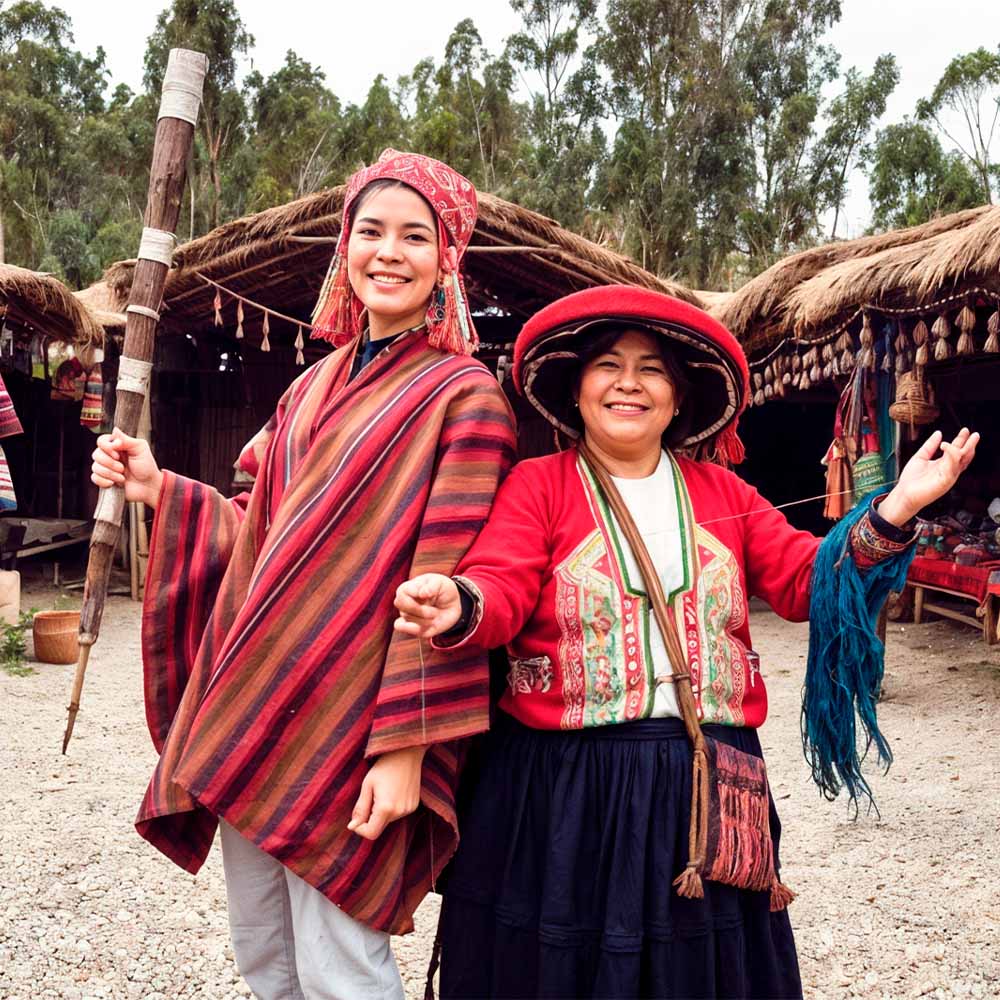
Considered by many as the most direct descendants of the Incas, the Q’eros live in hard-to-reach areas in the heights of Paucartambo. Their geographical isolation allowed them to keep traditions, rituals and an Andean worldview practically intact, which makes a visit to their community one of the deepest and least commercial experiences in the region.
Chinchero (textiles and craft market)
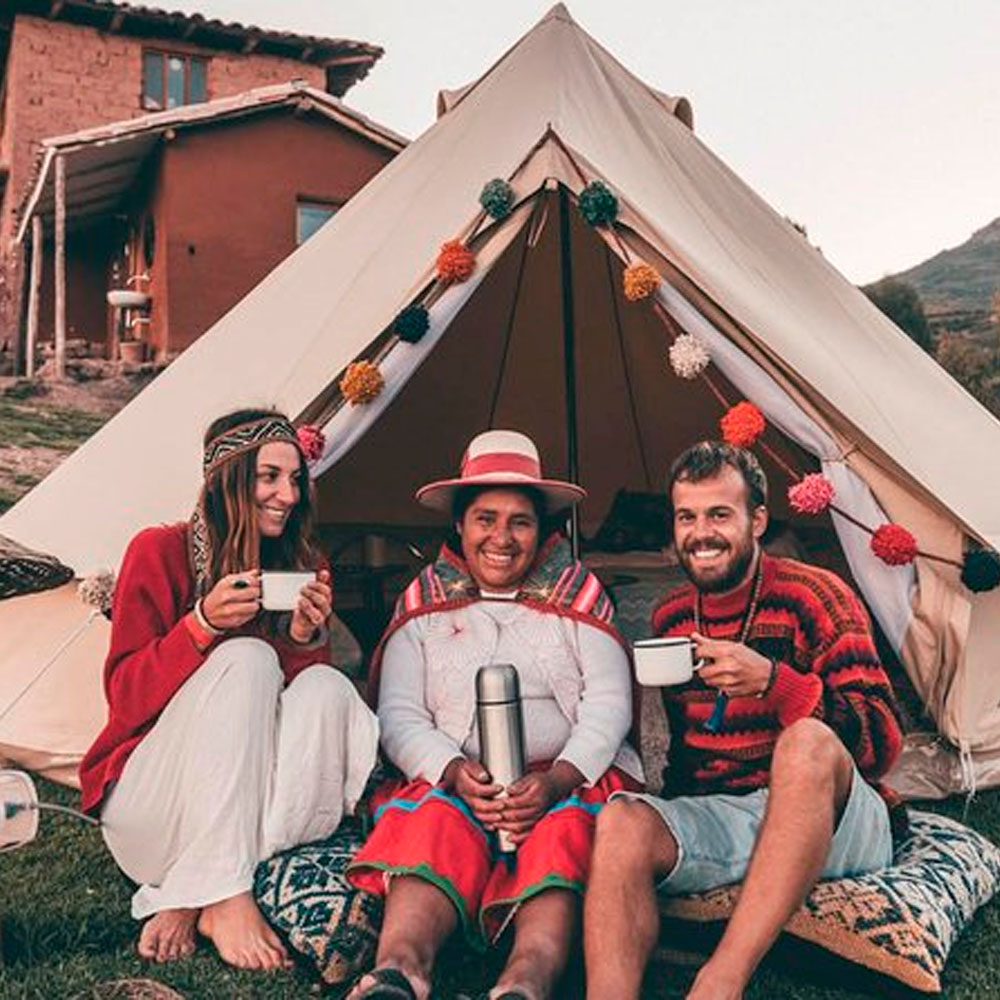
30 minutes from Cusco, Chinchero combines an impressive Inca archaeological site with a living town, famous for its natural dyeing and weaving workshops. Its craft market is one of the most authentic in the Sacred Valley, and many families open their workshops to visitors to show the whole process, from shearing the wool to the finished garment.
Misminay (farming and livestock life)
Located in the heights near Chinchero, Misminay offers one of the most complete farm tourism experiences: visitors get directly involved in farming and livestock tasks, participate in the making of typical dishes and enjoy high Andean landscapes with a deep cultural background.
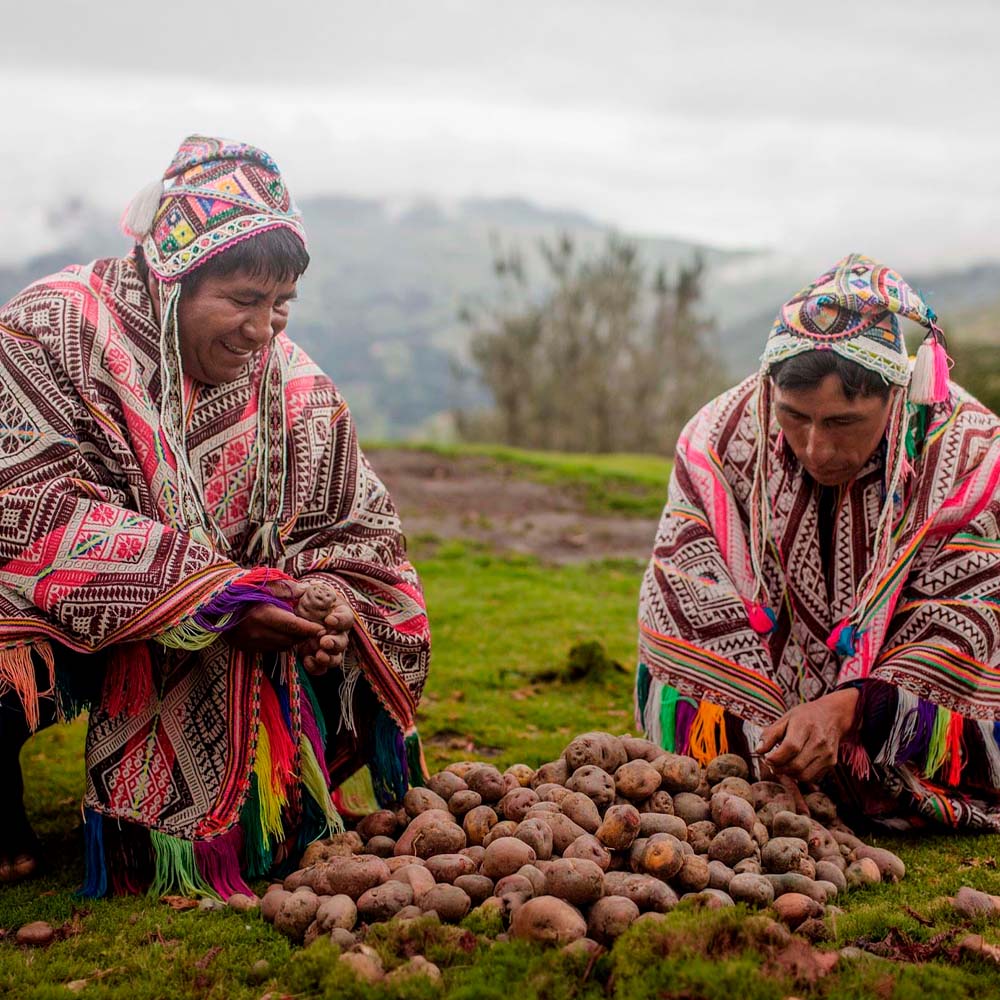
Potato Park: Amaru, Chawaytire, Paru-Paru, Pampallaqta and Sacaca
This agro-biodiverse park gathers five communities organized around the protection of more than 1,400 native potato varieties. Visitors can participate in botanical gardens, medicinal plant workshops and textile activities, with a shared management system that divides tourism income among the five towns.
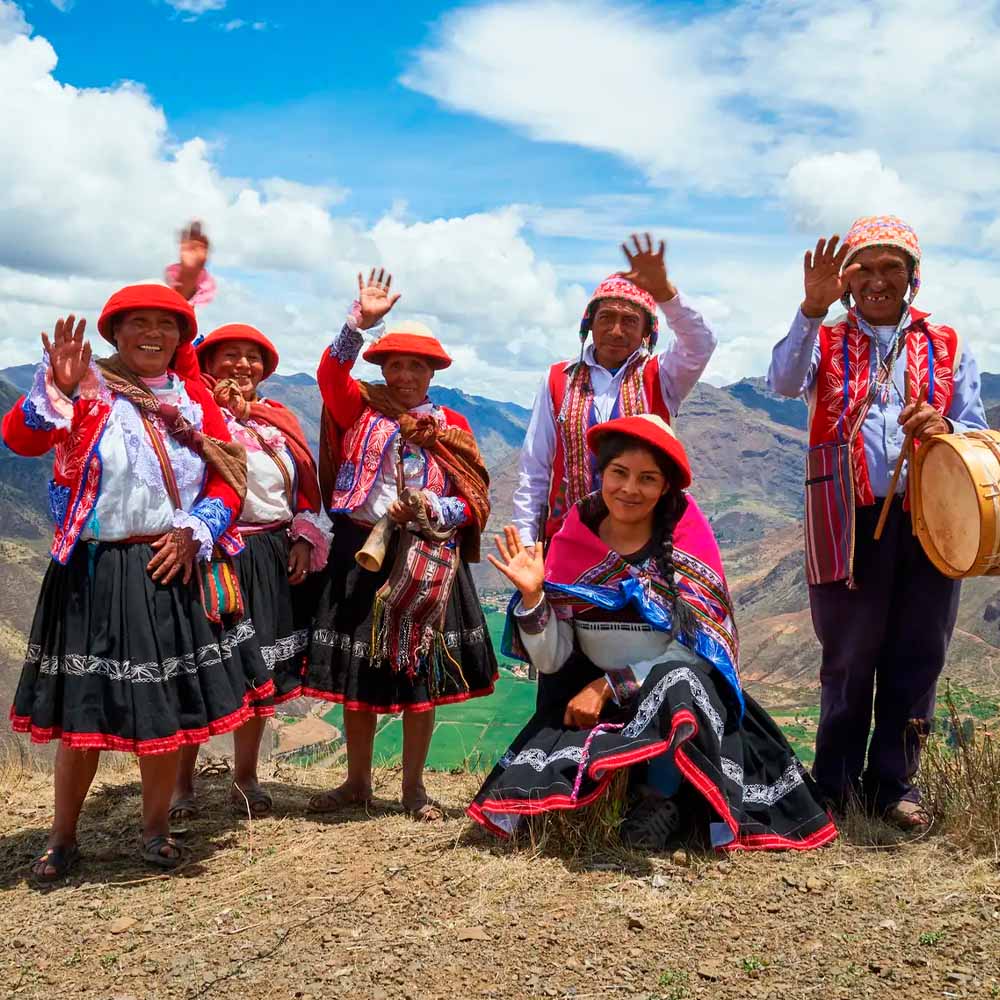
Patabamba, Chillca and Kharhui (Pacha-Paqareq network)
Located between Cusco and Puno, these three communities form the Pacha-Paqareq experiential tourism network, working together with Raqchi to offer a larger experience. Each one provides its own scenic, archaeological and cultural attraction, with activities that seek coexistence and mutual exchange with the visitor.
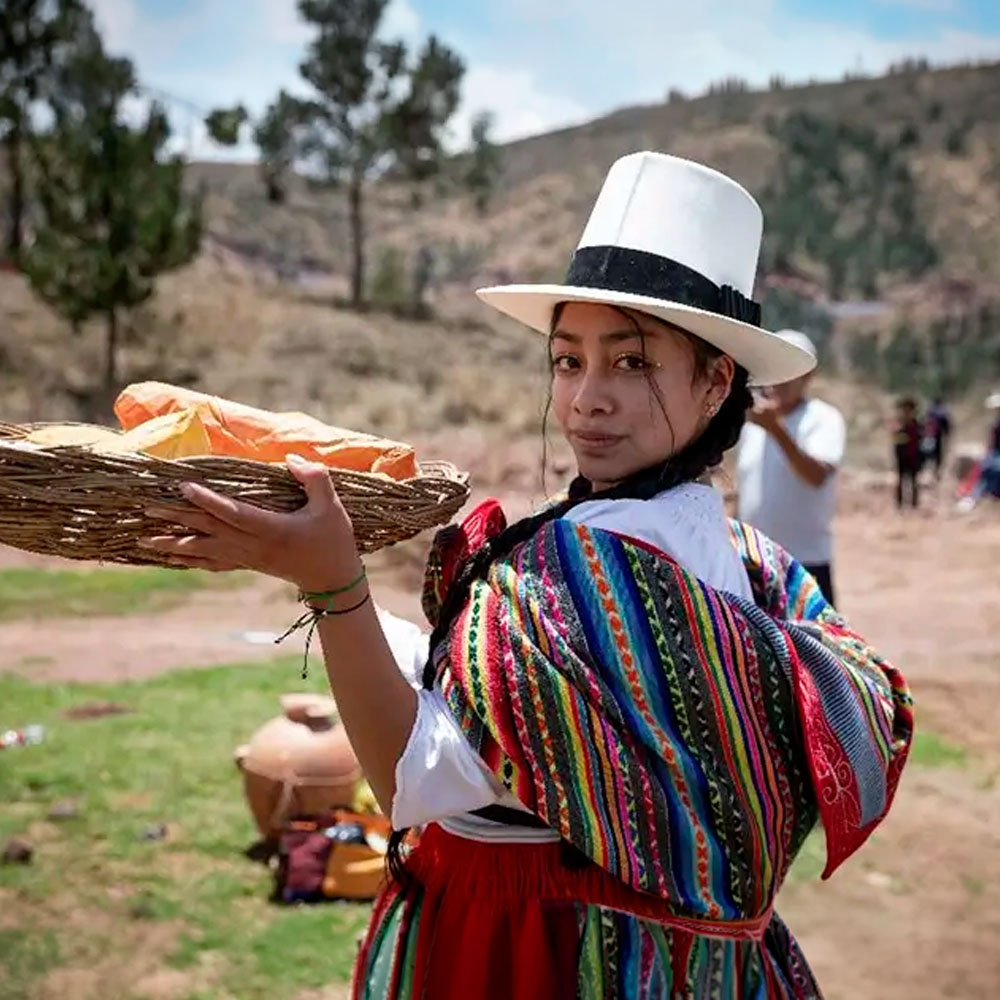
Chocco (the closest to the city of Cusco)
Just 20 minutes from the historic center, Chocco keeps a rural essence marked by adobe houses, farming terraces and stone roads, with views of the city from its hills. It is the ideal option for those who have little time, but do not want to give up an authentic community experience.
What does an experiential tourism experience include?
Beyond the community you choose, experiential tourism experiences in Cusco share a similar structure regarding accommodation, food, activities and length. Knowing this beforehand helps you plan your visit better and know what to expect.
Starting to answer what an experiential tourism experience includes, the most common choice is the homestay: sleeping in a room inside the family house or in an extra room built specially for visitors, with a private or shared bathroom. Some communities, especially the highest or farthest ones, also offer camping areas managed by the people themselves.
Next is the food, which is a main part of the experience. It is common to take part in making dishes like huatia (potatoes cooked underground with hot stones), fried guinea pig or a healthy quinoa soup, using ingredients grown by the same family that welcomes you. Also, depending on the community and the time of the year, activities can include weaving workshops with alpaca wool, planting or harvesting days, traditional pottery work and walks to nearby apus (sacred mountains).
On the other hand, the shortest experiences last half a day and usually focus on just one activity, like a textile workshop. Full-day ones let you see many sides of community life, while the ones that include spending the night (one or more nights) are the ones that offer the deepest and most real immersion.
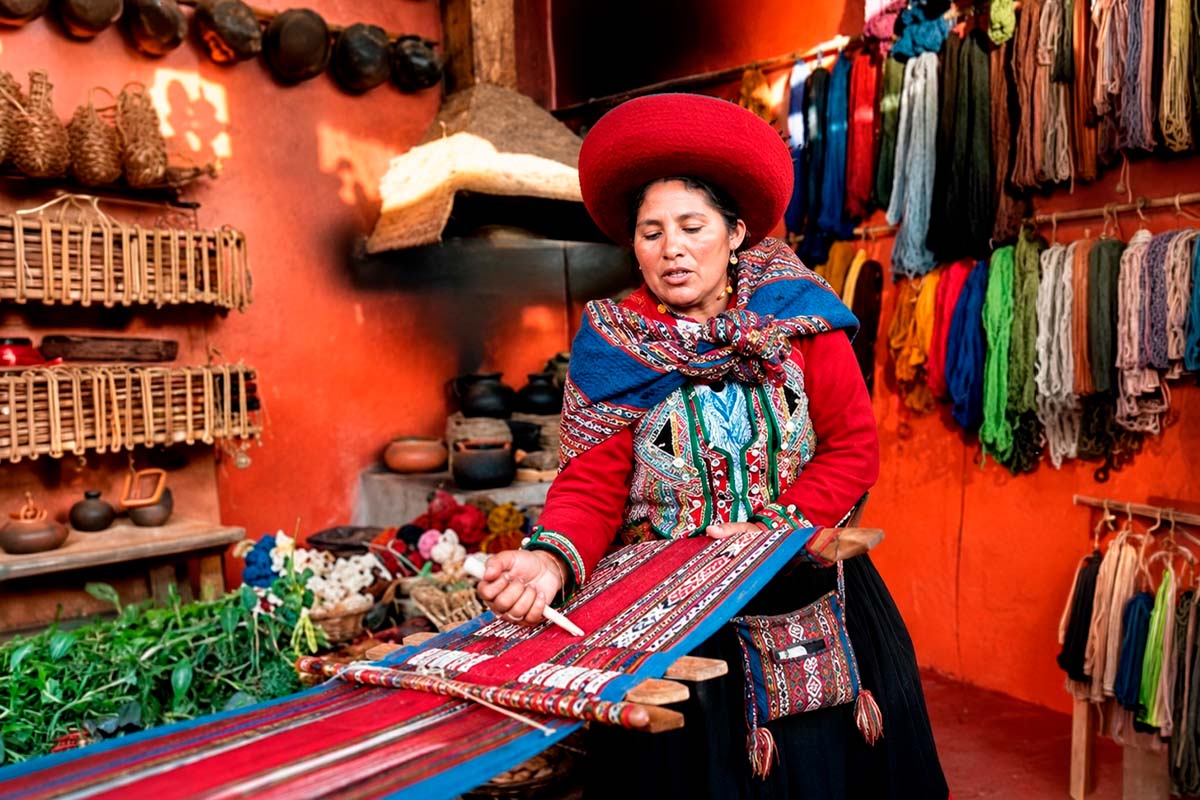
Recommendations for a better experiential trip
Living an experiential trip in Cusco to the fullest depends, mostly, on how you prepare before arriving. These experiential tourism tips in Cusco will help you enjoy it with more comfort and build a real exchange with the community that welcomes you.
-
Cultural respect and traveler’s attitude
The attitude is, probably, the most important thing. Arrive willing to listen more than to take photos, ask before taking pictures of people, and remember that you are stepping into the daily life of a family, not a tourist spot. A simple greeting in Quechua (“Hello”) usually opens many doors.
-
What to bring?
Andean communities are usually at a high altitude, so the cold (especially at night) can be strong even in the dry season. Bring warm clothes in layers, sunscreen and a flashlight. About gifts, it is better to bring useful things for the family (non-perishable food, school items) rather than candy or direct money for the kids. Also have cash in soles, because in most communities there is no access to cards or ATMs.
-
Getting used to the altitude before the visit
Many of these communities are located above 3,500 meters above sea level, so it is recommended to spend at least one or two days in Cusco before the visit to get used to the altitude, avoid hard physical effort the first day and stay well hydrated.
-
How to choose a responsible operator
Not all operators work the same way. Before booking, check that the agency works directly with the community (and does not just use it as a stop on a larger tour) and that a real part of what you pay reaches the host families. Asking how the money is shared is a simple way to make sure that your visit really helps.
Frequently asked questions
- How much does experiential tourism cost in Cusco?
The price varies depending on the community, the duration, and if it includes an overnight stay. A half-day visit can cost from 30-50 dollars per person, while a full experience with lodging and meals can be over 100 dollars, usually including transport and a guide. - Is it safe to stay in an Andean community?
Yes. Working with established operators and organized communities within experiential tourism networks, the experience is safe. The host families are used to receiving visitors and usually have adequate basic facilities for lodging. - Do I need to speak Quechua or Spanish to participate?
It is not required. Many communities have bilingual guides who translate during the experience. However, knowing a few basic words in Quechua or Spanish always enriches the exchange and is highly valued by the families. - What is the best time of the year to do it?
The dry season, between April and October, offers better weather conditions and more accessible roads. However, experiential tourism can be practiced all year round, and the rainy season (November-March) matches the planting season, ideal for those looking for agrotourism experiences. - Is it suitable for children or older people?
In general yes, although it is better to choose communities that are easier to access and check with the operator the level of physical effort required, especially because of the altitude. Communities close to Cusco, like Chocco, are a good option for groups with small children or older adults. - How is it different from a traditional tour to Machu Picchu?
A tour to Machu Picchu focuses on an archaeological site with a guided tour and set times. Experiential tourism, on the other hand, focuses on the people: you do not visit a monument, but you live with those who inhabit the territory, in a much more flexible and personal format. Both experiences complement each other and can be combined in the same trip.
