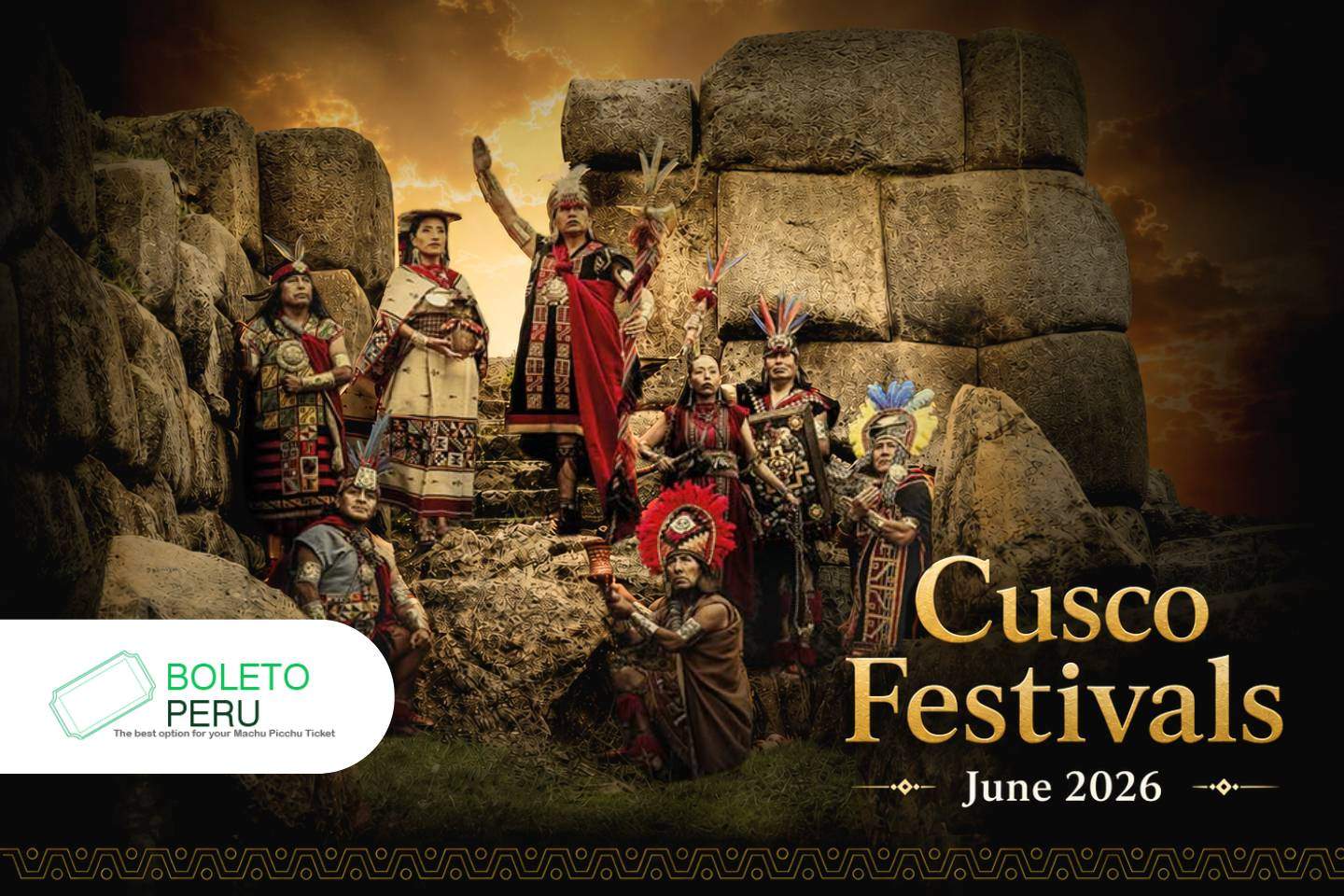
The ancient capital of the Inca Empire, one of the most famous and historic cities in Peru, transforms during its festive season. Every June, the streets of the historic center, the imposing Inca stone walls, and the colonial squares become the setting for one of the most important cultural celebrations in South America.
During this month, Cusco is filled with color, music, and tradition. With ancient dances, troupes, parades, Andean ceremonies, and the sound of drums that accompany a series of activities, which reflect the cultural wealth and the legacy of the Andean peoples. The whole city transforms into a big party that brings together locals and visitors around its most representative customs.
If you are planning to visit the city on these dates, you will find a unique opportunity to get a close look at the traditions of Cusco and live an authentic and unforgettable experience. In this guide, we tell you what the most important events are, the dates you should mark on your calendar, and everything you need to know to fully enjoy the Cusco Festivities 2026.
Below, we present the complete schedule of the Cusco Festivals in June 2026.
Andean spirituality and rituals
The June celebrations in Cusco do not start with parades or fireworks, they start with the earth. Before any public party, the city pays tribute to the Pachamama and the Apus, the sacred mountains that Andean people consider protective entities. It is the starting point to understand everything that comes next, and also the gateway to a worldview that is still alive in every corner of this region.
-
Offering to the Pachamama
The first day of celebrations takes place in the Main Square. There, the Andean priests (the Yachayniyoq) prepare the dispatches: offerings made with coca leaves, seeds, and sacred elements that are given to Mother Earth in gratitude and as a request for prosperity. It is a ceremony that wraps those who watch it in a special silence, hard to describe, but easy to feel. For the traveler who arrives without much prior context about the Andean culture, this ritual is probably the best possible first contact.
-
Pilgrimage of the Lord of Qoyllur Rit’i
In the first days of the season, the mysticism moves to the heights. The pilgrimage to the Ausangate snow-capped mountain is one of the most impressive expressions of faith in all of Peru: tens of thousands of devotees, organized in nations and dance groups, climb to more than 4,700 meters above sea level to reach the sanctuary of the Lord of Qoyllur Rit’i. They do it in freezing temperatures, dancing and marching all the way, in a mix of Catholic passion and worship to the glaciers that only makes sense when seen up close. It is a physical and spiritual journey that is unlike anything else in the Andean festive calendar.
Religious mix and colonial food
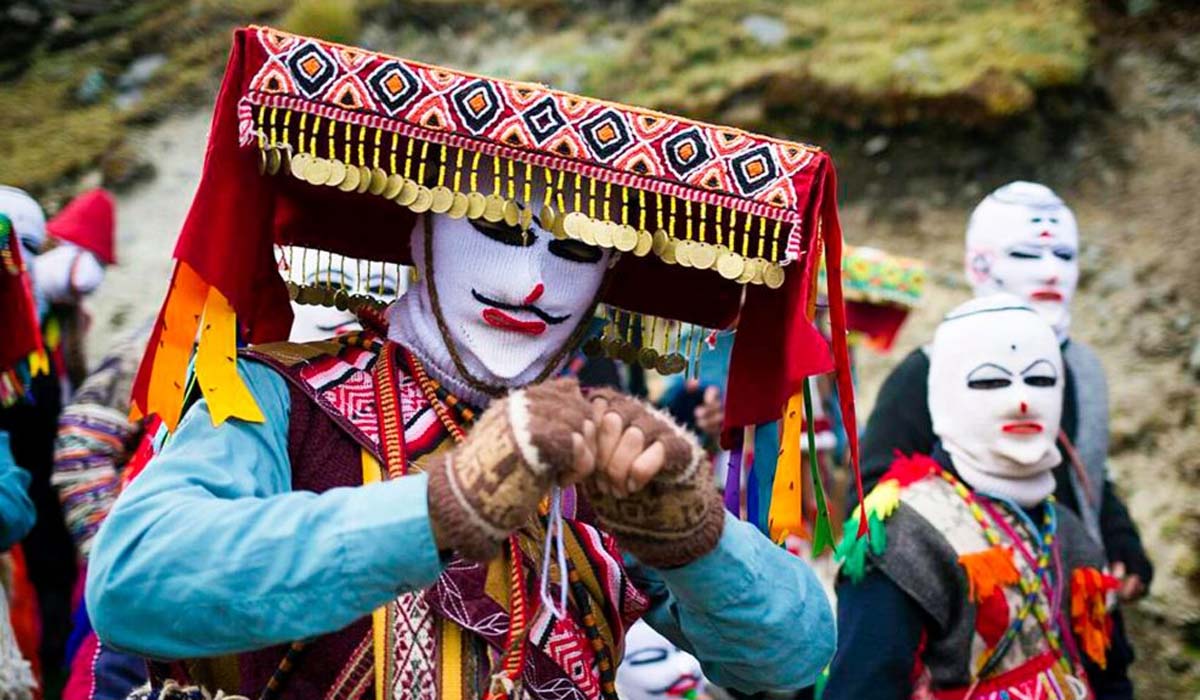
One of the most fascinating parts of the festivals in Cusco is how two cultures that seemingly should not fit together live together and mix: the Catholic tradition brought by the Spanish and the Andean worldview that existed long before the conquest. The result is a series of celebrations that do not belong completely to either of the two cultures, but to something new that came from the meeting between both.
-
Corpus Christi Procession — Days 3 and 4 of June
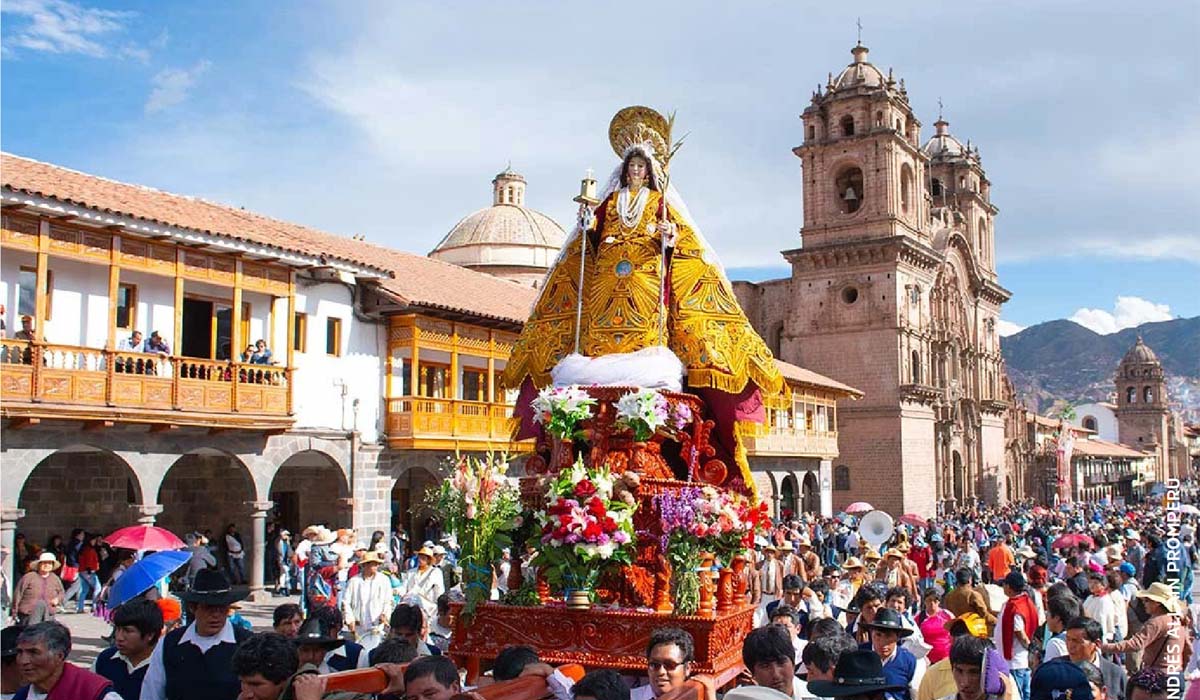
During these two days, the streets of the historic center become the stage for one of the most important processions in the religious calendar of Cusco. Fifteen saints and virgins, heavily decorated, are carried on litters by their followers from different parishes to the Cathedral. The tour is accompanied by songs in Quechua, clouds of incense, and a devotion that mixes Catholic passion with clearly Andean elements. It is one of those celebrations that are better understood by seeing them than by reading about them.
-
Chiriuchu Food Festival — Day 4 of June
While the procession goes through the streets, the San Francisco Square turns into a great feast. The main star is the chiriuchu, the traditional cold dish of the region above all: “chiri” means cold and “uchu” means chili. The mix of ingredients is a perfect combination of the Andean and the colonial: baked guinea pig, ch’arki (dried meat), boiled hen, fish roe, cochayuyo seaweed, and rocoto pepper. For those who also travel with their taste, this is one of the most awaited events of this festival.
-
Eighth of Corpus Christi — Day 11 of June
The cycle of religious celebrations closes with the Eighth, when the respected images leave the Cathedral again to say goodbye to the Main Square before returning to their home parishes. It is a more private closing than the previous days, but with its own emotional weight. The city gets back to its usual pace, but the atmosphere left by this week of celebrations takes a little longer to fade away.
Cultural identity, expression and parades
The heart of the Jubilee Month beats in the streets. Throughout June, the squares and avenues of the historic center become the stage for parades, troupes, and presentations that show the Cusco identity from different angles: the academy, the schools, the provinces, contemporary art, and even the neighborhood pets.
-
University Dances Parade — Days 5, 9, 10 and 16 of June
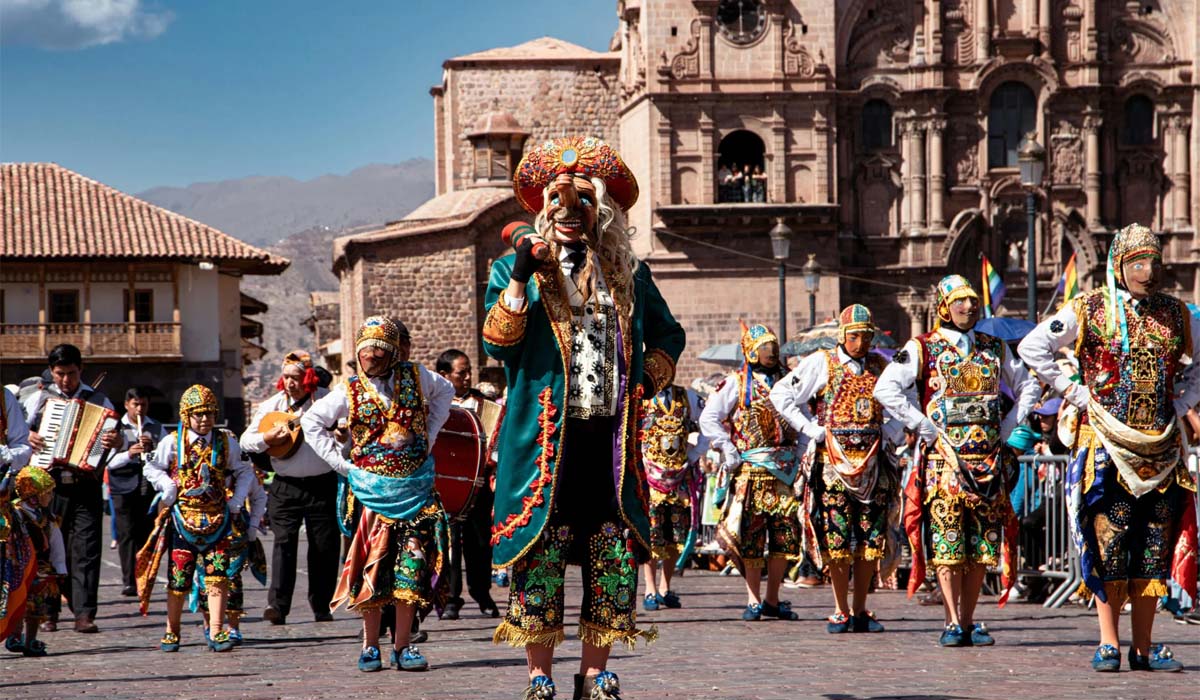
On these dates, the students of the Cusco universities take over the historic center with costumes full of symbolism and choreographies that show ancient ancestral dances with rigor and research behind them. It is one of the most interesting expressions of the month because it mixes cultural pride with the energy of the young people who actively choose to keep these traditions alive.
-
Typical Dances Parades — Days 8, 15, 17 and 18 of June
These days the leading role belongs to the little ones. From preschool to higher institutes, thousands of children and young people parade through the Main Square with traditional clothes made with detail, performing the rhythms of their ancestors with a seriousness and a naturalness that surprises any visitor. It is one of those moments of the month that are hard to forget.
-
Peru’s Greeting to Qosqo and Pet Parade — Day 13 of June
This day the celebration takes on a national character: artistic delegations from different regions arrive in Cusco to pay tribute to the ancient capital of the Empire. But there is a parallel event that deserves a separate mention: the dog parade “Puririsun Alqochakunawan” in the San Sebastian Square, where local families dress their dogs in ponchos and typical miniature outfits. It is exactly as charming as it sounds, and it adds a moment of humor and tenderness in the middle of so much seriousness.
-
Giant Allegories Parade — Day 20 of June
One of the most visual events of the month. The Diego Quispe Ttito National University of Fine Arts presents mobile sculptures and large parade floats that go through the main square representing Andean myths, social criticism, and stories of the Cusco tradition. It is a show of the contemporary artistic talent of the region that lives perfectly with everything ancestral that surrounds the month.
-
Parade of the 13 Provinces — Day 22 of June
The most complete closing of the month in cultural terms. Delegations from the thirteen provinces of Cusco arrive at the Main Square with their own dances, music, and typical clothes, many of which are not usually seen in tourist circuits. It is the best opportunity of the month to understand the real diversity of the region, beyond the city and the most known archaeological sites.
Ancient engineering and the great tribute to the Sun
The month of June in Cusco closes with the most impressive events of the calendar: a live demonstration of pre-Hispanic engineering and the most important celebration of the year for the Andean culture.
-
Renewal of the Q’eswachaka Bridge — Days 11 to 14 of June
A few kilometers from the city, in the Quehue district, an important event in the Andean calendar happens. During these days, the local communities completely take apart the hanging bridge of braided straw that crosses the Apurimac River and weave it again by hand, following exactly the same technique that has been used for six centuries. It is not a recreation or a show for tourists: it is a real collective work, where each family in the area has a defined role and participation is part of the community identity. Seeing it in person is one of the most authentic experiences the region offers.
-
Light and Sound Show — Day 19 of June
The night of June 19, the Main Square becomes the stage of a night celebration that projects lights and sound on the historical architecture of the city. It is a moment where tradition and technology meet in a way that works surprisingly well, and that offers a different perspective of the historic center for those who already know it by day.
-
The festival of the Sun: The Inti Raymi — Day 24 of June
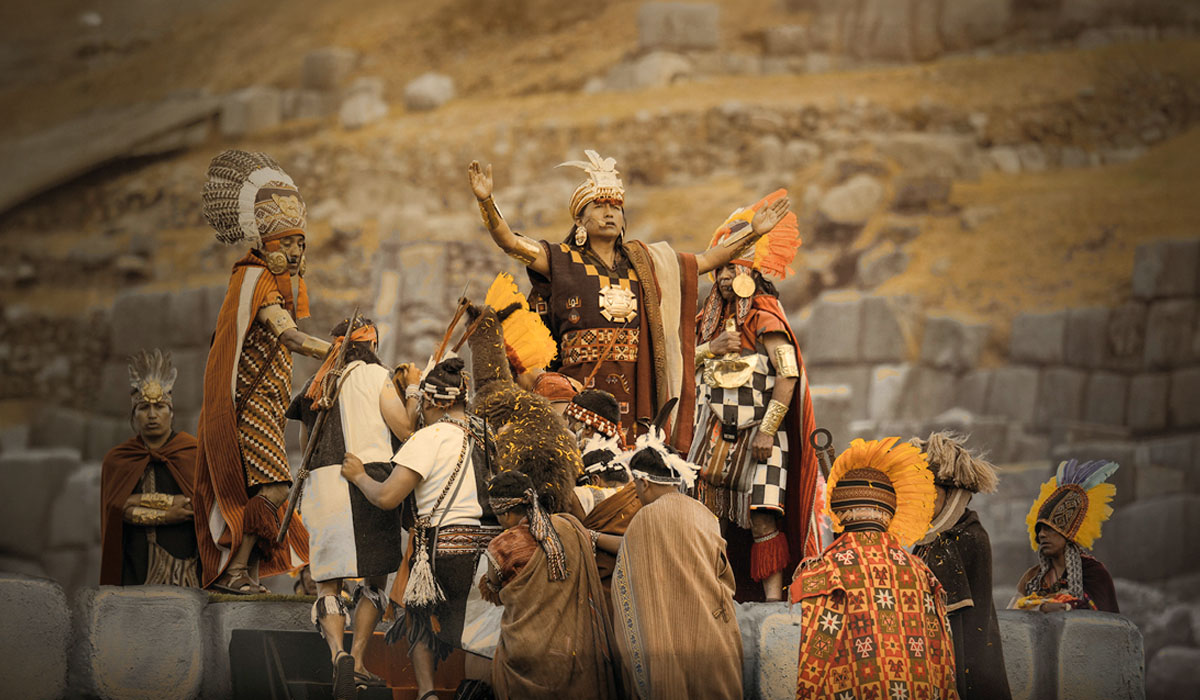
The highest point of the month. The Festival of the Sun is the most important celebration of the Andean calendar and one of the largest cultural shows in South America. The ceremony takes place in three acts that go through the stages most full of history in the city: the initial greeting on the walls of the Qorikancha, the meeting in the Main Square and the central ceremony in the open area of Sacsayhuaman, where thousands of people gather to witness the performance of the tribute to Inti, the Sun god.
If there is a time of the year to be in Cusco, this is it.